Palmitoleic Acid
Best for
More hydrated skin
Faint early signal 500 mg/day 12 weeks 1 study, n=79 #10 of 15 studied
- 1 papers
- 1 of 4 outcomes
- 1 positive
Palmitoleic acid shows a faint early signal for skin moisture retention, but evidence remains too limited for confident expectations or broad recommendations.
Median effective dose, most-studied outcomes
- Support your skin barrier 500 mg 12 wk
- Reduce moisture loss 500 mg 12 wk
What palmitoleic acid actually does
Hydrated skin holds water and can feel less dry, tight, or rough. 37292315
| Outcome | Effect | Evidence | Dose | Time | Rank |
|---|---|---|---|---|---|
| Early research 1 | |||||
| More hydrated skin Faint early signal Hydrated skin holds water and can feel less dry, tight, or rough. | | 1 RCT 1 papers · n=79 | 500 mg | 12 wk | #10 /15 |
Effect tiers come from native-unit MCID where available, Cohen's d otherwise.
Dose, timing & forms
How much
The only skin-focused oral protocol in the available evidence used 500 mg daily for 12 weeks. It produced a small early signal in skin moisture and barrier outcomes, so treat that amount as a research reference point rather than an established target.2
When and how long
Take it consistently each day rather than saving it for days when your skin feels dry. The skin study assessed results after a sustained daily routine, not after occasional doses or a quick pre-event use.2
Studied range, by outcome
| Outcome | Studied range | Median effective | Duration | Evidence |
|---|---|---|---|---|
| Support your skin barrier | 500 mg | 500 mg | 12 wk | 1 paper 3 sig. endpoints |
| Reduce moisture loss | 500 mg | 500 mg | 12 wk | 1 paper 4 sig. endpoints |
What this is and how it works
- One study (n=79) reported improved skin moisture retention across 12 endpoints; no noticeable-change threshold was provided.2
- The reviewed evidence includes 1 paper spanning 4 outcomes, with skin hydration as the strongest reported outcome.
- Evidence comes from one small early study, limiting confidence in the finding’s reliability and wider applicability.
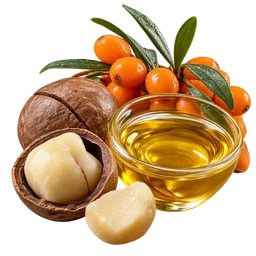
Palmitoleic acid is a monounsaturated omega-7 fat that occurs naturally in small amounts in your body and in foods such as macadamia nuts and sea buckthorn. Supplements usually provide it in an oil, with the label listing palmitoleic acid or omega-7 as the featured ingredient.1
Your outer skin barrier uses fats as part of the mortar between its protective surface cells. Palmitoleic acid is one of those fats, so the idea is a bit like keeping the grout between bathroom tiles flexible enough to hold water in, but the available clinical study does not prove that this is why skin measures changed.12
Bottom line
Palmitoleic acid is worth watching if you are curious about nutrition-based skin support, but one small early study is too thin a foundation for high expectations.2 If you want a supplement with well-established skin outcomes, this is not yet the confident choice. People with an allergy to the product's oil source should skip it.
Common questions
Does palmitoleic acid improve skin hydration?
Is palmitoleic acid the same as omega-7?
How long does palmitoleic acid take to work for skin?
Sources
Sources
Generated August 27, 2026
Related
More evidence for Palmitoleic Acid
Ingredient evidence
Ingredient evidence
NewAloe
All scored outcomes
Aug 27, 2026
Ingredient evidence
Ingredient evidence
NewCeramides
All scored outcomes
Aug 27, 2026
Ingredient evidence
Ingredient evidence
NewCollagen
All scored outcomes
Aug 27, 2026
Ingredient evidence
Ingredient evidence
NewEvening Primrose Oil
All scored outcomes
Aug 27, 2026
Ingredient evidence
Ingredient evidence
NewGotu Kola
All scored outcomes
Aug 27, 2026
Ingredient evidence
Ingredient evidence
NewHyaluronic Acid
All scored outcomes
Aug 27, 2026