Hyaluronic Acid
25 studies read · 3 answers · 3 sources
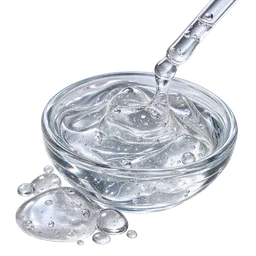
Hyaluronic acid likely provides a strong benefit for skin moisture in people with dry skin, while evidence for other outcomes is less convincing.
What it does
Worth watching
-
More skin hydration · May help
Well-hydrated skin feels less dry and helps maintain its protective outer layer.
1 review of 2 trials · 196 people · noticed in 4–12 weeks
-
Less joint pain and stiffness · May help
Joint pain and stiffness can limit movement and make everyday routines harder.
2 trials · 47 people · noticed in 8–52 weeks
Early findings (1)
-
Slower skin aging · May help a little
4 trials · at least 184 people · 1 review · noticed in 4–12 weeks
How to take it
Oral hyaluronic acid is a sensible pick if your main goal is less dry, tight-feeling skin and you will use it daily for at least several weeks.1,3 It also has a modest joint-comfort signal, but it is not the choice for someone expecting major pain relief.2 If you take prescription medicines or have had reactions to hyaluronan products, check with a pharmacist or clinician before starting.
How much
For skin moisture, barrier support, and elasticity, oral studies most often use 60 to 200 mg daily, with 120 mg daily sitting near the middle of effective protocols.1,3 Those same amounts appear in wrinkle studies, where the signal is promising but less settled than the hydration result.3 Joint studies also commonly use roughly 80 to 200 mg daily, but expect subtle average pain changes rather than a dramatic shift.2
When
Treat it as a daily routine, not an occasional rescue product. Skin protocols generally run for 4 to 12 weeks, while joint trials often assess results after about 8 weeks or longer.1,2,3 The clinical results do not establish a meaningful advantage for morning versus evening dosing, so choose the time you can repeat consistently.
Which form
Look for an oral product that clearly names hyaluronic acid or hyaluronan and states the amount per daily serving. The skin evidence comes from oral hyaluronan products, not topical serums, and studies use products across different molecular sizes.1,3 A label that hides the hyaluronan amount inside a proprietary blend makes it hard to match a studied intake.
The dose that worked, by measure (8)
- Support your skin barrier
- 120 mg4–12 weeks
- Soften facial wrinkles
- 120 mg4–12 weeks
- Help skin spring back
- 100 mg4–12 weeks
- Move more easily with joint problems
- 64 mg4–52 weeks
- Move more freely after rest
- 111 mg8–52 weeks
- Reduce moisture loss
- 120 mg4–12 weeks
- Move with less joint pain
- 111 mg4–12 weeks
- Ease the daily burden of arthritis
- 200 mg8–52 weeks
Who should be careful
Medicines it can clash with
- imatinib major
- celecoxib major
- voriconazole major
- insulin moderate
- lisinopril moderate
- 5-fluorouracil moderate
Reported side effects
- severe acute inflammatory reactions (SAIR) with cross-linked hylan G-F 20 moderate
- diarrhea mild
- hypoesthesia of the tongue mild
- skin irritation mild
- oral irritation / stinging mild
- injection-site pain and swelling mild
- post-inflammatory hyperpigmentation mild
- gastrointestinal discomfort (dyspepsia, flatulence, reflux esophagitis, appetite loss) mild
Bottles worth buying
Dosed where the research is, in a clean formula, from audited brands. Not sponsored.
-

Hyaluronic Acid
Pure Encapsulations · 140 mg a day · brand audit 78
-

SynovoDerma
Allergy Research Group · 210 mg a day · brand audit 83
-

Hyaluronic Acid 100 mg
Nutricost · 100 mg a day · brand audit 57
-

Hyaluronic Acid 100 mg Unflavored
Nutricost · 100 mg a day · brand audit 57
-

Hyaluronic Acid (150 mg)
BulkSupplements.com · 300 mg a day · brand audit 54
-

Hyaluronic Acid
BulkSupplements.com · 193.3 mg a day · brand audit 54
How it works
Hyaluronic acid, also called hyaluronan, is a long sugar-like molecule found in your skin, eyes, and the slippery fluid around joints. Your body makes it naturally, while supplements usually come as purified hyaluronan made through fermentation. Oral studies focus mostly on skin hydration, skin elasticity, and everyday joint comfort.1,2,3
Hyaluronan acts like a microscopic sponge mesh: its long chains hold water in the spaces around skin cells, which supports a better-hydrated outer barrier.1,3 In joints, it is part of the cushioning fluid that helps surfaces glide, although oral trials show only a small average change in pain and function.2
Studied alongside
-
Xylitol
14 measures studied together
-
Proline
10 measures studied together
-
Glycine
10 measures studied together
-
Alanine
10 measures studied together
-
Carnosine
10 measures studied together
-
Vitamin B2
10 measures studied together
-
Clay
9 measures studied together
-
Propolis
8 measures studied together
-
Vitamin B1
8 measures studied together
-
Vitamin B6
8 measures studied together
-
Vitamin B12
8 measures studied together
-
Vitamin E
8 measures studied together
-
Calcium
8 measures studied together
-
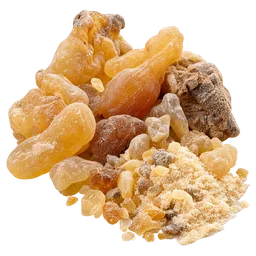
Boswellia
6 measures studied together
-
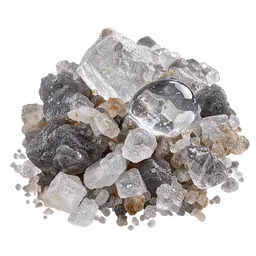
Seawater
5 measures studied together
-
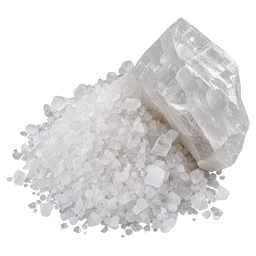
Sodium
5 measures studied together
-
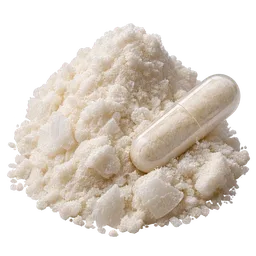
Chondroitin
1 measures studied together