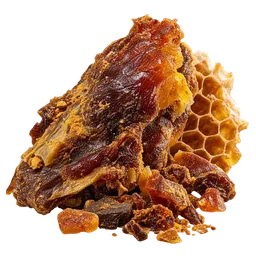
Propolis
Best for
Fewer cavities
Likely strong benefit 500 mg/day 1–13 weeks 11 studies, n=234 #1 of 11 studied
- 47 papers
- 2 of 106 outcomes
- 2 positive
Propolis likely provides strong benefit for plaque control and cavity protection, especially as a topical oral-care add-on alongside brushing, fluoride toothpaste, and routine dental care.
Median effective dose, most-studied outcomes
- Leave less plaque behind 500 mg 1–13 wk
- Reduce gum swelling and bleeding 500 mg 1–13 wk
Risk, worst reported severity
- muscle tissue effects including myocardial tissue concerns
- hypersensitivity
What propolis actually does
| Outcome | Effect | Evidence | Dose | Time | Rank |
|---|---|---|---|---|---|
| Strong benefits 1 | |||||
| Fewer cavities Likely strong benefit Cavities form when tooth decay breaks down enamel, the hard outer layer of a tooth. | | 6 RCTs 11 papers · n=234 | 500 mg | 1–13 wk | #1 /11 |
| Worth watching 1 | |||||
| Healthier gums Large effect, needs confirmation Gums help hold teeth in place, and inflammation can lead to bleeding and damage around teeth. | | 7 RCTs 10 papers · n=337 | 500 mg | 1–13 wk | #1 /12 |
Effect tiers come from native-unit MCID where available, Cohen's d otherwise.
Dose, timing & forms
How much
The strongest oral-health evidence centers on 500 mg topical propolis preparations used to reduce plaque, with protocols commonly running for roughly 3 to 5 weeks.1 That same topical amount appears in studies tracking gum swelling and bleeding, but those gum findings remain less settled than the plaque and cavity-protection evidence.1 Use the product as directed rather than treating propolis like a general oral supplement.
When and how long
Consistency matters more than a particular time of day. Oral studies use propolis repeatedly within a daily hygiene routine for several weeks, allowing the preparation to contact teeth and gums rather than using it only when your mouth feels sore.1 Follow the product instructions for rinsing, brushing, or gel application, and do not eat or drink immediately afterward if the label tells you to leave it in place.
Forms & standardisation
Choose a product specifically intended for oral use, such as a rinse, gel, or toothpaste. Propolis varies widely with the plants available to the bees, so a label that identifies the extract and provides batch or standardization details offers more confidence than a vague "bee propolis" claim.1 Avoid products that trigger burning, rash, or mouth irritation, especially if you have reacted to bee-derived products before.1
Studied range, by outcome
| Outcome | Studied range | Median effective | Duration | Evidence |
|---|---|---|---|---|
| Leave less plaque behind | 500 mg | 500 mg | 1–13 wk | 10 papers 4 sig. endpoints |
| Reduce gum swelling and bleeding | 500 mg | 500 mg | 1–13 wk | 6 papers 4 sig. endpoints |
Adverse events and drug interactions
Safety events
Recommended Propolis products
Real products that dose Propolis where the research does, in a clean formulation, from brands we've audited. We only list ones we'd stand behind.
-

NOW
Propolis 2000 5:1 Extract
Well dosed 400 mg/day A formulaBrand audit 87/100
-

Double Wood Supplements
Bee Propolis 1,000 mg
Well dosed 1,000 mg/day A formulaBrand audit 75/100
-

NOW
Propolis 1500
Well dosed 300 mg/day B formulaBrand audit 87/100
-

The Vitamin Shoppe
Bee Propolis Extract
Well dosed 250 mg/day A formulaBrand audit 69/100
-

Puritan's Pride
Bee Propolis Extract 125 mg
Well dosed 250 mg/day A formulaBrand audit 68/100
-

SuperSmart
Green Propolis
Well dosed 1,200 mg/day A formulaBrand audit 63/100
Chosen for adequate Propolis dosing vs. the studied range, a clean formulation (grade A–C), and independent brand-quality audits. Not sponsored.
What this is and how it works
- Across 11 studies (n=234), propolis improved cavity-related endpoints, with positive direction reported across 35 measures.1
- The evidence review covered 47 papers spanning 106 outcomes, with strongest support for oral-health applications.
- Topical propolis should complement—not replace—fluoride toothpaste, interdental cleaning, or professional dental care.
Propolis is the sticky resin bees make by blending plant compounds with wax and their own enzymes. Bees use it to seal and protect the hive. Oral-care products use purified propolis in rinses, gels, toothpastes, and other products that contact the gums and teeth.1
Propolis contains plant polyphenols that can slow the growth and acid-making activity of bacteria that build sticky dental plaque.1 Think of it as making the bacteria's construction crew less efficient, so it has a harder time laying down the film that clings to teeth. Its anti-inflammatory compounds also appear to calm irritated gum tissue, though gum-health findings still need confirmation.1
Bottom line
Topical propolis is a reasonable add-on for someone who wants extra support with plaque control and cavity protection, particularly when they already brush with fluoride toothpaste and clean between their teeth. The gum-health signal looks promising but needs firmer confirmation. Skip it if you have a bee-product allergy or develop irritation, and do not use it as a substitute for dental care.1
Common questions
Does propolis help with plaque?
Can propolis replace toothpaste or dental visits?
Is propolis safe if you have a bee allergy?
Sources
Sources
Generated August 27, 2026
Related