Sage
Best for
Remember more
Promising early signal 300–600 mg/day 4–12 weeks 3 studies, n=128 #9 of 42 studied
- 8 papers
- 2 of 27 outcomes
- 1 positive
Sage shows a promising early signal for memory in healthy adults, while findings for menopausal hot flashes remain small and uncertain rather than established.
Median effective dose, most-studied outcomes
- Recall information across tasks 600 mg 4–12 wk
- Reduce hot flash frequency and intensity 235 mg 4–8 wk
- Ease night sweats 300 mg 12 wk
Risk, worst reported severity
- gastrointestinal complications mild
- generalized tonic-clonic seizures
What sage actually does
| Outcome | Effect | Evidence | Dose | Time | Rank |
|---|---|---|---|---|---|
| Worth watching 1 | |||||
| Remember more Promising early signal Memory helps you hold onto information and bring it back when you need it. | | 2 RCTs 3 papers · n=128 | 300–600 mg | 4–12 wk | #9 /42 |
| Early research 1 | |||||
| Fewer hot flashes during menopause Not enough research Hot flashes and night sweats can interrupt sleep, focus, and daily comfort during menopause. | | 1 meta-analysis 3 papers · n=271 | 100–300 mg | 4–12 wk | — |
Effect tiers come from native-unit MCID where available, Cohen's d otherwise.
Dose, timing & forms
How much
Memory studies most often use 300 to 600 mg daily of a sage preparation, with 600 mg appearing often among the more effective protocols. Researchers generally assessed recall after roughly 4 to 12 weeks, so this is not an occasional, before-a-test supplement. 1
Menopause trials use lower-to-similar extract amounts over several weeks, but the hot-flash result is too small and uncertain to use as a dosing target. 2
When and how long
Use the product consistently each day for the same kind of multiweek trial period used in memory research, rather than judging it from one dose. Studies do not establish a clearly superior morning, evening, with-food, or empty-stomach routine, so follow the product directions and choose a time you can repeat reliably. 1
Forms & standardisation
Look for a product that clearly identifies the sage species and says whether it contains a leaf extract or essential oil. The cognitive research evaluates defined preparations, not ordinary dried culinary herb, so a label that only says "sage powder" offers a weaker match to the studied products. 1 3
Do not treat all Salvia products as interchangeable. Their chemical profiles differ, and the research does not establish one universal active-compound standard for every sage supplement. 1
Studied range, by outcome
| Outcome | Studied range | Median effective | Duration | Evidence |
|---|---|---|---|---|
| Recall information across tasks | 300–600 mg | 600 mg | 4–12 wk | 3 papers 5 sig. endpoints |
| Reduce hot flash frequency and intensity | 100–280 mg | 235 mg | 4–8 wk | 2 papers 4 sig. endpoints |
| Ease night sweats | 300 mg | 300 mg | 12 wk | 1 paper 3 sig. endpoints |
Adverse events and drug interactions
Safety events
Recommended Sage products
Real products that dose Sage where the research does, in a clean formulation, from brands we've audited. We only list ones we'd stand behind.
-

Nootropics Depot
Sibelius: Sage Powder
Well dosed 400 mg/day A formulaBrand audit 87/100
-

Solaray
Sage 570 mg
Well dosed 570 mg/day A formulaBrand audit 76/100
-

Solaray
Sage 285 mg
Well dosed 570 mg/day A formulaBrand audit 76/100
-

Nature's Answer
Sage Leaf Extract Alcohol-Free
Well dosed 765 mg/day A formulaBrand audit 75/100
-

BulkSupplements.com
Sage Extract
Well dosed 850 mg/day A formulaBrand audit 54/100
-
Nootropics Depot
Sibelius: Sage Capsules 200 mg
Well dosed 400 mg/day C formulaBrand audit 87/100
Chosen for adequate Sage dosing vs. the studied range, a clean formulation (grade A–C), and independent brand-quality audits. Not sponsored.
What this is and how it works
- Across 3 studies (n=128), sage improved memory-related outcomes; numeric effect size and MCID comparison were not supplied. 1
- Eight papers reviewed here span 27 outcomes, including cognition, menopausal hot flashes, and associated symptoms.
- Evidence comes from small, early-stage human trials using varied sage preparations and populations. 1 2
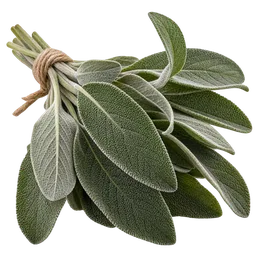
Sage usually refers to Salvia officinalis, an aromatic Mediterranean leaf used in food, tea, and concentrated supplements. Supplement makers turn the leaf into extracts or oils that deliver far more of its naturally occurring plant chemicals than a normal culinary serving. 1
Sage compounds appear to slow the enzyme that clears acetylcholine, a chemical messenger your brain uses to pass information between nerve cells. Picture acetylcholine as a note passed around a classroom. Slowing the note shredder can leave more messages available briefly, which gives the memory findings a biologically plausible explanation. 3
Common questions
Does sage improve memory?
Does sage reduce menopausal hot flashes?
Is culinary sage the same as a sage supplement?
Sources
Sources
Generated August 27, 2026
Related
More evidence for Sage
Ingredient evidence
Ingredient evidence
NewBacopa
All scored outcomes
Aug 27, 2026
Ingredient evidence
Ingredient evidence
NewCarnitine
All scored outcomes
Aug 27, 2026
Ingredient evidence
Ingredient evidence
NewCholine
All scored outcomes
Aug 27, 2026
Ingredient evidence
Ingredient evidence
NewCiticoline
All scored outcomes
Aug 27, 2026
Ingredient evidence
Ingredient evidence
NewCreatine
All scored outcomes
Aug 27, 2026
Ingredient evidence
Ingredient evidence
NewGinkgo
All scored outcomes
Aug 27, 2026