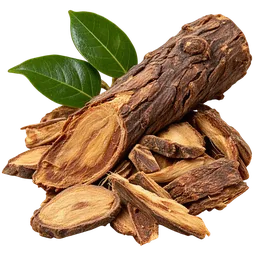
Salacia
What the trials found
Salacia has insufficient evidence for lowering post-meal blood glucose in humans; one small study is not enough to establish a reliable benefit or broader metabolic-health effects.
- 1 papers
- 0 of 1 outcomes
Median effective dose, most-studied outcomes
- Limit after-meal glucose rises 1,000 mg —
Risk, worst reported severity
- abdominal discomfort (cramping, distention) mild
- vomiting mild
Dose, timing & forms
How much
The available human trial used 1,000 mg of a water-soluble Salacia reticulata extract for limiting the glucose rise after a meal. 1 That single protocol gives a useful reference point, not a proven long-term daily dose for broader metabolic goals.
When and how long
Meal timing matters more than taking Salacia at a random point in the day. Use it with, or immediately before, a meal containing carbohydrates, because the studied effect concerns digestion-driven glucose changes after eating. 1 Daily long-term use has not been established by this evidence.
Forms & standardisation
Look for a product that clearly names the Salacia species and plant part used, rather than a vague proprietary blend. The human study used a water-soluble Salacia reticulata extract, but it did not establish a specific active-compound standardization or prove that all Salacia extracts work interchangeably. 1
Studied range, by outcome
| Outcome | Studied range | Median effective | Duration | Evidence |
|---|---|---|---|---|
| Limit after-meal glucose rises | 1,000 mg | 1,000 mg | — | 1 paper 2 sig. endpoints |
Adverse events and drug interactions
Safety events
What this is and how it works
- One human study examined post-meal blood glucose after Salacia, but sample size and effect magnitude were not reported here. 1
- Evidence reviewed here covers one paper and one outcome: post-meal blood glucose in humans.
- Long-term effects, clinically noticeable improvement, and safety alongside glucose-lowering medication remain unestablished.
Salacia is a group of woody climbing plants used in traditional South Asian herbal practice. Supplements typically use extracts from the plant's roots or stems, especially Salacia reticulata. 1
Salacia appears to slow gut enzymes that cut dietary starch and sugar into the small pieces your body absorbs. Picture those enzymes as kitchen scissors: Salacia dulls the cutting action, so glucose enters the bloodstream more gradually after eating. 1
Bottom line
Salacia is worth considering if your goal is specifically to soften the glucose rise after carbohydrate-rich meals and you understand that the evidence is early. One small study is not enough to support big promises about long-term metabolic health. Skip it if mild stomach upset would be a dealbreaker, and get clinician guidance if you use glucose-lowering medication.
Common questions
Does salacia lower blood sugar?
When should you take salacia?
What does salacia do in the body?
Sources
Sources
Generated August 27, 2026
Related
More evidence for Salacia
Ingredient evidence
Ingredient evidence
NewAsian Psyllium
All scored outcomes
Aug 27, 2026
Ingredient evidence
Ingredient evidence
NewBarley
All scored outcomes
Aug 27, 2026
Ingredient evidence
Ingredient evidence
NewBean
All scored outcomes
Aug 27, 2026
Ingredient evidence
Ingredient evidence
NewBerberine
All scored outcomes
Aug 27, 2026
Ingredient evidence
Ingredient evidence
NewBitter Melon
All scored outcomes
Aug 27, 2026
Ingredient evidence
Ingredient evidence
NewChromium
All scored outcomes
Aug 27, 2026