St. John's Wort
6 studies read · 5 answers · 2 sources
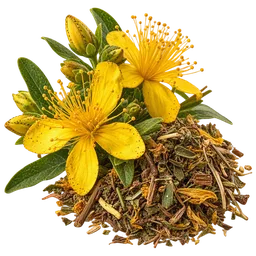
St. John’s wort provides a proven modest benefit for depressive symptoms, while evidence across other outcomes remains too limited to outweigh important medication-interaction concerns.
What it does
Modest benefits
-
Less depression · Probably helps a little
Depression can drain energy and enjoyment, making ordinary responsibilities feel harder to manage.
3 trials · 2,983 people · 1 review · noticed in 4–12 weeks
Early findings (4)
-
A brighter everyday mood · Unclear if it helps
1 trial · 140 people · noticed in 6 weeks
-
Better quality of life · Unclear if it helps
1 trial · 49 people · noticed in 12 weeks
-
Fewer anxiety symptoms · Unclear if it helps
2 trials · 351 people · noticed in 6–8 weeks
-
Better social connection · Unclear if it helps
1 trial · 48 people · noticed in 12 weeks
How to take it
St. John's wort suits someone considering a carefully monitored, 12-week trial for depressive symptoms who takes no interacting medicines and accepts that the expected benefit is small.1 Skip self-starting it if you use warfarin, cyclosporine, or hormonal contraceptive ingredients, and ask a pharmacist or clinician to review your full medication list first.2 The early findings on quality of life and social functioning are not strong enough to drive the decision.1
How much
For depressive symptom severity, the clearest studied protocol is 810 mg daily for 12 weeks. The reviewed evidence shows a small benefit, so do not expect a quick or dramatic shift in how you feel.1 The same daily amount appeared in the limited quality-of-life and social-function research, but those outcomes remain too uncertain to guide a reason for use.1
When
The trial evidence supports taking St. John's wort consistently every day across a multi-week course, not using it only when mood dips.1 The available protocols do not establish a best time of day, meal pairing, or split schedule, so follow the product directions unless a clinician or pharmacist gives you a different plan. Check interactions before the first dose, since the drug-processing effect is the central timing issue here.2
Which form
Look for an oral extract with a clearly named botanical species, Hypericum perforatum, and a stated amount per daily serving. The evidence does not show that every tea, powder, or extract works interchangeably, so avoid treating a label's “St. John's wort” claim as proof that it matches the extracts used in trials.1 Standardization details can help identify a consistent product, but they do not remove the interaction risk driven largely by hyperforin.2
Who should be careful
Medicines it can clash with
- warfarin major
- cyclosporine major
- ethinyl estradiol major
- norethindrone major
- indinavir major
- ritonavir major
- nevirapine major
- methadone major
- imatinib major
Reported side effects
- drowsiness mild
- gastrointestinal upset, headache, sleep disturbance, dizziness mild
- headache mild
- allodynia mild
- erythrodermia mild
- hypophosphatemia mild
- paresthesia mild
- nausea mild
How it works
St. John's wort is a yellow-flowering plant, Hypericum perforatum, sold as capsules, tablets, teas, and extracts. Its modern use centers on mood, but the extract contains many active plant compounds rather than one single ingredient.1
In the brain, St. John's wort compounds appear to influence the chemical messages that nerve cells use to communicate, which gives researchers a plausible explanation for its small mood signal in trials.1 Its bigger practical trick happens in the liver: hyperforin flips on a drug-processing switch, like opening extra checkout lanes that move some medicines out of the body faster.2