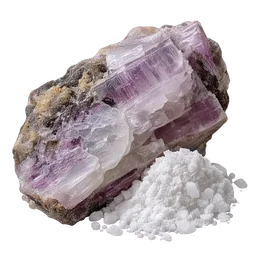
Lithium
Best for
Ease depression symptoms
Large effect, needs confirmation 3–78 weeks 1 meta-analysis, n=290 #2 of 36 studied
- 20 papers
- 4 of 44 outcomes
- 1 positive
- 6 severe, 5 major interactions
Lithium shows a large effect on depression symptoms, but that signal needs confirmation; evidence across other outcomes is less convincing, and safety risks make unsupervised mood use inappropriate.
Median effective dose, most-studied outcomes
- Reduce overall depressive symptom severity 225 mg 3–78 wk
- Ease manic symptoms in bipolar disorder 375 mg 1–12 wk
Risk, worst reported severity
- Depression with suicide attempt (serious adverse event) severe
- Serious adverse event (any) severe
- diuretics major
- antihypertensives major
What lithium actually does
| Outcome | Effect | Evidence | Dose | Time | Rank |
|---|---|---|---|---|---|
| Worth watching 1 | |||||
| Ease depression symptoms Large effect, needs confirmation Depression can bring persistent low mood and loss of interest in daily life. | | 1 meta-analysis 6 papers · n=290 | — | 3–78 wk | #2 /36 |
| Early research 1 | |||||
| Less severe mania in bipolar disorder Not enough research People with bipolar disorder may have periods of unusually high energy, activity, or mood. | | 2 RCTs 2 papers · n=16 | 150–800 mg | 1–12 wk | — |
| Doesn't appear to help 2 | |||||
| Feel less anxious Doesn't appear to help Anxiety can bring persistent worry, unease, and physical tension into ordinary moments. | | 1 meta-analysis 3 papers · n=679 | 10–885 mg | 3–78 wk | — |
| Fewer suicidal thoughts and self-harm Doesn't appear to help People may experience suicidal thoughts or deliberate self-harm during a mental health crisis. | | 2 RCTs 2 papers · n=575 | 150–600 mg | 52 wk | — |
Effect tiers come from native-unit MCID where available, Cohen's d otherwise.
Dose, timing & forms
How much
For depressive symptoms, the reviewed trials span 10 to 1,050 mg daily, with a median effective amount of 225 mg, but only one of six studies showed a significant result. That is an interesting early signal, not a do-it-yourself target. Studies of manic symptoms used 150 to 800 mg daily over roughly 1 to 12 weeks, yet the evidence base remains too small for a consumer dosing recommendation.1
When and how long
The trials used oral lithium daily for weeks or months, not as an occasional mood lift. Consistent fluid and salt intake matters because dehydration and abrupt dietary changes can shift lithium levels. A clinician should set the schedule and arrange blood monitoring, especially after dose changes or medication changes.4
Forms & standardisation
The strongest clinical evidence involves prescribed lithium salts, commonly lithium carbonate or lithium citrate, with dose adjustment based on blood levels. Do not equate the milligrams printed on lithium orotate with a prescribed lithium dose, since products can report compound weight rather than elemental lithium. Given kidney and pregnancy risks, choose clinician-supervised treatment rather than a retail lithium product for mental-health goals.45
Studied range, by outcome
| Outcome | Studied range | Median effective | Duration | Evidence |
|---|---|---|---|---|
| Reduce overall depressive symptom severity | — | 225 mg | 3–78 wk | 6 papers 1 sig. endpoint |
| Ease anxiety symptoms | 10–885 mg | — | 3–78 wk | 3 papers |
| Ease manic symptoms in bipolar disorder | 150–800 mg | 375 mg | 1–12 wk | 2 papers 1 sig. endpoint |
| Reduce suicidal thoughts and self-harm | 150–600 mg | — | 52 wk | 2 papers |
Adverse events and drug interactions
Safety events
Drug interactions
Recommended Lithium products
Real products that dose Lithium where the research does, in a clean formulation, from brands we've audited. We only list ones we'd stand behind.
-

Priority One Nutritional Supplements
Organic Lithium (Orotate)
Well dosed 15 mg/day A formula -

Vitamin Research Products
Lithium Orotate
Well dosed 260 mg/day A formula -

Global Healing Center
Lithium Orotate
Well dosed 20 mg/day A formula -

AgeImmune
Lithium Orotate 10 mg
Well dosed 10 mg/day A formula -

Global Healing
Lithium Orotate
Well dosed 10 mg/day A formula -

Super-Nutrition
Lithium Orotate 250 mg
Well dosed 10 mg/day A formula
Chosen for adequate Lithium dosing vs. the studied range, a clean formulation (grade A–C), and independent brand-quality audits. Not sponsored.
What this is and how it works
- Across 6 studies (n=290), lithium improved depression symptoms, but effect size and MCID comparison were not reported.1
- Twenty reviewed papers spanned 44 outcomes, including depression, anxiety, suicidal thoughts, kidney health, and pregnancy safety.
- Kidney disease, pregnancy, blood-pressure medicines, and diuretics require clinician-led lithium monitoring.4
Lithium is a naturally occurring mineral. In medicine, clinicians use carefully measured lithium salts and blood tests to keep levels in a narrow target range. That is very different from treating it like an everyday vitamin or assuming lithium orotate matches prescription products.
Lithium changes several signaling systems in brain cells, including an enzyme called GSK-3 that influences how cells respond to stress and maintain connections.1 Picture GSK-3 as a control knob that can push cellular stress signaling too high. Lithium turns that knob down, but it also affects salt and water handling in the body, which explains why dose precision matters.14
Bottom line
Lithium is not a low-stakes mood supplement. The reviewed evidence gives depression an early signal worth watching, while anxiety and suicidal thoughts showed no meaningful benefit. Anyone considering lithium for mood, especially during pregnancy or while taking blood-pressure medicines or diuretics, should use clinician-led care and monitoring.2345
Common questions
Is lithium orotate the same as prescription lithium?
Does lithium help depression?
Can lithium reduce anxiety?
Why does lithium need monitoring?
Sources
Sources
- 1. Glycogen synthase kinase-3 beta, mood disorders, and neuroprotection (2007) ↑
- 2. Lithium in the prevention of suicide in mood disorders: updated systematic review and meta-analysis (2007) ↑
- 3. Lithium in the prevention of suicide in mood disorders: systematic review and meta-analysis of randomised controlled trials (2013) ↑
- 4. Lithium and chronic kidney disease: debates and dilemmas (2017) ↑
- 5. Lithium use in pregnancy and the risk of cardiac malformations (2021) ↑
Generated August 27, 2026
Related
More evidence for Lithium
Ranking
Healthy Brain Aging
NewBest Supplements to Protect Brain Tissue as You Age (2026)
Evidence ranking
May 18, 2026
Ranking
Mental speed and reaction time
NewThe 10 Supplements With Real Evidence for Faster Thinking
Evidence ranking
Apr 3, 2026
Evidence map
Stress
NewStress: evidence map across 46 supplements
Evidence coverage map
Jul 30, 2026
Ingredient evidence
Ingredient evidence
New5-HTP
All scored outcomes
Aug 27, 2026
Ingredient evidence
Ingredient evidence
NewAshwagandha
All scored outcomes
Aug 27, 2026
Ingredient evidence
Ingredient evidence
NewBacopa
All scored outcomes
Aug 27, 2026