My supplement says “clinically studied.” Was this actual product tested?
Nov 12, 2026 · 2 min read · 4 sources
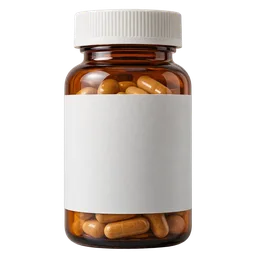
A “clinically studied” label often refers to an ingredient, not the exact supplement sold in your bottle.
You see the phrase on the front of a bottle, usually near a white coat graphic or a tiny footnote. The trick is that the words sound more specific than they often are.
I would assume the actual bottle was not tested unless the company shows you the study and the study names the product. The exception is simple: if the paper, trial registry or company science page identifies the same finished product, same dose and same serving instructions, then yes, you may be looking at a real product trial.
The phrase is weaker than it sounds
“Clinically studied” is not a special FDA stamp. For dietary supplements, FDA allows structure and function claims, but says those claims are not pre-approved. The company has to have substantiation, notify FDA within 30 days after marketing certain claims and use the familiar disclaimer that FDA has not evaluated the claim and the product is not intended to diagnose, treat, cure or prevent disease.2
Advertising is watched by the FTC, and the FTC’s baseline rule is plain: health claims must be truthful, not misleading and supported before the ad runs. Its 2022 Health Products Compliance Guidance also says objective product claims need adequate substantiation, including implied claims a reasonable shopper takes from the ad.1 So if a label makes you think the exact product improved sleep, joints, memory or workout performance in people, the company needs support for that message. But the phrase itself does not tell you what was studied.
Here is the practical read. “Clinically studied ingredient” usually means a raw material has human research behind it. “Clinically tested formula” should mean the whole formula was tested. “Clinically proven” is stronger marketing language and should carry stronger support. None of those phrases replaces the boring but decisive question: where is the trial?
Ask whether the study matches the bottle
The best case is a finished product trial. Basis is a clean example of what that looks like. A randomized, double blind, placebo controlled trial tested NRPT, described in the paper as commercially known as Basis, in 120 healthy adults ages 60 to 80 for 8 weeks, with placebo, the recommended dose and a double dose. The main reported outcome was increased whole blood NAD+ in a dose dependent pattern.3
That is more specific than a label saying “NAD booster clinically studied.” It ties the claim to a named product and a measured biomarker. It still does not mean the product was shown to make people live longer, feel younger or avoid disease. It means that product, in that population, under those dosing conditions, changed that marker.
The more common case is ingredient evidence. Creatine is a good example. The International Society of Sports Nutrition position stand says creatine supplementation consistently increases intramuscular creatine and supports high intensity exercise performance, and it also notes short and long term use up to 30 g per day for 5 years was safe and well tolerated in healthy people and several patient populations.4 That supports buying plain creatine monohydrate from a quality brand. It does not prove that a proprietary pre-workout blend, a tiny capsule serving or a newer creatine form was tested as a finished product.
That is the buyer’s move: match product, ingredient form, dose, outcome and population. If the study used 3 to 5 grams of creatine monohydrate and your product gives 750 mg of a blend, the study is not really about your purchase. If a sleep study used a specific magnesium salt at a specific dose, a gummy with a different form and less elemental magnesium is borrowing the glow.
What I would do before buying
First, look for a citation, not just a badge. A useful brand page should link to a peer reviewed paper, PubMed record or trial registration. If it only says “backed by science” and gives no study, treat that as decoration.
Second, scan the methods or abstract for the exact product name. If the study names only the ingredient, I judge the bottle at the ingredient and dose level. That can still be enough for basic supplements with strong ingredient evidence, like creatine monohydrate. For complex blends, it is weaker because changing the dose, form or companion ingredients can change what you should expect.
Third, check what was measured. Biomarkers are not the same as felt outcomes. Raising NAD+ is not the same claim as improving energy. Increasing blood vitamin D is not the same as preventing fractures. A serious brand will keep the claim close to the measurement.
Fourth, ignore “doctor formulated” unless it comes with data. Formulation is not testing. A certificate of analysis can help with identity and contaminants, but it is not proof that the supplement works. Third party testing is useful for quality control; it is not a clinical trial.
My buying rule is simple. For single ingredient staples, I will accept strong ingredient evidence plus a transparent dose and independent quality testing. For expensive blends making a specific promise, I want a finished product trial. If the company cannot show it, I assume “clinically studied” means someone studied something nearby.
Supplements in this article
Worth knowing
- FDA labeling rules and FTC advertising rules overlap, but they answer different questions.
- Some single ingredient supplements can be reasonable buys when ingredient evidence, dose transparency and quality testing line up.
- Dietary supplements cannot legally claim to diagnose, treat, cure or prevent disease under the FDA structure and function claim framework.
Common questions
Does “clinically studied” mean the exact supplement was tested?
What is the fastest way to check the claim?
Is a biomarker trial enough?
Sources
- 1. Health Products Compliance Guidance (2022) Substantiation standard for advertising claims
- 2. Structure/Function Claims FDA distinction between supplement structure and function claims and disease claims
- 3. Repeat dose NRPT (nicotinamide riboside and pterostilbene) increases NAD+ levels in humans safely and sustainably (2017) Concrete example of a finished supplement product trial
- 4. International Society of Sports Nutrition position stand: safety and efficacy of creatine supplementation in exercise, sport, and medicine (2017) Concrete example of ingredient level evidence for creatine