My fish oil says 1,000 mg, but has only 300 mg EPA and DHA. What am I getting?
Nov 10, 2026 · 2 min read · 5 sources
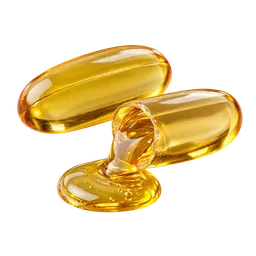
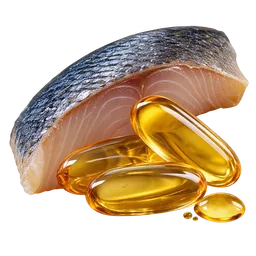
A 1,000 mg fish-oil softgel usually provides 1,000 mg oil but only about 300 mg total omega-3 fats, including EPA and DHA.
This is one of the most common supplement label traps. The big number on the front is usually the oil, not the active omega-3 dose.
I would read your bottle as a 300 mg omega-3 supplement, not a 1,000 mg EPA and DHA supplement. Use the EPA plus DHA line for your dose, take it with a meal, and ignore the big fish-oil number unless you are tracking total fat.
The protocol is simple: count EPA plus DHA
Here is the label math. If the front says Fish Oil 1,000 mg and the Supplement Facts panel says EPA 180 mg and DHA 120 mg, you are getting 300 mg EPA plus DHA. The other roughly 700 mg is mostly other fats in the fish oil softgel, plus small amounts of other fatty acids. A real label in the NIH Dietary Supplement Label Database works this way: one softgel provides 1 g fish oil and 300 mg total omega-3 fatty acids, with EPA, DHA, and other fatty acids listed inside that omega-3 amount.2
So the practical rule is: decide your EPA plus DHA target, then divide by the EPA plus DHA per serving. If your bottle gives 300 mg EPA plus DHA and you want about 1,000 mg daily, that is 4 softgels for 1,200 mg. If you only take one, you are taking a low-dose omega-3 softgel. That can be fine. It is just not the dose most people think they bought.
Take fish oil with a meal, especially one that contains fat. Not because the label number changes, but because fish oil is fat and is usually easier to tolerate with food. Timing is otherwise not special. Morning versus evening matters less than taking the amount you actually meant to take.
Why the named fatty acids matter
EPA and DHA are the marine omega-3s people usually mean when they say fish oil. NIH ODS names EPA and DHA as two of the three main omega-3 fatty acids and notes that DHA and EPA come from fish and other seafood.1 The bottle’s total oil weight tells you capsule size. The EPA and DHA lines tell you the part most tied to omega-3 intake.
This also explains why trial headlines can mislead supplement shoppers. REDUCE-IT, the famous cardiovascular outcomes trial, did not test one grocery-store 1,000 mg fish oil softgel. It tested icosapent ethyl 2 g twice daily, for 4 g per day, in 8,179 statin-treated patients with elevated triglycerides and high cardiovascular risk. The primary endpoint occurred in 17.2 percent with icosapent ethyl versus 22.0 percent with placebo, with a hazard ratio of 0.75.4 That is a prescription EPA product, a high dose, and a specific patient group. It is not the same as 300 mg EPA plus DHA from a mixed fish oil capsule.
The FDA also separates the ingredient from the marketing. For certain qualified health claims about EPA and DHA and coronary heart disease or hypertension, FDA said the evidence did not meet the stronger authorized health claim standard, but did meet the credible evidence standard. For the qualified claim discussed in its 2019 notice, products had to contain at least 0.8 g EPA and DHA combined per serving.3 Your 300 mg softgel is below that threshold unless the serving size is multiple softgels.
The mistakes are all label mistakes
The first mistake is counting fish oil as EPA plus DHA. A 1,000 mg softgel with 300 mg omega-3s is not dishonest by itself. It is just easy to misread.
The second mistake is missing the serving size. Some labels get to 600 mg or 900 mg EPA plus DHA only by making the serving size 2 or 3 softgels. Check whether the numbers are per softgel or per serving.
The third mistake is chasing huge doses without a reason. Higher dose omega-3 products can affect bleeding tendency and atrial fibrillation risk in some settings. In REDUCE-IT, atrial fibrillation or flutter hospitalization was 3.1 percent with icosapent ethyl versus 2.1 percent with placebo, and serious bleeding was 2.7 percent versus 2.1 percent.4 If you take anticoagulants, have atrial fibrillation, or are using prescription omega-3s for triglycerides, this is no longer a casual label question.
For an ordinary bottle, my move is boring: buy the product with the clearest EPA and DHA lines, calculate cost per 1,000 mg EPA plus DHA, and take it with food. The front-label 1,000 mg is not the dose that matters.
Supplements in this article
Worth knowing
- This explains supplement labels and dosing math, not treatment for high triglycerides or cardiovascular disease.
- Prescription EPA, concentrated EPA plus DHA, cod liver oil, algae DHA, and standard fish oil can have different labeled amounts.
- High-dose omega-3 trials report atrial fibrillation and bleeding signals that matter for people on anticoagulants or with rhythm problems.
Common questions
Does 1,000 mg fish oil mean 1,000 mg omega-3?
Should I count EPA, DHA, or total omega-3?
Is one 1,000 mg fish oil softgel enough?
Sources
- 1. Omega-3 Fatty Acids Fact Sheet for Consumers (2026) Definition of EPA and DHA and omega-3 categories
- 2. Fish Oil 1000 mg Label, NIH Dietary Supplement Label Database (2013) Real-world 1,000 mg fish oil label example
- 3. FDA Announces New Qualified Health Claims for EPA and DHA Omega-3 Consumption and the Risk of Hypertension and Coronary Heart Disease (2019) FDA qualified claim status and 0.8 g EPA plus DHA threshold
- 4. Cardiovascular Risk Reduction with Icosapent Ethyl for Hypertriglyceridemia (2019) High-dose prescription EPA trial details and safety signals
- 5. Omega-3 Polyunsaturated Fatty Acid (Fish Oil) Supplementation and the Prevention of Clinical Cardiovascular Disease (2017) Clinical context for cardiovascular fish oil claims