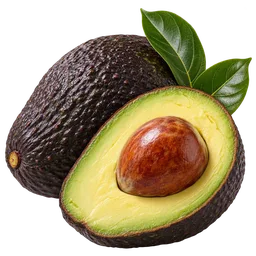
Avocado
What the trials found
Avocado did not significantly lower LDL or total cholesterol in overweight adults after 12 weeks, and evidence remains limited across broader health outcomes.
- 4 papers
- 0 of 31 outcomes
Risk, worst reported severity
- total adverse events (pooled)
Dose, timing & forms
How much
When and how long
The available protocol tests avocado as a daily food habit, not as an occasional dose or a fast-acting intervention.1 Add it to a meal where it replaces a less favorable fat source, rather than treating timing as the key variable. The trial evidence does not establish a preferred morning, evening, or empty-stomach schedule.1
Forms & standardisation
The available cholesterol evidence uses whole avocado, not avocado oil, avocado seed products, or concentrated extracts.1 Choose ripe fresh or frozen avocado based on what you will actually eat consistently. Evidence from whole fruit does not automatically transfer to capsules or oils, because whole avocado also contains fiber and has a different food structure.1
Studied range, by outcome
| Outcome | Studied range | Median effective | Duration | Evidence |
|---|---|---|---|---|
| Lower LDL cholesterol | — | — | 12 wk | 1 paper |
| Lower total cholesterol | — | — | 12 wk | 1 paper |
Adverse events and drug interactions
Safety events
What this is and how it works
- One reviewed 12-week trial found no significant LDL or total-cholesterol reduction from daily avocado consumption.1
- Four papers reviewed here span 31 outcomes, with strongest evidence focused on blood-lipid measures.
- Evidence primarily covers overweight adults consuming avocado daily for 12 weeks, limiting broader conclusions.
Avocado is the creamy fruit of the avocado tree, usually eaten fresh in meals rather than taken like a conventional supplement. It supplies mostly unsaturated fat, plus fiber, potassium, and several vitamins in a package that can replace butter, cheese, or processed spreads in a meal.1
Its main nutritional move is substitution: avocado swaps some saturated fat for unsaturated fat, like replacing a stiff waxy ingredient in a recipe with a more fluid oil. That change can influence the mix of fats carried through the bloodstream, but the reviewed 12-week whole-avocado trial did not show a significant drop in LDL or total cholesterol.1
Bottom line
Avocado makes sense as a satisfying whole-food swap for foods rich in saturated fat, not as a proven cholesterol-lowering supplement. If your main goal is lowering LDL or total cholesterol, the reviewed 12-week daily-avocado evidence does not show a meaningful effect.1
Common questions
Does eating avocado lower LDL cholesterol?
How much avocado did cholesterol research use?
Is avocado oil the same as eating avocado?
Should you eat avocado every day for heart health?
Sources
Sources
Generated August 27, 2026
Related
More evidence for Avocado
Ranking
Arthritis and joint pain
NewBest Supplements for Arthritis and Joint Pain, Ranked by Clinical Evidence
Evidence ranking
Apr 4, 2026
Ingredient evidence
Ingredient evidence
NewArtichoke
All scored outcomes
Aug 27, 2026
Ingredient evidence
Ingredient evidence
NewAsian Psyllium
All scored outcomes
Aug 27, 2026
Ingredient evidence
Ingredient evidence
NewBarberry (Berberis spp.)
All scored outcomes
Aug 27, 2026
Ingredient evidence
Ingredient evidence
NewBerberine
All scored outcomes
Aug 27, 2026
Ingredient evidence
Ingredient evidence
NewBergamot (Citrus bergamia)
All scored outcomes
Aug 27, 2026