Isoleucine
2 studies read · 2 answers · 1 sources
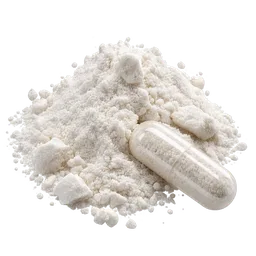
Isoleucine offers a promising early signal for heavier-weight performance, but evidence across outcomes remains too limited to establish reliable strength gains.
What it does
Early findings (2)
-
More muscle strength · Unclear if it helps
1 trial · 16 people · noticed in 52 weeks
-
Better arm and hand function · Unclear if it helps
1 trial · 16 people · noticed in 52 weeks
How to take it
Isoleucine is worth watching if you are curious about amino-acid research and accept that the strength finding remains preliminary. The available evidence does not justify expecting reliable strength gains or replacing a solid training program and adequate dietary protein. People considering 30 g daily should get individualized advice, especially if they use medications or manage a metabolic condition.
How much
For the only consumer-facing outcome with a promising signal, the studied protocol used 30 g daily for 52 weeks. That is a substantial, long-term intake, not a dose supported by several short trials, so it is best viewed as a research protocol rather than a proven everyday target.1 There is not enough human evidence to recommend isoleucine specifically for lifting heavier or building strength.
When
Consistency matters more than workout timing in the long-term strength protocol. Use the dose schedule shown by the product or clinician instead of saving it only for training days, since the available signal came from sustained daily use over many months.1 There is no solid evidence that taking isolated isoleucine immediately before or after a workout changes strength results.
Which form
The relevant question is whether the label provides the actual amount of free-form L-isoleucine, rather than hiding it inside a proprietary amino acid blend. The early strength evidence is too thin to show that a BCAA blend, a food protein, or a particular ratio works the same way as isolated isoleucine. The glucose-uptake mechanism comes from preclinical work, so do not treat it as proof of a human metabolic result.1
The dose that worked, by measure (1)
- Increase everyday strength
- 30 g52 weeks
How it works
Isoleucine has one intriguing strength result, but it is still the opening scene, not the victory lap.
Isoleucine is an essential amino acid, which means your body needs it but cannot make it from scratch. You get it from protein-rich foods such as meat, dairy, soy, beans, and grains, and it also appears in branched-chain amino acid supplements.
Muscle can burn isoleucine for energy, and laboratory research shows it also prompts muscle cells to pull more sugar in from the bloodstream through a cell-signaling route.1 Think of it as giving working muscle both an extra fuel source and a stronger signal to open its fuel gate.1 That biology is interesting, but it does not yet explain a settled human strength benefit.