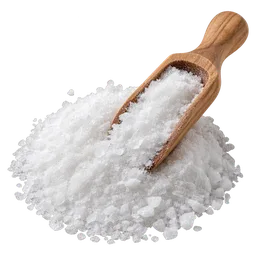
Betaine
Best for
Lower homocysteine
Proven strong benefit 2–15 weeks 2 meta-analyses, n=1.9k #1 of 10 studied
- 32 papers
- 5 of 73 outcomes
- 5 positive
- 4 severe
Betaine delivers a proven strong benefit for lowering homocysteine burden, while evidence across other outcomes is less established and does not support broad performance expectations.
Median effective dose, most-studied outcomes
- Address elevated homocysteine 3 g 2–15 wk
- Generate more peak power 1,250 mg 1–14 wk
- Increase everyday strength 3,125 mg 2–14 wk
Risk, worst reported severity
- cerebral edema / white matter abnormalities severe
- cerebral oedema severe
- atazanavir moderate
- ritonavir moderate
What betaine actually does
| Outcome | Effect | Evidence | Dose | Time | Rank |
|---|---|---|---|---|---|
| Strong benefits 1 | |||||
| Lower homocysteine Proven strong benefit Homocysteine is a blood level tied to heart and brain health. | | 2 meta-analyses 8 papers · n=1.9k | — | 2–15 wk | #1 /10 |
| Modest benefits 1 | |||||
| Support choline and betaine levels when low Likely real but unnoticeable Choline and betaine supply methyl groups for methylation, a normal process used throughout the body. | | 8 RCTs 6 papers · n=587 | — | 2–26 wk | #2 /2 |
| Worth watching 1 | |||||
| Get stronger Promising early signal Strength helps your muscles produce more force for lifting, carrying, and daily movement. | | 6 RCTs 6 papers · n=146 | 1.25–5 g | 2–14 wk | — |
| Early research 2 | |||||
| Sprint faster with more power Faint early signal Speed and power drive explosive efforts when every second and pedal stroke count. | | 8 RCTs 8 papers · n=259 | 1.25–5 g | 1–14 wk | #5 /29 |
| Build more muscle Barely detectable More muscle can support strength, movement, and the physical changes you train for. | | 6 RCTs 6 papers · n=217 | 2–9.9 g | 3–14 wk | — |
Effect tiers come from native-unit MCID where available, Cohen's d otherwise.
Dose, timing & forms
How much
The clearest target is elevated homocysteine: clinical protocols span 1.5 to 6 g daily, with 3 g daily sitting near the middle of effective use, usually over several weeks. 1 Exercise studies have used roughly 1.25 to 5 g daily for strength and peak-power outcomes, but those results remain promising rather than established. 3
When and how long
Betaine works through steady daily exposure, not a one-time pre-workout hit. For homocysteine, trials generally ran for 2 to 15 weeks, with many reaching a meaningful assessment point around four weeks. 1 In training studies, researchers used daily supplementation across multiweek programs, so attach it to a meal or another routine you can repeat consistently. 3
Forms & standardisation
Studied range, by outcome
| Outcome | Studied range | Median effective | Duration | Evidence |
|---|---|---|---|---|
| Address elevated homocysteine | 1.5–6 g | 3 g | 2–15 wk | 8 papers 5 sig. endpoints |
| Generate more peak power | 1,250–5,000 mg | 1,250 mg | 1–14 wk | 8 papers 4 sig. endpoints |
| Increase everyday strength | 1,250–5,000 mg | 3,125 mg | 2–14 wk | 6 papers 6 sig. endpoints |
| Process methyl donors efficiently | 3,000 mg | — | 2–4 wk | 2 papers |
| Build muscle size | 2.5 g | 2.5 g | 6 wk | 2 papers 1 sig. endpoint |
| Stomach acid and pepsin activity | 1,500–4,500 mg | — | — | 1 paper |
Adverse events and drug interactions
Safety events
Drug interactions
Recommended Betaine products
Real products that dose Betaine where the research does, in a clean formulation, from brands we've audited. We only list ones we'd stand behind.
-

NutraBio
TMG
Well dosed 3,000 mg/day A formulaBrand audit 90/100
-

NutraBio
TMG 1000 Milligrams
Well dosed 3,000 mg/day A formulaBrand audit 90/100
-

NOW Sports
Betaine Powder
Well dosed 3.2 Gram(s)/day A formulaBrand audit 87/100
-

BulkSupplements.com
Betaine Anhydrous (TMG)
Well dosed 3,000 mg/day A formulaBrand audit 54/100
-

NOW
TMG Betaine - 1,000 mg
Well dosed 6 Gram(s)/day C formulaBrand audit 87/100
-

Source Naturals
TMG 750 mg
Well dosed 3,000 mg/day C formulaBrand audit 73/100
Chosen for adequate Betaine dosing vs. the studied range, a clean formulation (grade A–C), and independent brand-quality audits. Not sponsored.
What this is and how it works
- Across 8 studies (n=1,906), betaine lowered homocysteine; the supplied summary gives no pooled effect size or MCID comparison. 1
- The review covered 32 papers and 73 outcomes, including homocysteine, exercise performance, muscle, and body composition.
- Exercise-performance evidence remains less convincing, so strong strength or physique benefits should not be expected. 3
Betaine, also called trimethylglycine or TMG, is a natural compound found in foods such as beets, spinach, and whole grains. Your body also makes some from choline. It carries three methyl groups, which are small chemical tags cells constantly pass around to keep everyday chemistry moving. 2
Betaine gives a methyl group to the enzyme system that converts homocysteine back into methionine, instead of letting homocysteine pile up. Think of it as handing a missing postage stamp to a return package so the package can re-enter the delivery route. Human trials show this pathway produces a substantial drop in circulating homocysteine. 12
Bottom line
Betaine makes the most sense for someone specifically working to lower elevated homocysteine with clinician guidance. 1 Its strength findings are interesting, but they are not yet a reason for most lifters to expect dramatic changes. 3 Avoid self-prescribing it if you are pregnant, have a history of serious neurologic or vascular problems, or use prescription medicines with known interaction concerns. 2
Co-studied with
Common questions
What does betaine do in the body?
Does betaine improve strength or workout performance?
Is betaine the same as betaine HCl?
Sources
Sources
Generated August 27, 2026
Related
More evidence for Betaine
Evidence guide
Betaine (trimethylglycine; "TMG")
NewFrom Beet Vats to Methyl Marks: How Betaine Quietly Rewrites the Body's Chemistry
Evidence guide
Apr 30, 2026
Evidence guide
Trimethylglycine (TMG, betaine)
NewThe Beet's Spare Key: How TMG Reroutes a Metabolic Traffic Jam—and Why the Detour Isn't Always Straight
Evidence guide
May 1, 2026
Ranking
Low Testosterone
NewBest Supplements for Testosterone, Ranked by Evidence
Evidence ranking
Apr 4, 2026
Ranking
Body Fat Reduction
NewBest Supplements for Fat Loss, Ranked by Clinical Evidence
Evidence ranking
Apr 4, 2026
Ingredient evidence
Ingredient evidence
NewVitamin B9 / Folate
All scored outcomes
Aug 27, 2026
Systematic review
Systematic review
NewGarlic for Cardiovascular Health: A Systematic Evidence Review
GRADE evidence review
Jun 7, 2026