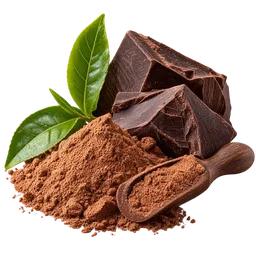
Epicatechin
Best for
Make arteries more flexible
Promising early signal 37.3–150 mg/day 1–4 weeks 3 studies, n=46 #8 of 45 studied
- 12 papers
- 1 of 44 outcomes
- 1 positive
Epicatechin shows a promising early signal for improved artery flexibility, while evidence across other outcomes remains too limited for confident claims about strength, performance, or body composition.
Median effective dose, most-studied outcomes
- Help your vessels widen with blood flow 50 mg 1 wk
- Increase everyday strength 80 mg 13 wk
Risk, worst reported severity
- Platelet count decreased
- Alkaline phosphatase decreased
- amiodarone moderate
- levodopa minor
What epicatechin actually does
| Outcome | Effect | Evidence | Dose | Time | Rank |
|---|---|---|---|---|---|
| Worth watching 1 | |||||
| Make arteries more flexible Promising early signal Flexible arteries help blood move smoothly and reduce strain on the heart. | | 2 RCTs 3 papers · n=46 | 37.3–150 mg | 1–4 wk | #8 /45 |
Effect tiers come from native-unit MCID where available, Cohen's d otherwise.
Dose, timing & forms
How much
For the clearest human signal, vascular studies used 50 to 150 mg orally, with 50 mg appearing as the median effective dose in the reviewed studies.1 One small strength-focused protocol used 80 mg daily for 13 weeks, but that result needs replication before it becomes a dependable performance target.2 Start with the amount used for the outcome you care about rather than assuming a larger dose works better.
When and how long
Vessel studies assessed effects shortly after dosing, so take it consistently and use the same timing if you are tracking how you feel during training or activity.1 The longer strength protocol treated epicatechin as a daily habit, not an occasional pre-workout product.2 There is not enough direct evidence to call morning, evening, fasted, or with-food use superior.
Forms & standardisation
Look for a supplement that names (-)-epicatechin and states the actual milligrams per serving. That matters because cocoa powders and broad cocoa extracts vary widely in flavanol content, and their label weight does not tell you the epicatechin dose.1 Pure epicatechin has the cleanest match to the small human protocols, while cocoa foods bring a wider mix of compounds.
Studied range, by outcome
| Outcome | Studied range | Median effective | Duration | Evidence |
|---|---|---|---|---|
| Help your vessels widen with blood flow | 50–150 mg | 50 mg | 1 wk | 2 papers 2 sig. endpoints |
| Increase everyday strength | 80 mg | 80 mg | 13 wk | 1 paper 4 sig. endpoints |
Adverse events and drug interactions
Safety events
Drug interactions
What this is and how it works
- Across 3 studies (n=46), epicatechin improved artery-flexibility measures; no numeric effect or noticeable-change threshold was reported.1
- Twelve papers reviewed here span 44 outcomes, with the clearest signal involving vascular function rather than muscle performance.
- Human strength-related evidence remains too thin to support epicatechin as a go-to muscle supplement.2
Epicatechin is a plant compound called a flavanol. Cocoa is its best-known food source, although tea and some fruits contain it too.1 Supplements isolate or concentrate this single compound rather than delivering the full mix found in cocoa foods.
Epicatechin appears to increase nitric oxide signaling in the vessel lining. Think of nitric oxide as the green-light signal that tells the smooth muscle around a blood vessel to loosen, giving blood more room to move when flow increases.1 Early human research also sparked interest in muscle-growth signaling, but that finding still needs stronger real-world strength and training evidence.2
Bottom line
Epicatechin is worth watching if your main interest is vascular function, especially if you want an isolated cocoa flavanol rather than a general cocoa supplement. The artery-flexibility signal is promising but early, and the strength evidence is too thin to make it a go-to muscle supplement.12 Skip the hype if you expect dramatic performance or body-composition changes.
Co-studied with
- Drug:Simvastatin11 shared · d=1.30
Common questions
What is epicatechin used for?
Is epicatechin the same as cocoa extract?
How long does epicatechin take to work?
Does epicatechin build muscle?
Sources
Sources
Generated August 27, 2026
Related
More evidence for Epicatechin
Evidence map
Metabolic health
NewMetabolic health: evidence map across 82 supplements
Evidence coverage map
Jul 30, 2026
Ingredient evidence
Ingredient evidence
NewArginine
All scored outcomes
Aug 27, 2026
Ingredient evidence
Ingredient evidence
NewArginine Silicate Inositol
All scored outcomes
Aug 27, 2026
Ingredient evidence
Ingredient evidence
NewBeet nitrate
All scored outcomes
Aug 27, 2026
Ingredient evidence
Ingredient evidence
NewCitrulline
All scored outcomes
Aug 27, 2026
Ingredient evidence
Ingredient evidence
NewCocoa / Cacao
All scored outcomes
Aug 27, 2026