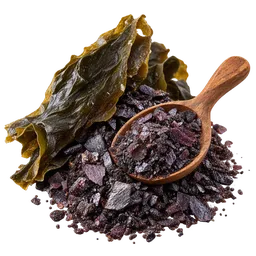
Iodine
Best for
Healthy thyroid function in pregnancy
Likely benefit 150–250 mcg/day 4–26 weeks 2 meta-analyses, n=6.3k #1 of 8 studied
- 21 papers
- 3 of 28 outcomes
- 1 positive
- 3 severe, 9 major interactions
Iodine likely benefits maternal and fetal thyroid needs during pregnancy, while routine supplementation does not provide a general thyroid-marker boost across other outcomes.
Median effective dose, most-studied outcomes
- Bring thyroid levels into range 225 mcg 26 wk
- Bring thyroid size closer to normal 225 mcg 26–52 wk
Risk, worst reported severity
- thyrotoxicosis severe
- pulmonary oedema severe
- amiodarone major
- aliskiren major
What iodine actually does
| Outcome | Effect | Evidence | Dose | Time | Rank |
|---|---|---|---|---|---|
| Clear benefits 1 | |||||
| Healthy thyroid function in pregnancy Likely benefit During pregnancy, the thyroid makes hormones that regulate metabolism and support fetal development. | | 2 meta-analyses 9 papers · n=6.3k | 150–250 mcg | 4–26 wk | #1 /8 |
| Early research 1 | |||||
| Shrink an enlarged thyroid Not enough research A goiter is an enlarged thyroid gland that can cause neck swelling or pressure. | | 3 meta-analyses 5 papers · n=480 | 35–350 mcg | 26–52 wk | — |
| Doesn't appear to help 1 | |||||
| Improve thyroid function Probably doesn't help Thyroid hormones help regulate energy use, body temperature, heart rate, and digestion. | | 2 meta-analyses 7 papers · n=5.5k | 150–250 mcg | 26 wk | — |
Effect tiers come from native-unit MCID where available, Cohen's d otherwise.
Dose, timing & forms
How much
The clearest use is pregnancy support, where studies and clinical guidance center on 150 to 250 mcg daily of supplemental iodine as part of meeting higher total needs.3 Research on thyroid size and thyroid blood tests used doses from 35 to 250 mcg daily over many months, but these results were limited, and routine supplementation did not meaningfully improve thyroid markers overall.1
When and how long
Use iodine consistently rather than occasionally, because thyroid hormone production depends on a steady supply of the mineral.1 Prenatal protocols generally build iodine into a once-daily prenatal routine, so taking it with a meal is a simple way to make the habit stick.3 Do not use high-dose iodine on your own to chase a thyroid test result.1
Forms & standardisation
Studied range, by outcome
| Outcome | Studied range | Median effective | Duration | Evidence |
|---|---|---|---|---|
| Bring thyroid levels into range | 150–250 mcg | 225 mcg | 26 wk | 7 papers 1 sig. endpoint |
| Bring thyroid size closer to normal | 35–225 mcg | 225 mcg | 26–52 wk | 5 papers 1 sig. endpoint |
Adverse events and drug interactions
Safety events
Drug interactions
Recommended Iodine products
Real products that dose Iodine where the research does, in a clean formulation, from brands we've audited. We only list ones we'd stand behind.
-

NOW
Kelp
Well dosed 150 mcg/day B formulaBrand audit 87/100
-

Nature's Way
Bladderwrack Whole Thallus 580 mg
Well dosed 232 mcg/day B formulaBrand audit 72/100
-

Nature's Way
Kelp Whole Thallus 600 mg
Well dosed 270 mcg/day A formulaBrand audit 72/100
-

Puritan's Pride
Sea Kelp with 200 mcg of Iodine
Well dosed 200 mcg/day C formulaBrand audit 68/100
-

XYMOGEN
InSea2
Well dosed 150 mcg/day C formulaBrand audit 80/100
-

Protocol For Life Balance
ProtoMeal Natural Chocolate Flavor
Well dosed 150 mcg/day A formulaBrand audit 86/100
Chosen for adequate Iodine dosing vs. the studied range, a clean formulation (grade A–C), and independent brand-quality audits. Not sponsored.
What this is and how it works
- Nine studies (n=6,283) reported positive maternal and fetal thyroid-related endpoints, without a pooled effect size or MCID comparison.1
- The reviewed evidence spans 21 papers and 28 outcomes, with strongest support concentrated in pregnancy-related needs.
- Routine supplementation can disrupt thyroid function when iodine intake becomes excessive, especially during pregnancy.3
Iodine is a mineral found in iodized salt, seafood, dairy foods, and some prenatal supplements. Your body cannot make it, so your intake depends on food and supplements.1
Your thyroid pulls iodine from the bloodstream to build thyroid hormones, the body's chemical pace-setters for growth and energy use.1 Think of iodine as the ink in a thermostat's instruction manual. Without enough ink, the thyroid cannot write clear hormone signals for the body to follow.1 During pregnancy, those signals matter for both the mother's rising thyroid needs and early fetal development.3
Bottom line
Iodine makes the most sense for people planning pregnancy, pregnant people, and anyone whose clinician identifies low intake. It is not a general thyroid tune-up. The reviewed evidence does not show a meaningful thyroid-marker benefit from routine supplementation, and too much iodine can push thyroid function in the wrong direction.13
Co-studied with
 Iron12 shared
· d=0.29
Iron12 shared
· d=0.29 Vitaminb912 shared
· d=0.29
Vitaminb912 shared
· d=0.29 Hibiscus4 shared
· d=0.47
Hibiscus4 shared
· d=0.47 Calcium1 shared
· d=0.42
Calcium1 shared
· d=0.42- Phosphorus1 shared · d=0.42
 Potassium1 shared
· d=0.42
Potassium1 shared
· d=0.42 Magnesium1 shared
· d=0.42
Magnesium1 shared
· d=0.42 Fattyacids1 shared
· d=0.42
Fattyacids1 shared
· d=0.42
Common questions
Why is iodine especially important during pregnancy?
Should everyone take an iodine supplement?
What form of iodine should I look for in a prenatal?
Sources
Sources
Generated August 27, 2026