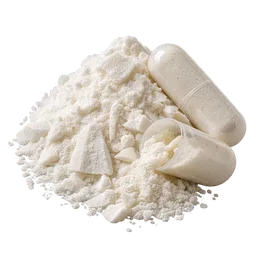
Palmitoylethanolamide
Best for
Ease neuropathy symptoms
Large effect, needs confirmation 400–1200 mg/day 4–12 weeks 5 studies, n=221 #1 of 12 studied
- 18 papers
- 4 of 54 outcomes
- 4 positive
- 1 severe
Palmitoylethanolamide provides a proven benefit for persistent pain in adults, with the strongest evidence showing more pain-free time; evidence across other outcomes is less established.
Median effective dose, most-studied outcomes
- Feel less intense pain 1,050 mg 4–12 wk
- Ease neuropathic pain 1,200 mg 4–8 wk
- Ease neuropathy symptoms 600 mg 8 wk
Risk, worst reported severity
- fatigue (severe episode) severe
- palpitations moderate
- morphine moderate
- acetaminophen moderate
What palmitoylethanolamide actually does
Neuropathy can cause pain, numbness, tingling, weakness, and changes in sensation. 36057884 · 39766143 · 28299455 +2
| Outcome | Effect | Evidence | Dose | Time | Rank |
|---|---|---|---|---|---|
| Clear benefits 1 | |||||
| Feel less pain Proven benefit Pain relief can make it easier to move, rest, focus, and get through the day. | | 2 meta-analyses 4 papers · n=1.4k | 300–1800 mg | 4–12 wk | #4 /50 |
| Worth watching 3 | |||||
| Ease neuropathy symptoms Large effect, needs confirmation Neuropathy can cause pain, numbness, tingling, weakness, and changes in sensation. | | 5 RCTs 5 papers · n=221 | 400–1200 mg | 4–12 wk | #1 /12 |
| Lower systemic inflammation Large effect, needs confirmation The immune system can drive body-wide inflammation that affects long-term health and how people feel day to day. | | 3 RCTs 3 papers · n=202 | 150–600 mg | 0–8 wk | — |
| Ease neuropathic pain Promising early signal Neuropathic pain comes from damaged or irritated nerves and can feel burning, shooting, or electric. | | 2 RCTs 2 papers · n=94 | 600–1200 mg | 4–8 wk | #1 /5 |
Effect tiers come from native-unit MCID where available, Cohen's d otherwise.
Dose, timing & forms
How much
For general pain, trials span 300 to 1,800 mg daily, with many protocols landing near 1,200 mg daily and running for roughly 4 to 12 weeks. 1 Nerve-pain studies most often use 600 to 1,200 mg daily, while early neuropathy studies also include lower daily intakes around 400 to 800 mg. 2 Start with the product label and do not chase the highest study dose without clinician input, particularly if you use pain medicine.
When and how long
PEA works as a daily routine, not as a fast, take-it-only-when-it-hurts option. Studies generally evaluate steady oral use over weeks, so pick a time you can repeat every day. 1 2 If your daily serving is split on the label, dividing it across morning and evening can make the habit easier to sustain. Trial reports do not establish one universally superior time of day or a required relationship to meals. 1 2
Forms & standardisation
Look for oral PEA that clearly lists the amount of palmitoylethanolamide per serving. Micronized and ultramicronized PEA are common forms designed to make this poorly water-soluble fat-like compound easier for the body to absorb, and these forms feature prominently in pain research. 1 2 A sublingual product can include sorbitol, which has caused stomach upset or diarrhea in some users, so check the inactive ingredients as well.
Studied range, by outcome
| Outcome | Studied range | Median effective | Duration | Evidence |
|---|---|---|---|---|
| Feel less intense pain | 300–1,800 mg | 1,050 mg | 4–12 wk | 4 papers 10 sig. endpoints |
| Ease neuropathic pain | 600–1,200 mg | 1,200 mg | 4–8 wk | 2 papers 9 sig. endpoints |
| Ease neuropathy symptoms | 400–800 mg | 600 mg | 8 wk | 2 papers 3 sig. endpoints |
| Support lower whole-body inflammation | 600 mg | 600 mg | 8 wk | 1 paper 1 sig. endpoint |
Adverse events and drug interactions
Safety events
Drug interactions
Recommended Palmitoylethanolamide products
Real products that dose Palmitoylethanolamide where the research does, in a clean formulation, from brands we've audited. We only list ones we'd stand behind.
-

SuperSmart
P-E-A 1200 mg
Well dosed 1,200 mg/day A formulaBrand audit 63/100
-

Wellness Resources
PEA Ultra
Well dosed 600 mg/day B formula -

X Gold Health
PEA
Well dosed 1,260 mg/day A formula -

Enzyme Science
(PEA)+
Well dosed 600 mg/day A formula -

Moss Nutrition
PEA Luteolin Select
Well dosed 600 mg/day A formula -

NFH
Pain Relief SAP
Well dosed 600 mg/day B formula
Chosen for adequate Palmitoylethanolamide dosing vs. the studied range, a clean formulation (grade A–C), and independent brand-quality audits. Not sponsored.
What this is and how it works
- Across 4 studies (n=1,399), palmitoylethanolamide increased time free from pain; effect size and MCID comparison were not reported 1.
- The reviewed evidence spans 18 papers and 54 outcomes, with strongest support for chronic pain relief.
- Neuropathic-pain benefits remain encouraging but rest on limited evidence from early studies 2.
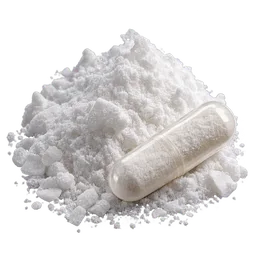
Palmitoylethanolamide, usually shortened to PEA, is a fat-like molecule found naturally in your body and in small amounts in foods such as egg yolk and peanuts. It is not a cannabis product, even though it sits near some of the same pain-signaling biology. Researchers study supplemental PEA mainly for persistent pain and nerve-related discomfort. 3
PEA activates PPAR-alpha, a protein that acts like a thermostat for inflammatory signaling, turning down some of the chemical noise that keeps pain-sensing tissues on high alert. It also influences immune cells called mast cells and glial cells, which can amplify pain signals when they stay activated too long. 3
Bottom line
PEA is a reasonable option for an adult looking for additional support with persistent general pain, with moderate evidence that it reduces pain intensity. 1 Its nerve-pain results look encouraging, including some large early effects, but the evidence remains too limited for a sure thing. 2 Skip self-experimenting if you take prescription pain medicines or have had palpitations, hives, severe fatigue, or unusual drowsiness, and get clinician guidance first.
Co-studied with


Common questions
What is palmitoylethanolamide used for?
How long does palmitoylethanolamide take to work?
Is palmitoylethanolamide the same as CBD?
Can you take palmitoylethanolamide with pain medicine?
Sources
Sources
Generated August 27, 2026
Related
More evidence for Palmitoylethanolamide
Ranking
Colds and Upper Respiratory Infections
NewThe 7 Supplements That Actually Help You Catch Fewer Colds
Evidence ranking
Apr 4, 2026
Ranking
Migraines and Headaches
NewBest Supplements for Migraines and Headaches, Ranked by Clinical Evidence
Evidence ranking
Apr 4, 2026
Ranking
Peripheral Neuropathy
NewBest Supplements to Ease Neuropathy Pain and Numbness (2026)
Evidence ranking
Apr 4, 2026
Evidence map
Peripheral Neuropathy
NewPeripheral Neuropathy: evidence map across 8 supplements
Evidence coverage map
Jul 30, 2026
Ingredient evidence
Ingredient evidence
NewAlpha Lipoic Acid
All scored outcomes
Aug 27, 2026
Ingredient evidence
Ingredient evidence
NewTetrahydrocannabinol
All scored outcomes
Aug 27, 2026