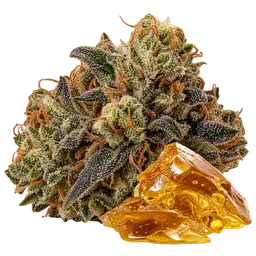
Tetrahydrocannabinol
Best for
Feel less pain
Large effect, needs confirmation 1.22–4.4 mg/day 8 weeks 2 meta-analyses, n=294 #8 of 50 studied
- 10 papers
- 5 of 23 outcomes
- 3 positive
Tetrahydrocannabinol offers likely real but unnoticeable neuropathy symptom relief, while evidence across other outcomes does not support meaningful improvements in sleep or chemotherapy-related nausea.
Median effective dose, most-studied outcomes
- Feel less intense pain 2.81 mg 8 wk
- Ease neuropathic pain 28 mg —
What tetrahydrocannabinol actually does
Neuropathy can cause pain, numbness, tingling, weakness, and changes in sensation. 41181607
Pain relief can make it easier to move, rest, focus, and get through the day. 33118602 · 40748522 · 41181607 +1
Neuropathic pain comes from damaged or irritated nerves and can feel burning, shooting, or electric. 25843054
Nausea, vomiting, and appetite loss can make it hard to eat and drink during chemotherapy. 40748522
Sleep quality reflects whether the night leaves you feeling well rested. 41181607
| Outcome | Effect | Evidence | Dose | Time | Rank |
|---|---|---|---|---|---|
| Modest benefits 1 | |||||
| Ease neuropathy symptoms Likely real but unnoticeable Neuropathy can cause pain, numbness, tingling, weakness, and changes in sensation. | | 1 meta-analysis 1 papers · n=2.5k | — | — | #8 /12 |
| Worth watching 2 | |||||
| Feel less pain Large effect, needs confirmation Pain relief can make it easier to move, rest, focus, and get through the day. | | 2 meta-analyses 4 papers · n=294 | 1.22–4.4 mg | 8 wk | #8 /50 |
| Ease neuropathic pain Large effect, needs confirmation Neuropathic pain comes from damaged or irritated nerves and can feel burning, shooting, or electric. | | 1 RCT 1 papers · n=16 | 16–28 mg | — | #2 /5 |
| Doesn't appear to help 2 | |||||
| Less nausea and vomiting with chemotherapy Probably doesn't help Nausea, vomiting, and appetite loss can make it hard to eat and drink during chemotherapy. | | 1 meta-analysis 1 papers · n=1.0k | — | — | — |
| Sleep that feels more restorative Probably doesn't help Sleep quality reflects whether the night leaves you feeling well rested. | | 1 meta-analysis 1 papers · n=2.5k | — | — | — |
Effect tiers come from native-unit MCID where available, Cohen's d otherwise.
Dose, timing & forms
How much
For general pain, small measured sublingual THC doses of 1.22 to 4.4 mg were studied over 8 weeks, with a median effective dose near 2.81 mg. 1 Nerve-pain research used substantially higher doses, 16 to 28 mg, but that finding comes from one early study and needs replication before it becomes a standard target. 2 Start only under guidance from a clinician familiar with cannabinoid products, since THC effects can become unpleasant well before a dose feels useful.
When and how long
Pain protocols used THC as a scheduled daily treatment over weeks, not as an occasional response to a bad day. 1 Sublingual products generally act faster than swallowed products, while oral doses have a slower and less predictable onset, so changing routes can change both the experience and the dose that feels tolerable. 1 Avoid driving, alcohol, and tasks that require quick reactions after taking THC.
Forms & standardisation
The most informative pain evidence comes from measured, labeled cannabinoid medicines and sublingual preparations, not from smoked cannabis or loosely dosed edibles. 1 Look for THC listed in milligrams per dose and a clear product type. Do not assume a product that also contains cannabidiol, often shortened to CBD, produces the same effects as THC alone, because combination products complicate the evidence. 1
Studied range, by outcome
| Outcome | Studied range | Median effective | Duration | Evidence |
|---|---|---|---|---|
| Feel less intense pain | 1.22–4.4 mg | 2.81 mg | 8 wk | 4 papers 2 sig. endpoints |
| Ease neuropathic pain | 16–28 mg | 28 mg | — | 1 paper 6 sig. endpoints |
What this is and how it works
- One study (n=2,471) reported positive neuropathy symptom outcomes, but no numerical effect or noticeable-change threshold was provided.1
- The review covered 10 papers spanning 23 outcomes, including chronic neuropathic pain, sleep, and chemotherapy-related nausea.
- Evidence for neuropathy relief remains early, with findings varying by product, dose, and patient population.
Tetrahydrocannabinol, usually called THC, is the cannabis plant compound responsible for the familiar intoxicating high. It comes in measured pharmaceutical-style oils, sprays, capsules, and sublingual products, as well as less predictable consumer cannabis products. Research on pain often examines THC alongside other cannabis compounds, which makes product labels and exact doses especially important. 1 2
THC switches on cannabinoid type 1 receptors, the signal controls found on many nerve cells in the brain and spinal cord. Think of those receptors as a volume dial on an overactive alarm wire: activating them can turn down incoming pain messages before the brain interprets them as urgent. 1
Bottom line
THC is worth discussing with a clinician if pain, especially nerve-related pain, has not responded to simpler options and you can use a measured product cautiously. The pain signal is promising but still early, and the evidence does not support using THC for better restorative sleep or delayed chemotherapy nausea. 1 3 4 Avoid self-directed use if intoxication, impaired coordination, or anxiety-like reactions would create a meaningful safety risk.
Common questions
Does THC help with pain?
Does THC improve sleep quality?
What is the best way to take THC for pain?
Sources
Sources
- 1. Cannabinoids for Medical Use: A Systematic Review and Meta-analysis (2015) ↑
- 2. Cannabis-based medicines for chronic neuropathic pain in adults (2018) ↑
- 3. Cannabinoids for nausea and vomiting in adults with cancer receiving chemotherapy (2015) ↑
- 4. Cannabis, Cannabinoids, and Sleep: a Review of the Literature (2021) ↑
Generated August 27, 2026
Related
More evidence for Tetrahydrocannabinol
Ranking
Peripheral Neuropathy
NewBest Supplements to Ease Neuropathy Pain and Numbness (2026)
Evidence ranking
Apr 4, 2026
Evidence map
Peripheral Neuropathy
NewPeripheral Neuropathy: evidence map across 8 supplements
Evidence coverage map
Jul 30, 2026
Evidence map
Sleep
NewSleep: evidence map across 37 supplements
Evidence coverage map
Jul 30, 2026
Evidence map
Stress
NewStress: evidence map across 46 supplements
Evidence coverage map
Jul 30, 2026
Ingredient evidence
Ingredient evidence
NewBoswellia
All scored outcomes
Aug 27, 2026
Ingredient evidence
Ingredient evidence
NewBromelain
All scored outcomes
Aug 27, 2026