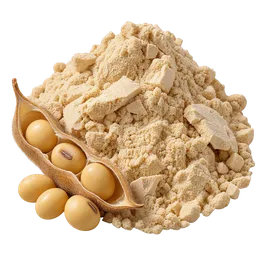
Soy Protein
Best for
Get stronger
Proven strong benefit 1.5–80 g/day 1 weeks 1 meta-analysis, n=5.3k #2 of 41 studied
- 7 papers
- 5 of 20 outcomes
- 3 positive
Soy protein provides a proven strong benefit for resistance-trained adults, supporting meaningful gains in muscle strength and muscle size when paired with regular training.
Risk, worst reported severity
- dry skin mild
What soy protein actually does
Strength helps your muscles produce more force for lifting, carrying, and daily movement. 33726784 · 38612975
More muscle can support strength, movement, and the physical changes you train for. 38612975
Recovery helps your body feel ready for the next training session after hard exercise. 33726784
Weight loss means carrying less total body weight over time. 21677076
| Outcome | Effect | Evidence | Dose | Time | Rank |
|---|---|---|---|---|---|
| Strong benefits 2 | |||||
| Get stronger Proven strong benefit Strength helps your muscles produce more force for lifting, carrying, and daily movement. | | 1 meta-analysis 2 papers · n=5.3k | 1.5–80 g | 1 wk | #2 /41 |
| Build more muscle Likely strong benefit More muscle can support strength, movement, and the physical changes you train for. | | 1 meta-analysis 1 papers · n=5.3k | 10–80 g | — | #5 /37 |
| Modest benefits 1 | |||||
| Lower cholesterol Proven but unnoticeable High LDL cholesterol can build up in artery walls and raise the risk of heart disease. | | 2 meta-analyses 2 papers · n=1.7k | — | — | — |
| Early research 2 | |||||
| Recover better after exercise Not enough research Recovery helps your body feel ready for the next training session after hard exercise. | | 1 RCT 1 papers · n=— | 1.5 g/kg | 1 wk | — |
| Lose weight Not enough research Weight loss means carrying less total body weight over time. | | 1 RCT 1 papers · n=— | — | 23 wk | — |
Effect tiers come from native-unit MCID where available, Cohen's d otherwise.
Dose, timing & forms
How much
For muscle gain, trials span 10 to 80 g/day of soy protein, with about 45 g/day sitting near the middle of effective protocols. That wide range reflects different body sizes, diets, and training plans, so use soy protein to close the gap between what you eat and the protein your training demands rather than chasing the highest dose.1 The reviewed strength protocol used 1.5 g/kg/day, but that is a research intake, not a universal target for a protein powder.1
When and how long
Think daily consistency, not perfect clock timing. Resistance-training research pairs soy protein with regular workouts over weeks, because the training stimulus and repeated protein intake work together.1 A shake is practical after training or whenever a meal falls short on protein, but the evidence does not establish a narrow post-workout deadline for soy.1
Forms & standardisation
Soy protein isolate has the clearest supplement-style trial coverage because it delivers a concentrated amount of protein with little extra carbohydrate or fat.1 Look for the grams of protein per serving on the label, not a flashy proprietary blend. Soy concentrate and whole soy foods still contribute protein, but their serving sizes and nutrient mix differ from isolate.1
Studied range, by outcome
| Outcome | Studied range | Median effective | Duration | Evidence |
|---|---|---|---|---|
| Increase everyday strength | 1.5 g/kg | — | 1 wk | 2 papers |
| Build muscle size | 10–80 g | 45 g | — | 1 paper 1 sig. endpoint |
| Restore strength after exercise | 1.5 g/kg | — | 1 wk | 1 paper |
Adverse events and drug interactions
Safety events
Recommended Soy Protein products
Real products that dose Soy Protein where the research does, in a clean formulation, from brands we've audited. We only list ones we'd stand behind.
-

NutraBio
Soy Protein
Well dosed 86.1 Gram(s)/day A formulaBrand audit 90/100
-

Greens Today
Soy Protein Formula
Well dosed 54,000 mg/day B formula
Chosen for adequate Soy Protein dosing vs. the studied range, a clean formulation (grade A–C), and independent brand-quality audits. Not sponsored.
What this is and how it works
- Across 2 studies (n=5,272), soy protein supplementation improved strength outcomes in resistance-trained adults.1
- Seven papers reviewed here spanned 20 outcomes, with strongest evidence for strength and muscle preservation.
- Benefits reflect soy protein combined with resistance exercise, not a dramatic standalone effect.
Soy protein comes from soybeans after manufacturers remove much of the bean's fat and carbohydrate. Powders commonly use soy protein isolate or concentrate, while tofu, tempeh, and soy milk provide soy protein as foods with different amounts per serving.1
After digestion, soy supplies amino acids that act like a delivery truck unloading bricks at a renovation site, giving exercised muscle the raw materials it uses to rebuild. Resistance exercise provides the renovation signal, while protein intake supplies the materials, which explains why the strongest results appear in training programs rather than from protein alone.1
Bottom line
Soy protein is a solid option if you lift, want a plant-based protein source, and need an easy way to raise daily protein intake. Expect its biggest value to come from supporting consistent training and nutrition, not from a dramatic standalone effect. Choose it for muscle support, not for a noticeable cholesterol change.12
Common questions
Is soy protein good for building muscle?
Is soy protein as effective as other proteins for strength training?
Does soy protein lower cholesterol?
When should you take soy protein?
Sources
Sources
Generated August 27, 2026
Related
More evidence for Soy Protein
Evidence map
Metabolic health
NewMetabolic health: evidence map across 82 supplements
Evidence coverage map
Jul 30, 2026
Ingredient evidence
Ingredient evidence
NewArginine
All scored outcomes
Aug 27, 2026
Ingredient evidence
Ingredient evidence
NewAshwagandha
All scored outcomes
Aug 27, 2026
Ingredient evidence
Ingredient evidence
NewBCAAs (Branched-Chain Amino Acids)
All scored outcomes
Aug 27, 2026
Ingredient evidence
Ingredient evidence
NewBetaine
All scored outcomes
Aug 27, 2026
Ingredient evidence
Ingredient evidence
NewCreatine
All scored outcomes
Aug 27, 2026