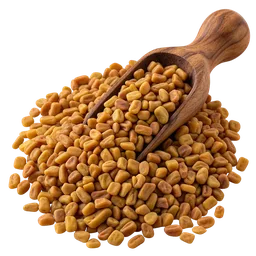
Fenugreek
Best for
Avoid sharp blood sugar rises after meals
Proven strong benefit 4–156 weeks 4 meta-analyses, n=1.6k #2 of 42 studied
- 24 papers
- 7 of 69 outcomes
- 5 positive
- 2 severe
Fenugreek delivers a proven strong benefit for after-meal blood-sugar control, with additional evidence supporting lower harmful cholesterol across studied adults and supplement formulations.
Median effective dose, most-studied outcomes
- Lower your fasting blood sugar 12.625 g 1–156 wk
- Lower LDL cholesterol 5,012.5 mg 1–156 wk
- Lower total cholesterol 25 mg 1–156 wk
Risk, worst reported severity
- abortion severe
- bowel obstruction severe
- glimepiride moderate
- blood glucose lowering moderate
What fenugreek actually does
Insulin sensitivity describes how well the body responds to insulin to move sugar out of the blood. 26436069 · 29518003 · 37762302 +4
Sexual desire and arousal can make intimacy feel more wanted and engaging. 39288153
| Outcome | Effect | Evidence | Dose | Time | Rank |
|---|---|---|---|---|---|
| Strong benefits 2 | |||||
| Avoid sharp blood sugar rises after meals Proven strong benefit Blood sugar normally rises after eating, but a smaller rise can make levels easier to manage. | | 4 meta-analyses 6 papers · n=1.6k | — | 4–156 wk | #2 /42 |
| Lower cholesterol Likely strong benefit High LDL cholesterol can build up in artery walls and raise the risk of heart disease. | | 1 meta-analysis 8 papers · n=594 | — | 1–156 wk | #10 /97 |
| Clear benefits 1 | |||||
| Keep blood sugar steadier Proven benefit Steadier blood sugar can help avoid highs and lows that affect how you feel. | | 4 meta-analyses 13 papers · n=3.1k | — | 1–156 wk | #1 /86 |
| Worth watching 2 | |||||
| Raise testosterone levels in men Large effect, needs confirmation Testosterone levels in men are tied to sex drive, erections, muscle mass, and energy. | | 3 RCTs 5 papers · n=342 | 300–1800 mg | 8–12 wk | #3 /12 |
| Feel fuller and curb cravings Large effect, needs confirmation Appetite control can help eating feel more manageable when hunger or cravings get in the way. | | 1 RCT 2 papers · n=31 | 3000–24000 mg | 1 wk | #3 /44 |
| Early research 2 | |||||
| Improve insulin sensitivity Early data, direction unclear Insulin sensitivity describes how well the body responds to insulin to move sugar out of the blood. | | 2 meta-analyses 7 papers · n=353 | 0.5–30 g | 1–156 wk | — |
| Feel more sexual desire Not enough research Sexual desire and arousal can make intimacy feel more wanted and engaging. | | 1 RCT 1 papers · n=— | 600–1800 mg | 12 wk | — |
Effect tiers come from native-unit MCID where available, Cohen's d otherwise.
Dose, timing & forms
How much
Blood sugar is where fenugreek has its best support. Trials span an unusually wide range, from 0.5 g to 100 g daily, with many effective protocols clustering around roughly 12 to 15 g per day of seed-based preparations over about 12 weeks. 1 LDL studies also vary widely, but commonly land around 5 g daily and run for roughly 10 weeks. 2 Do not assume a small extract capsule equals a multi-gram seed preparation.
When and how long
For glucose support, take fenugreek consistently with meals, especially meals that contain substantial carbohydrates. That matches the evidence that it works in the gut during digestion and helps blunt the post-meal rise, rather than acting like an occasional rescue supplement. 13 Give a protocol time. Most glucose and cholesterol trials tracked outcomes over weeks, not days. 12
Forms & standardisation
Whole seed, seed powder, and food-like seed preparations have the strongest coverage for glucose outcomes. 1 If you choose an extract for men's hormonal goals, look for the exact branded or standardized extract used in the research, because those results do not automatically transfer to culinary seeds or generic capsules. 4 Fiber-rich powders can cause more stomach symptoms than lower-volume extracts. 5
Studied range, by outcome
| Outcome | Studied range | Median effective | Duration | Evidence |
|---|---|---|---|---|
| Lower your fasting blood sugar | — | 12.625 g | 1–156 wk | 13 papers 6 sig. endpoints |
| Lower LDL cholesterol | — | 5,012.5 mg | 1–156 wk | 8 papers 2 sig. endpoints |
| Lower total cholesterol | — | 25 mg | 1–156 wk | 8 papers 1 sig. endpoint |
| Lower average blood sugar | 0.5–30 g | 12.625 g | 4–26 wk | 7 papers 6 sig. endpoints |
| Limit after-meal glucose rises | — | 15.25 g | 4–156 wk | 6 papers 3 sig. endpoints |
| Support healthy testosterone in men | 300–1,800 mg | 400 mg | 8–12 wk | 5 papers 6 sig. endpoints |
| Help cells use insulin better | 1,005–10,000 mg | 3,000 mg | 1–156 wk | 4 papers 1 sig. endpoint |
| Stay fuller between meals | 24,000 mg | 24,000 mg | — | 1 paper 4 sig. endpoints |
| Feel more sexual desire | 600–1,800 mg | — | 12 wk | 1 paper |
Adverse events and drug interactions
Safety events
Drug interactions
Recommended Fenugreek products
Real products that dose Fenugreek where the research does, in a clean formulation, from brands we've audited. We only list ones we'd stand behind.
-

Swanson
Fenugreek Extract 500 mg
Well dosed 500 mg/day A formulaBrand audit 69/100
-

Swanson
Fenugreek Extract 300 mg
Well dosed 600 mg/day A formulaBrand audit 69/100
-

21st Century
Fenugreek 610 mg
Well dosed 610 mg/day A formulaBrand audit 77/100
-

NOW
Libido Fem
Well dosed 600 mg/day C formulaBrand audit 87/100
-

Protocol For Life Balance
Fem Libido
Well dosed 600 mg/day C formulaBrand audit 86/100
-

XYMOGEN
MedCaps IS
Well dosed 300 mg/day B formulaBrand audit 80/100
Chosen for adequate Fenugreek dosing vs. the studied range, a clean formulation (grade A–C), and independent brand-quality audits. Not sponsored.
What this is and how it works
- Six studies involving 1,608 participants found fenugreek improved after-meal glucose responses across nine endpoints.1
- Twenty-four papers reviewed here span 69 outcomes, including glucose, cholesterol, hormones, appetite, and physical performance.
- Eight studies involving 594 participants reported improved lipid profiles, strengthening the case for LDL support.2
Fenugreek comes from the seeds of Trigonella foenum-graecum, a plant used in cooking and traditional medicine across parts of Asia, the Mediterranean, and North Africa. You will see it as whole seeds, powder, tea, or concentrated extracts. 5
Its seed fiber turns part of a meal into something closer to slow-release fuel, thickening the contents of the gut and slowing how quickly carbohydrates reach the bloodstream. 1 Fenugreek also contains 4-hydroxyisoleucine, a seed compound that increases insulin release when glucose is present, like a doorbell that rings louder only when someone is actually at the door. 3
Bottom line
Fenugreek is a sensible option if your priority is steadier glucose after meals, fasting glucose, or LDL support and you can tolerate a seed-based product. 12 Skip self-experimenting if you are pregnant, have bowel obstruction, or use glucose-lowering or blood-thinning medication without medical guidance. Its testosterone and appetite findings are interesting, but they are not its best-established reasons to buy it. 4
Common questions
Does fenugreek lower blood sugar?
Can fenugreek lower cholesterol?
What is the best form of fenugreek for blood sugar?
Does fenugreek increase testosterone?
Sources
Sources
- 1. Effect of fenugreek intake on glycemia: a meta-analysis of clinical trials (2014) ↑
- 2. The effect of fenugreek supplementation on lipid profiles: a systematic review and meta-analysis of randomized controlled trials (2016) ↑
- 3. 4-Hydroxyisoleucine: a novel amino acid potentiator of insulin secretion (1998) ↑
- 4. The effects of a commercially available botanical supplement on strength, body composition, power output, and hormonal profiles in resistance-trained males (2016) ↑
- 5. Fenugreek
Generated August 27, 2026
Related
More evidence for Fenugreek
Evidence guide
Fenugreek (Trigonella foenum-graecum)
NewThe Maple-Syrup Mystery Seed: How Fenugreek Travels from Ancient Kitchens to Modern Metabolism
Evidence guide
May 3, 2026
Ranking
Period Cramps (Primary Dysmenorrhea)
NewBest Supplements for Period Cramps, Ranked by Clinical Evidence
Evidence ranking
Apr 4, 2026
Ranking
Blood Sugar Control
NewBest Supplements for Blood Sugar, Ranked by Clinical Evidence
Evidence ranking
Apr 4, 2026
Evidence map
Metabolic health
NewMetabolic health: evidence map across 82 supplements
Evidence coverage map
Jul 30, 2026
Ingredient evidence
Ingredient evidence
NewAsian Psyllium
All scored outcomes
Aug 27, 2026
Ingredient evidence
Ingredient evidence
NewBarley
All scored outcomes
Aug 27, 2026