New Fenugreek (Trigonella foenum-graecum) Published May 3, 2026
The Maple-Syrup Mystery Seed: How Fenugreek Travels from Ancient Kitchens to Modern Metabolism
Better blood sugar control, increased milk production for nursing mothers, modest strength gains
Evidence summary
Fenugreek is an ancient seed whose clearest modern signal is modest improvement in blood-sugar control overall in type 2 diabetes.
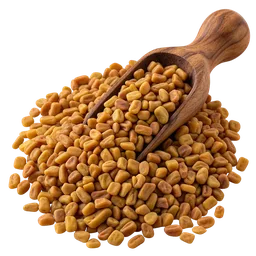
One autumn night in New York City, a sweet pancake smell rolled over Manhattan. For four years, it returned like a ghost. The culprit wasn't a bakery at all—it was a New Jersey factory processing fenugreek, a humble seed whose aroma molecule, sotolon, can perfume an entire borough and even your sweat. That same seed has threaded its way from ancient Egyptian remedies to clinical trials on blood sugar, milk supply, and men's strength. What else could it be hiding? 89
A seed with a passport
Open a spice drawer in Delhi, Cairo, or Marseille and fenugreek will likely be there—methi in India, hulba in Arabic, once listed among Egyptian remedies as far back as the Ebers Papyrus. In living rooms today, it shows up as tea, capsules, or the bitter-sweet note in a curry. History set the stage; science stepped in with measurements. 2627
When the sweet smell confuses medicine
The maple scent is more than a party trick. It comes from sotolon, a potent molecule that drifts from fenugreek into sweat and urine. In newborn units, that smell can trigger alarm: a rare genetic disease called maple syrup urine disease (MSUD) is diagnosed partly by odor. Doctors now know that a mother's fenugreek can mimic the scent—one case report described infants suspected of MSUD after maternal ingestion during labor. In other words, a kitchen spice briefly fooled a genetic diagnosis. 310
The sugar story: gels, switches, and signals
You eat, blood sugar rises, and fenugreek goes to work in two very different ways—one in the gut, one at the pancreas.
In the gut, fenugreek's soluble fiber (galactomannan) makes a thick gel that slows how quickly sugars slip through the intestinal wall—think of traffic calming on a busy street. Human and lab studies show this sticky fiber can blunt the post-meal glucose surge. 1314
At the pancreas, a rare amino acid inside fenugreek called 4-hydroxyisoleucine acts like a respectful doorman: it only encourages insulin release when glucose is high, helping beta cells respond without pushing when it's not needed. Early work in human islets and animal models mapped this glucose-dependent "nudge." 1112
Zoom out to what matters: meta-analyses of randomized trials suggest fenugreek can reduce fasting glucose and HbA1c, and modestly improve cholesterol, especially in type 2 diabetes. That's not folklore—that's pooled clinical data. 12315
"Galactagogues should not be considered as first-line therapy because current research.. is relatively inconclusive." —American College of Obstetricians and Gynecologists (ACOG), 2021. 6
Milk, myths, and measured outcomes
Ask any lactation forum and you'll hear stories:
"It filled my breasts overnight." Qualitative research captures mothers describing fullness within hours. Small trials and a network meta-analysis report increased milk volume with fenugreek teas in the first postpartum week, while a modern safety trial of a popular galactagogue tea (that included fenugreek) found no adverse infant effects. But professional guidance remains cautious: fix latch and feeding frequency first; consider herbs second. 1545256
"Insufficient evidence; likely a significant placebo effect." —Academy of Breastfeeding Medicine, Protocol #9 (on fenugreek). 7
The tension is real: lived experience vs. the spreadsheet. A network meta-analysis suggests benefit, yet guidelines warn against skipping fundamentals. Both can be true. 56
Strength and the bittersweet edge
Another modern twist: fenugreek extracts marketed to men. Several randomized trials—often with proprietary extracts—report improved strength, body composition, or symptom scores over 8–12 weeks, though testosterone changes are inconsistent and effects vary by product and study quality. A systematic review tallies gains in some trials but calls for better methods. Translation: interesting, not definitive. 17181920
Lipids: polishing the metabolic panel
Beyond sugar, fenugreek appears to lightly polish the lipid profile—lowering triglycerides and LDL and nudging HDL up. Part of this may come from diosgenin, a saponin that seems to dial down the liver's fat-making machinery in preclinical models, while clinical meta-analyses show small but meaningful changes. Picture it as asking the liver to spend less on "fat construction." 1516
How people actually use it (and what to watch)
If you're chasing steadier glucose, many trials used ground seed or standardized extracts for 8–12 weeks—long enough to move HbA1c. If you're exploring lactation, mothers often try teas or capsules for a week while simultaneously increasing effective milk removal (more feeds, better latch). For performance, most studies pair daily extracts with structured training over 8 weeks. In all cases, the product matters: fenugreek isn't a single chemical, and extract potency varies. Look for third-party testing when possible. 12517
And the quirks: the maple aroma is common; loose stools can happen; a few case reports link fenugreek to warfarin potentiation; and as a legume relative, it can cross-react with peanut/soy allergies. Treat it like you would a powerful kitchen tool—respect and attention, not fear. 212223
The open questions
- Can we pinpoint who benefits most (e.g., insulin-resistant phenotypes) and match them to dose and form? 12
- Could 4-hydroxyisoleucine—or improved analogs—become glucose-savvy therapeutics? 1112
- Will standardized, transparency-tested extracts finally harmonize the mixed results in lactation and performance? 517
Coda: the seed that fooled a city
From ancient scrolls to an aroma that briefly puzzled an entire metropolis, fenugreek keeps collapsing the distance between culture and clinic. Its sweetness can masquerade as disease; its fibers and rare amino acids may subtly steady modern metabolism. Use it thoughtfully, pair it with fundamentals—diet, movement, milk removal when nursing—and remember: sometimes the spice cabinet holds both a story and a strategy. 816
Key takeaways
What to walk away with
- 01
Fenugreek's signature maple scent comes from sotolon, which can even perfume sweat and urine—and occasionally confuse diagnoses tied to odor.
- 02
Promising human data suggests fenugreek lowers fasting glucose and HbA1c and can improve some lipids in type 2 diabetes.
- 03
For lactation, small trials and a network meta-analysis point to increased early postpartum milk volume, though guidance remains cautious about galactagogues as first-line therapy.
- 04
Mechanisms include 4-hydroxyisoleucine–stimulated insulin release when glucose is high and galactomannan fiber slowing carbohydrate absorption.
- 05
Practical use: 5–25 g/day seed or standardized extracts for glycemic support (8–12 weeks); short-term teas/capsules alongside effective milk removal for lactation; 300–600 mg/day extracts with training for performance.
- 06
Cautions: expect maple-syrup body odor; start low to reduce GI upset; monitor glucose if on insulin/sulfonylureas; discuss anticoagulants due to rare INR reports.
Effect timeline
When to expect what
- Immediate
- Within 24–72 hours for lactation reports; no immediate metabolic change.
- Peak
- Glycemic/lipid changes typically evident by 8–12 weeks; lactation effects often within first week; strength outcomes around 8 weeks.
- Duration needed
- 8–12 weeks for metabolic outcomes; 1–2 weeks trial alongside optimized feeding for lactation; 8 weeks with training for performance.
- Wears off
- Lactation effects fade within days after stopping if milk removal isn't maintained; metabolic changes diminish over 2–4 weeks off supplementation.
Research trajectory
What the studies actually show
-
Meta-analyses of randomized trials show fenugreek lowers fasting glucose and HbA1c and improves some lipids in type 2 diabetes. 1
Across 10–19 trials, pooled effects favored fenugreek for glycemia; lipids improved modestly.
Supports cautious clinical use alongside standard care.
-
Network meta-analysis and small RCTs suggest fenugreek can increase early postpartum milk volume, though guidance remains cautious. 5
Tea and capsule studies reported more milk; professional bodies still emphasize latch/frequency first.
Explains the popularity and the debate.
-
4-hydroxyisoleucine from fenugreek stimulates insulin release only when glucose is high; galactomannan fiber slows glucose absorption. 11
Human islet/animal experiments mapped the insulin "nudge"; fiber studies showed post-meal blunting.
Mechanisms align with clinical outcomes and safety profile.
-
Fenugreek extracts in resistance-trained men improved strength/body composition in several RCTs; testosterone effects are mixed. 17
Proprietary extracts plus training over 8–12 weeks showed gains; a review urges better standardization.
Promising for athletes with tempered expectations.
-
Meta-analysis indicates small improvements in triglycerides, LDL, and HDL; diosgenin may dampen hepatic lipogenesis. 15
Human pooled data align with preclinical work showing diosgenin turning down fat-making programs.
Adds a cardiovascular angle to the glycemic story.
Human trials
What real trials found
-
Neonates with maple-syrup-like odor after mothers ingested fenugreek during labor, triggering false suspicion of MSUD. 10
- Outcome
- Odor traced to fenugreek's sotolon; infants not affected by MSUD.
- Why it matters
- Shows how cultural practices can intersect with clinical signs and cause diagnostic confusion.
- Source
- Journal of Paediatrics and Child Health case report (2001).
-
Randomized trial of a fenugreek-containing herbal tea in first postpartum week. 4
- Outcome
- Earlier regain of birth weight and reduced maximal weight loss in infants of the fenugreek-tea group.
- Why it matters
- Illustrates measured, short-term lactation benefits in a real-world setting.
- Source
- Clinical trial in early postpartum mothers (2011).
-
Warfarin patient experienced elevated INR while taking boldo–fenugreek; normalized after stopping, recurred on re-challenge. 21
- Outcome
- Probable herb–drug interaction identified.
- Why it matters
- Highlights a safety consideration for people on anticoagulants.
- Source
- Pharmacotherapy case report (2001).
Expert insights
Voices in the field
Galactagogues should not be considered as first-line therapy because current research is relatively inconclusive. 6
Insufficient evidence; likely a significant placebo effect. 7
Practical guidance
Putting it to use
Who may benefit
People with type 2 diabetes seeking small, adjunctive improvements in glucose/lipids; postpartum mothers exploring short-term galactagogue support after optimizing latch and frequency; recreational athletes pairing training with a standardized extract.
Who should avoid
Known allergy to legumes such as peanut/soy or prior fenugreek reactions; those on warfarin or similar anticoagulants without medical supervision; individuals prone to hypoglycemia on glucose-lowering drugs.
Dosing
For glycemic support, studies used 5–25 g/day of ground seed in food or standardized extracts for 8–12 weeks; start low to gauge tolerance. For lactation, short trials used teas or capsules for about a week while increasing effective milk removal. For performance, standardized extracts (300–600 mg/day) paired with structured training for 8 weeks.
Timing
Take with meals if using seed/meal to leverage the 'gel' that tames post-meal glucose. If training, dose consistently (morning or pre-workout) to build a habit; for lactation, align tea/capsule use with frequent, effective feeding or pumping.
Quality
Choose products with third-party testing (USP/NSF/ConsumerLab) and transparent standardization (e.g., % 4-hydroxyisoleucine or saponins). Potency varies widely across brands.
Cautions
Expect a maple-syrup body odor. Start low to reduce GI upset. If you use insulin/sulfonylureas, monitor glucose as needs may shift. Discuss anticoagulants with your clinician due to rare case reports of increased INR.
A closing thought
Fenugreek blurs lines we like to keep tidy—kitchen and clinic, culture and chemistry. Its fragrance can trick a diagnosis, yet its fibers and rare amino acids quietly support modern metabolic goals. Used with discernment, it's less a miracle and more a bridge: from what our grandparents simmered to what our labs now measure.
Frequently asked
Common questions
What forms and doses are used for blood sugar support?
Can fenugreek actually increase milk supply?
What side effects should I expect?
Who should be especially careful using fenugreek?
How should athletes use it for performance goals?
Related
More on this supplement
Pulled from across the site — rankings, comparisons, combinations, and reviews where this supplement shows up.
Ingredient evidence
Ingredient evidence
NewFenugreek
All scored outcomes
Aug 27, 2026
Ranking
Period Cramps (Primary Dysmenorrhea)
NewBest Supplements for Period Cramps, Ranked by Clinical Evidence
Evidence ranking
Apr 4, 2026
Ranking
Blood Sugar Control
NewBest Supplements for Blood Sugar, Ranked by Clinical Evidence
Evidence ranking
Apr 4, 2026
Evidence map
Metabolic health
NewMetabolic health: evidence map across 82 supplements
Evidence coverage map
Jul 30, 2026
Sources
- 1. The Effect of Fenugreek in Type 2 Diabetes and Prediabetes: Systematic Review and Meta-Analysis of RCTs (2023)
- 2. Therapeutic effect of fenugreek supplementation on type 2 diabetes mellitus: systematic review & meta-analysis (2024)
- 3. Effect of fenugreek intake on glycemia: meta-analysis of clinical trials (2014)
- 4. The effect of galactagogue herbal tea on breast milk production and infant weight in first week (2011)
- 5. Effectiveness of fenugreek as a galactagogue: a network meta-analysis (2017)
- 6. Breastfeeding Challenges (ACOG Committee Opinion) (2021)
- 7. ABM Clinical Protocol #9 (2011): Use of Galactogogues (2011)
- 8. Meet the Molecule That Smells Like Pancakes (sotolon/NYC investigation) (2024)
- 9. Fenugreek and Sotalone (McGill Office for Science & Society) (2021)
- 10. Pseudo–maple syrup urine disease due to maternal prenatal ingestion of fenugreek (2001)
- 11. 4-Hydroxyisoleucine: a novel amino acid potentiator of insulin secretion (1998)
- 12. 4-Hydroxyisoleucine: experimental evidence of insulinotropic/antidiabetic properties (1999)
- 13. Galactomannan from fenugreek inhibits intestinal glucose uptake (rat ex vivo) (2009)
- 14. Fenugreek lowers postprandial glucose in overweight/obese adults (2014)
- 15. Effect of fenugreek on serum lipids: systematic review & meta-analysis (2020)
- 16. Diosgenin inhibits hepatic lipogenesis and lowers triglycerides (2010)
- 17. Fenugreek and muscle performance: systematic review (2022)
- 18. Fenu-FG randomized controlled study during resistance training (2016)
- 19. Testofen randomized trial with calisthenics (8 weeks) (2020)
- 20. Fenugreek seed extract and men's psychological/physical health (RCT) (2020)
- 21. Potential interaction between warfarin and boldo-fenugreek (case report) (2001)
- 22. Allergenicity and antigenicity of fenugreek proteins; cross-reactivity with peanut (2008)
- 23. Fenugreek anaphylaxis in a pediatric patient (2018)
- 24. Which benefits and harms of using fenugreek as a galactagogue need discussion? (Delphi) (2018)
- 25. Safety of a fenugreek-containing Mother's Milk tea (randomized, double-blind) (2019)
- 26. Revisiting Trigonella foenum-graecum L.: Pharmacology and traditional uses (2022)
- 27. Ebers Papyrus (historical reference to fenugreek) (2022)
1,112 words · 27 sources · Fenugreek (Trigonella foenum-graecum)