Astaxanthin
Best for
Firmer-looking skin
Likely benefit 2–12 mg/day 8 weeks 1 meta-analysis, n=221 #3 of 7 studied
- 36 papers
- 2 of 115 outcomes
- 1 positive
- 3 severe, 2 major interactions
Astaxanthin likely benefits skin firmness, with the clearest human evidence supporting a moderate elasticity improvement after consistent use over roughly two months.
Median effective dose, most-studied outcomes
- Support overall antioxidant capacity 8 mg 1–13 wk
- Ease screen-related eye strain 9 mg 6 wk
- Raise the sunburn threshold 4 mg 9 wk
Risk, worst reported severity
- ecchymosis (bleeding/bruising) severe
- elevated INR (INR 10.38) severe
- warfarin major
- valproic acid moderate
What astaxanthin actually does
Skin firmness shapes how taut and resilient the skin looks and feels. 34578794
Facial wrinkles are lines and creases that become more visible as skin changes over time. 34578794
| Outcome | Effect | Evidence | Dose | Time | Rank |
|---|---|---|---|---|---|
| Clear benefits 1 | |||||
| Firmer-looking skin Likely benefit Skin firmness shapes how taut and resilient the skin looks and feels. | | 1 meta-analysis 1 papers · n=221 | 2–12 mg | 8 wk | #3 /7 |
| Early research 1 | |||||
| Less noticeable facial wrinkles Not enough research Facial wrinkles are lines and creases that become more visible as skin changes over time. | | 1 meta-analysis 1 papers · n=162 | 2–12 mg | 8 wk | — |
Effect tiers come from native-unit MCID where available, Cohen's d otherwise.
Dose, timing & forms
How much
For skin elasticity, the useful trial range runs from 2 to 12 mg daily, with results assessed after about eight weeks of consistent use. 1 For broader antioxidant-capacity outcomes, studies span roughly 4 to 28 mg daily, though the middle of that range is more typical than the highest dose. 2 Eye-strain research used a fixed daily protocol for six weeks, but it remains a one-study finding rather than a reason to chase higher doses. 3
When and how long
Take astaxanthin every day and give it time. The skin trial measured results at eight weeks, while the visual-display study ran for six weeks, so this is not a supplement built for a same-day effect. 13 Take it with a meal that includes fat, such as eggs, yogurt, olive oil, nuts, or a regular mixed meal, because carotenoids absorb alongside dietary fat.
Forms & standardisation
Look for algae-derived astaxanthin from Haematococcus pluvialis. That is the source most commonly used in human supplement trials, including skin research. 12 Labels sometimes list an esterified natural form, which reflects how algae naturally package the pigment. More milligrams or a louder antioxidant claim does not automatically mean better skin results.
Studied range, by outcome
| Outcome | Studied range | Median effective | Duration | Evidence |
|---|---|---|---|---|
| Support overall antioxidant capacity | 4–28 mg | 8 mg | 1–13 wk | 7 papers 3 sig. endpoints |
| Ease screen-related eye strain | 9 mg | 9 mg | 6 wk | 1 paper 1 sig. endpoint |
| Soften facial wrinkles | 2–12 mg | — | 8 wk | 1 paper |
| Raise the sunburn threshold | 4 mg | 4 mg | 9 wk | 1 paper 1 sig. endpoint |
| Help skin spring back | 2–12 mg | 7 mg | 8 wk | 1 paper 1 sig. endpoint |
Adverse events and drug interactions
Safety events
Drug interactions
Recommended Astaxanthin products
Real products that dose Astaxanthin where the research does, in a clean formulation, from brands we've audited. We only list ones we'd stand behind.
-

Allergy Research Group
Astaxanthin 6 mg
Well dosed 6 mg/day A formulaBrand audit 83/100
-

Allergy Research Group
Astaxanthin 12 mg
Well dosed 12 mg/day A formulaBrand audit 83/100
-

Doctor's Best
Best Astaxanthin
Well dosed 6 mg/day A formulaBrand audit 82/100
-

Doctor's Best
Astaxanthin
Well dosed 6 mg/day A formulaBrand audit 82/100
-

Jarrow Formulas
Astaxanthin 12 mg
Well dosed 12 mg/day A formulaBrand audit 81/100
-

Nature Made
Astaxanthin 4 mg
Well dosed 4 mg/day A formulaBrand audit 80/100
Chosen for adequate Astaxanthin dosing vs. the studied range, a clean formulation (grade A–C), and independent brand-quality audits. Not sponsored.
What this is and how it works
- Across 1 study (n=221), astaxanthin improved skin firmness; the numerical effect and noticeable-change threshold were not provided. 1
- The reviewed evidence spans 36 papers and 115 outcomes, with skin firmness representing the strongest consumer-facing result.
- Skin-firming evidence rests on one randomized controlled study, while wrinkle reduction and screen-eye relief remain less certain.
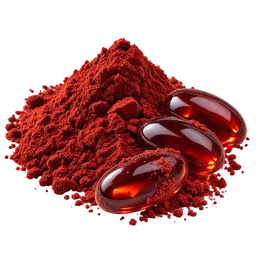
Astaxanthin is a red-orange carotenoid, a natural pigment made by tiny algae and passed up the food chain to salmon, trout, krill, and flamingos. Supplements usually use algae-derived astaxanthin, which offers a concentrated dose without asking you to eat seafood every day.
Astaxanthin sits across the fatty outer wall of a cell like a seatbelt stretched from one side to the other, where it helps intercept unstable molecules that can damage membrane fats. Human supplementation studies recorded lower markers of oxidative stress and inflammation, biological wear-and-tear signals that can affect skin and other tissues. 2
Bottom line
Astaxanthin makes the most sense if you want a skin-focused supplement and will use it consistently for about two months. The evidence supports a moderate elasticity benefit, but wrinkle reduction and screen-eye relief need more research before they deserve the same confidence. 13 Skip self-starting it if you use warfarin or another medicine that affects bleeding, and get clinician guidance first.
Co-studied with
Common questions
How long does astaxanthin take to work for skin?
Does astaxanthin help with screen-related eye strain?
Should you take astaxanthin with food?
Sources
Sources
- 1. The effect of astaxanthin on skin: A randomized, double-blind, placebo-controlled study (2012) ↑
- 2. Astaxanthin decreased oxidative stress and inflammation and enhanced immune response in humans (2010) ↑
- 3. Effects of astaxanthin on accommodation, critical flicker fusion, and pattern visual evoked potential in visual display terminal users (2009) ↑
Generated August 27, 2026
Related
More evidence for Astaxanthin
Evidence guide
Astaxanthin
NewFrom Blue Lobsters to Sun-Safer Skin: How a Sea Pigment Became a Modern Health Tool
Evidence guide
May 4, 2026
Ranking
Skin Hydration
NewBest Supplements for Skin Hydration, Ranked by Clinical Evidence
Evidence ranking
Apr 4, 2026
Ingredient evidence
Ingredient evidence
NewBilberry
All scored outcomes
Aug 27, 2026
Ingredient evidence
Ingredient evidence
NewLutein
All scored outcomes
Aug 27, 2026
Ingredient evidence
Ingredient evidence
NewCollagen
All scored outcomes
Aug 27, 2026
Ingredient evidence
Ingredient evidence
NewHyaluronic Acid
All scored outcomes
Aug 27, 2026