New Methylsulfonylmethane (MSM) Published May 4, 2026
From Solvent's Shadow to Sunday Long Runs: The Quiet Rise of MSM
Less joint stiffness, reduced exercise soreness, clearer breathing during allergy season, and firmer skin over time
Evidence summary
MSM's clearest benefit is modest knee osteoarthritis symptom relief in adults, with the strongest evidence coming from short oral trials and weaker signals elsewhere.
- Across two knee osteoarthritis studies, MSM reduced pain and improved function over 12 weeks 1.
- Oral MSM trials mostly studied knee osteoarthritis, with some combination-formula designs and short treatment windows.
- Allergy and exercise findings were smaller; half-marathon data did not change muscle damage markers.
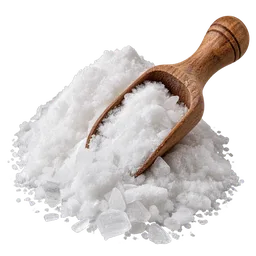
A solvent changed the way surgeons preserved organs—and in its wake, an odorless offshoot quietly slipped into runners' bottles and arthritis pill organizers.
The sulfur that wouldn't shout
If you were around the Oregon labs in the 1960s, you'd have seen physicians puzzling over dimethyl sulfoxide (DMSO): a wood-pulp solvent that slid through skin like water through silk. The headlines were loud, the controversies louder. But in DMSO's shadow was a gentler oxidized relative—methylsulfonylmethane, or MSM—odorless, better tolerated, and destined for supplement aisles rather than operating rooms. Chemist Robert Herschler and surgeon Stanley Jacob explored this quieter molecule, wondering if some of DMSO's promise arrived via its metabolite, DMSO2—MSM. Jacob would later champion it unabashedly. "I really believe there is nothing out there..that compares to DMSO and its metabolite DMSO2," he said in a patient forum—history's enthusiasm on the record even if modern proof would take its time. 11
What does MSM actually do?
Strip away the acronyms and MSM's story is about cooling a biological fire and shoring up cellular defenses. Laboratory and early human data suggest it helps dial down the body's alarm signals for inflammation and tempers the sparks of oxidative stress—the kind of chemical "rust" that builds after heavy use or injury. Think of it less as a fire extinguisher and more as a fire marshal: reducing the number of alarms pulled while making sure responders show up where needed. A 2017 scientific review translates the gist: MSM seems to reduce the production of pro-inflammatory messengers and support the body's antioxidant systems; the exact levers are still being mapped. 9
Knees, miles, and the difference between statistics and mornings
For joint pain, the most careful trials read like small but steady steps. In a double-blind study of older adults with knee osteoarthritis, 12 weeks of MSM led to improvements in pain and physical function—the authors called them "small," and candidly questioned whether they met the bar for clinical significance. 2 An earlier pilot trial using 3 grams twice daily also found reduced pain and better daily function over four weeks, again without major side effects. 3 Pair MSM with glucosamine and the plot thickens: in a 118-person trial, each helped on its own, but together they trimmed pain and swelling more than either alone, with benefits accruing over 12 weeks. 4 That combo echoes what many people try in real life—stacking gentler tools to move the needle rather than expecting a single, dramatic fix. Outside the clinic, endurance athletes have chased a different outcome: finishing a long race and actually wanting stairs the next day. In a randomized trial around the Portland Half-Marathon, runners who preloaded MSM for three weeks didn't budge laboratory markers of muscle damage, yet they reported clinically meaningful reductions in muscle and joint soreness after the race. Translation: MSM didn't change the bloodwork, but the body felt the difference. 5
Allergies and the surprising nose story
MSM's most unexpected detour might be through spring pollen. In an open-label, multi-center trial of people with seasonal allergic rhinitis, 2.6 g/day improved upper and lower respiratory symptoms within a week and boosted self-reported energy by week two. 6 Later, a randomized exploratory study used a standardized allergen challenge and found daily MSM—especially at 3 g/day—reduced congestion, sneezing, and itchy, watery eyes while objectively opening nasal airflow. The authors' summation was plain: MSM "provided significant relief of allergic rhinitis symptoms..without the occurrence of adverse events." 7
Skin, from the inside out
The skin tale is as much architecture as chemistry. Keratin—the scaffolding of hair, skin, and nails—leans on sulfur. In a 16-week, placebo-controlled trial, oral MSM (1–3 g/day) reduced facial wrinkle count and severity and improved skin firmness, elasticity, and hydration; the lower dose often sufficed. 8 No miracles—just an incremental refurbishing that matched the timeframe of collagen turnover rather than the rhetoric of overnight fixes.
A measured chorus of experts
Government scientists are frank: "Very little research has been done on DMSO and MSM, so it's uncertain whether they're helpful for OA symptoms." 1 Clinicians writing up the 12-week knee trial were equally careful: "These improvements, however, are small and it is yet to be determined if they are of clinical significance." 2 And yet, the allergy team's language—"significant relief..without adverse events"—reminds us that different tissues may tell different stories. 7
Safety, quality, and the long game
On safety, MSM reached a regulatory milestone: the U.S. FDA issued a "no questions" letter to its Generally Recognized as Safe (GRAS) notice, allowing it in certain foods—an endorsement of safety, not of medical efficacy. 10 MedlinePlus, which synthesizes the Natural Medicines database, currently rates MSM as "possibly effective" for osteoarthritis symptom relief and "possibly safe" for up to six months by mouth, with occasional GI upset. 12 Because supplements live outside drug-level standardization, purity matters. Look for brands that publish third-party testing or use standardized raw materials. MSM's benefits appear to build with steady use—more crockpot than microwave—so consistency over weeks is key in trials that showed effects. For joints and skin, change typically emerged by 8–12 weeks; for seasonal allergies, the earliest signals appeared within 7–14 days. 23468
Why might it work across such different fronts?
Inflammation and oxidative stress are not single switches—they are traffic systems. In joints, they amplify pain; in muscles, they color how tissues recover from strain; in nasal passages, they swell shut like over-zealous bouncers at the door. MSM appears to down the overall volume and help the system respond proportionally, rather than with a blanket overreaction. That coherence—one mechanism, many tissues—isn't proof, but it's a plausible through-line supported by a growing, still modest body of trials. 95
Practical ways readers are using it
For knee osteoarthritis: 2–3.4 g/day, divided, for at least 12 weeks, sometimes paired with glucosamine to nudge effect size. 2412
For endurance training: preload 3 g/day for 2–3 weeks before an event to target perceived soreness, not lab markers. 5
For seasonal allergies: 2.6–3 g/day for 2–4 weeks spanning peak allergen exposure. 67
For skin appearance: 1–3 g/day for 12–16 weeks. 8
Two cautions specific to MSM are worth noting. First, topical MSM used alone in people with chronic venous insufficiency has worsened leg swelling in reports—avoid that route if you have vein disease. 12 Second, if you take anticoagulants (like warfarin), discuss MSM with your clinician because of potential interactions flagged by clinical references. 12
Where the story goes next
The frontier now is precision—who benefits most, at what dose, and through which immune and repair pathways. Newer work is probing MSM's effects on post-exercise immune signaling and muscle repair dynamics, hinting that even lower daily doses might fine-tune recovery genes without blunting healthy training adaptations. 59 History gave MSM a dramatic origin story. Evidence has given it something subtler: a place at the table when the goal is to feel a little better, move a little easier, and let physiology heat without burning. That may be quiet work—but for many, quiet is exactly the point.
1: NCCIH, Osteoarthritis: In Depth—section on DMSO and MSM.
2: 12-week randomized trial of MSM for knee osteoarthritis (BMC Complement Altern Med, 2011).
3: 4-week pilot randomized trial of MSM for knee osteoarthritis (2006).
4: Randomized trial of glucosamine, MSM, and the combination (2007).
5: Half-marathon randomized trial assessing soreness and oxidative stress (JISSN, 2017).
6: Open-label, multicenter seasonal allergy trial (2002).
7: Randomized exploratory allergen-challenge study (JMIR Res Protoc, 2018).
8: Double-blind trial of oral MSM for skin aging (2020).
9: 2017 review of MSM mechanisms and safety (Nutrients).
10: FDA GRAS letter for MSM (GRN 229).
11: Stanley Jacob, M.D., IC Network transcript (2000).
12: MedlinePlus MSM monograph (effectiveness and safety).
Key takeaways
What to walk away with
- 01
MSM emerged from DMSO's controversial history as an odorless, better-tolerated metabolite, shifting from operating rooms to supplement aisles.
- 02
Evidence for joints is modest: 12-week trials show small pain/function improvements in knee OA, with stronger signals when combined with glucosamine.
- 03
For athletes, preloading (~3 g/day for ~3 weeks) didn't change damage markers after a race but did reduce perceived soreness.
- 04
Allergy support appears sooner: about 1–2 weeks during exposure, with studies using roughly 2.6–3 g/day for 2–4 weeks.
- 05
Skin benefits are gradual; most joint/skin studies ran 8–16 weeks at 1–3.4 g/day—treat it like training: consistent, daily use.
- 06
Cautions include avoiding topical MSM alone in chronic venous insufficiency and consulting a clinician if on anticoagulants such as warfarin.
Effect timeline
When to expect what
- Immediate
- Within days (nasal symptoms in allergy studies)
- Peak
- 8–12 weeks for joints/skin; ~2–3 weeks for training soreness
- Duration needed
- 8–12 weeks minimum for musculoskeletal/skin uses; 2–4 weeks during allergy season
- Wears off
- Likely within weeks after stopping, based on trial durations and symptom recurrence (inference from studies)
Research trajectory
What the studies actually show
-
MSM modestly reduces pain and improves function in knee osteoarthritis over 12 weeks. 2
Randomized, double-blind trial in older adults; benefits were small and authors questioned clinical significance.
Suggests a role as an adjunct, not a standalone fix for OA symptoms.
-
Combining MSM with glucosamine enhances symptom relief vs either alone. 4
118-person trial compared glucosamine, MSM, combo, and placebo across 12 weeks.
Points to synergy in multimodal joint support.
-
Preloading MSM did not change muscle damage markers after a race but reduced perceived soreness. 5
Half-marathon randomized trial tracked oxidative stress, enzymes, and pain ratings.
Highlights MSM's impact on how recovery feels, even when labs don't move.
-
MSM improved seasonal allergy symptoms within 1–2 weeks and increased nasal airflow in challenge testing. 6
Open-label multicenter study followed by randomized exploratory allergen-challenge work.
Expands MSM's relevance beyond joints to mucosal comfort during pollen season.
-
Oral MSM (1–3 g/day) reduced facial wrinkle severity and improved firmness and hydration over 16 weeks. 8
Double-blind, placebo-controlled trial with expert grading and instrumentation.
Suggests a slow-build effect on skin architecture consistent with keratin/collagen timelines.
Human trials
What real trials found
-
Knee osteoarthritis participants (mean age 68) taking ~3.4 g/day MSM for 12 weeks had small but measurable improvements in pain and function vs placebo. 2
- Outcome
- Benefits were statistically significant but modest; authors questioned clinical significance.
- Why it matters
- Sets realistic expectations for joint symptom relief over 3 months.
- Source
- BMC Complementary and Alternative Medicine randomized trial, 2011
-
Fifty adults with seasonal allergic rhinitis took 2.6 g/day MSM for 30 days. 6
- Outcome
- Upper respiratory symptoms improved by day 7; energy improved by day 14; no major lab changes.
- Why it matters
- Illustrates faster-onset symptom relief in allergy season.
- Source
- Journal of Alternative & Complementary Medicine open-label trial, 2002
-
Half-marathon runners preloaded 3 g/day MSM for 3 weeks. 5
- Outcome
- Clinically meaningful reductions in post-race muscle and joint soreness without changes in damage markers.
- Why it matters
- Unexpected application for perceived recovery after endurance efforts.
- Source
- Journal of the International Society of Sports Nutrition randomized trial, 2017
Expert insights
Voices in the field
"Very little research has been done on DMSO and MSM, so it's uncertain whether they're helpful for OA symptoms." 1
"These improvements, however, are small and it is yet to be determined if they are of clinical significance." 2
"...nothing out there...that compares to DMSO and its metabolite DMSO2." 11
"The MSM study product provided significant relief of allergic rhinitis symptoms...without the occurrence of adverse events." 7
Practical guidance
Putting it to use
Who may benefit
People with knee osteoarthritis seeking incremental pain/function relief; endurance athletes targeting perceived post-event soreness; seasonal allergy sufferers wanting a gentler adjunct; adults interested in gradual skin texture support.
Who should avoid
Topical MSM alone in chronic venous insufficiency; use caution and medical oversight if on warfarin or other anticoagulants.
Dosing
Most joint and skin studies used 1–3.4 g/day for 8–16 weeks; athletes preloaded 3 g/day for ~3 weeks; allergy studies used 2.6–3 g/day for 2–4 weeks.
Timing
Treat it like training: daily, not sporadic. Expect joints/skin to change by 2–3 months; allergies may respond within 1–2 weeks during exposure.
Quality
Choose products with third-party testing and consistent raw material sourcing; purity matters more than exotic blends.
Cautions
Avoid topical MSM alone if you have chronic venous insufficiency (reports of worsened swelling). If you take anticoagulants like warfarin, consult your clinician due to potential interaction signals in clinical references.
A closing thought
MSM's lesson is restraint: sometimes the right tool doesn't silence alarms—it teaches a noisy system to respond proportionally. In medicine, that kind of quiet competence often wins the long race.
Frequently asked
Common questions
What dose of MSM aligns with the evidence for joints, allergies, or race recovery?
How strong is the evidence for MSM in osteoarthritis?
When will I notice effects—and for how long should I take it?
Does MSM interact with medications like warfarin?
What side effects or cautions should I know about?
Can MSM help skin firmness or texture?
Related
More on this supplement
Pulled from across the site — rankings, comparisons, combinations, and reviews where this supplement shows up.
Sources
- 1. Osteoarthritis: In Depth (section on DMSO and MSM) (2017)
- 2. Efficacy of methylsulfonylmethane supplementation on osteoarthritis of the knee: a randomized controlled study (2011)
- 3. Efficacy of methylsulfonylmethane (MSM) in osteoarthritis pain of the knee: a pilot clinical trial (2006)
- 4. Randomised, Double-Blind, Parallel, Placebo-Controlled Study of Oral Glucosamine, MSM, and their Combination in Osteoarthritis (2007)
- 5. Effects of MSM on exercise-induced oxidative stress, muscle damage, and pain following a half-marathon (2017)
- 6. A Multicentered, Open-Label Trial on MSM in Seasonal Allergic Rhinitis (2002)
- 7. Evaluating the Impacts of MSM on Allergic Rhinitis After a Standard Allergen Challenge: Randomized Double-Blind Exploratory Study (2018)
- 8. Beauty from within: Oral MSM improves signs of skin ageing (2020)
- 9. Methylsulfonylmethane: Applications and Safety of a Novel Dietary Supplement (2017)
- 10. FDA GRAS Notice GRN 229: Methylsulfonylmethane—FDA has no questions (2008)
- 11. Meet the Expert Transcript—Dr. Stanley Jacob on DMSO & MSM (2000)
- 12. MedlinePlus: Methylsulfonylmethane (MSM) (2025)
1,098 words · 12 sources · Methylsulfonylmethane (MSM)