New GABA (gamma-aminobutyric acid) Published Feb 25, 2026
The Quiet Button: How GABA Went From Lab Curiosity to A New Kind of Calm
Faster stress recovery, gentle blood pressure support, improved sleep quality
Evidence summary
Oral GABA is an emerging supplement for calmer stress responses and better sleep, with small human trials showing the most consistent benefits while broader blood-pressure and growth-hormone claims remain secondary.
- A 28 mg chocolate dose improved autonomic recovery after mental stress within 15 minutes 7.
- Trials include adults with mild hypertension, women with overweight, and healthy volunteers under acute stress testing.
- Evidence remains small and heterogeneous, so no single dose or outcome is firmly established.
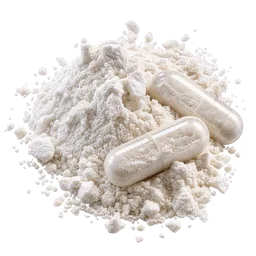
In 1950, a young biochemist named Eugene Roberts found an odd little molecule saturating the brain—GABA. At first, even giants of neuroscience doubted it was the language of inhibition. Decades later, you can buy it in gummies at the checkout line. Here's the paradox: the very messenger that tells brain cells to hush may not easily cross the brain's security gate. So why do some people feel calmer after swallowing it?125
The brain's quiet button
"GABA is the off switch of the brain," says neuropsychopharmacologist David Nutt—glutamate flips things on; GABA turns them down.3 Roberts's 1950 discovery launched a scientific detective story: from crustacean stretch receptors to mammalian synapses, researchers traced an inhibitory current that helped stabilize the nervous system's storm of signals.12 Yet the supplement story opens with a riddle. Reviews point out that oral GABA may not pass the blood–brain barricade efficiently. One mini-review put it plainly: evidence for benefits exists, but mechanisms remain uncertain, and some studies carry conflicts of interest. Any real effects might come from tiny amounts slipping through—or from signals traveling along the gut's own nervous system.5 A 2020 systematic review concluded there's "limited evidence for stress and very limited evidence for sleep benefits of oral GABA intake."4
A bridge, a heartbeat, and a quick shift
Consider a small, vivid experiment from Japan. Volunteers with fear of heights crossed a suspended bridge—hands sweating, hearts racing. Those given GABA showed a steadier pattern: brainwaves tilted toward relaxed alpha within an hour, and stress-sensitive salivary IgA dipped less than in placebo.6 It's a cinematic scene that hints at peripheral routes of action—calming the body's stress wiring first, with the mind following. A separate test used GABA-enriched chocolate (28 mg) before a timed arithmetic challenge. Fifteen minutes later, people who ate the chocolate recovered faster: their heart-rate variability—an index of resilience in the autonomic nervous system—normalized more quickly, and a stress marker in saliva didn't spike.7 That's the kind of near-term effect a busy reader might actually notice: not knockout sedation, but less "echo" after a stressful hit.
From the gut upward
Here the plot thickens. GABA isn't just a brain chemical; it's also a microbial message. Several Lactobacillus and Bifidobacterium strains manufacture it; your intestinal neurons listen and relay along the vagus nerve, a hard-wired hotline to the brainstem.1415 Recent overviews even argue GABA could act like a postbiotic mediator—a compound made by microbes that nudges mood and stress responsiveness via gut–brain circuits.14 In mice, a single oral GABA dose reduced short-term food intake only if timing matched a spike in vagal signaling—another clue that peripheral nerves, not brain entry, may be key.16
Blood pressure mornings and better nights
Japan embraced GABA as a food component long before wellness aisles did. In a randomized trial of a fermented milk naturally rich in GABA, mildly hypertensive adults saw meaningful systolic and diastolic drops within 2–4 weeks; the effect persisted through 12 weeks of daily intake.9 A later trial of GABA-enriched rice found morning blood pressure readings improved over several weeks versus placebo rice—small numbers, but real-world food, real home measurements.8 Sleep is trickier. The review evidence is mixed,4 but a recent randomized, double-blind study in sedentary women with overweight used 200 mg/day of GABA for 90 days alongside exercise. Compared with placebo, the GABA group reported better sleep efficiency and lower negative affect; heart-rate variability suggested a shift toward parasympathetic (rest-and-digest) tone.10 It reads like GABA smoothing the body's brake pedal more than sedating the mind.
The gym surprise
Then came an odd finding: 3 grams of GABA caused a sharp, transient rise in growth hormone at rest and amplified the post-exercise GH surge in resistance-trained men.12 A small 12-week trial later paired 100 mg of GABA with whey protein, reporting greater gains in fat-free mass versus protein alone, along with higher resting GH at midpoints.11 These are early signals, not guarantees of transformation—but they add a twist: GABA may influence recovery and composition via hormonal and autonomic routes, again without proving it floods the brain.
Outside the skull: immunity and inflammation
Immune cells carry GABA receptors. In animal models, oral GABA dampened inflammatory cascades without central side effects—precisely because it stays mostly outside the brain.13 It's an unexpected angle: the same molecule that quiets neuronal chatter may cool the immune conversation in the periphery.
What this means for you
If you're chasing a calmer edge before a stress-heavy meeting or exam, the acute studies used modest amounts—often 25–100 mg taken 15–60 minutes beforehand—and looked for faster recovery, not knockout calm.67
For cardiometabolic or sleep-adjacent aims, daily low-to-moderate intake over weeks—as in fermented foods or 200 mg capsules—has shown small but measurable improvements in specific groups, especially when paired with lifestyle steps like exercise and regular bedtimes.9810
If you experiment, treat GABA like a body-first signal: notice shifts in heart rhythm smoothness, muscle tension, or "after-stress echo," rather than expecting a sedative wallop. And if you use blood-pressure meds, monitor closely; GABA-fortified foods lowered BP in trials.9
The unresolved pieces
The mechanistic question remains open. As one review put it, we need tools like noninvasive magnetic resonance spectroscopy to test whether oral GABA nudges brain levels in humans—and better, independent trials to pin down who benefits and how.5 Meanwhile, transporter biology offers another narrative thread. As transporters recapture GABA from synapses, drugs or nutrients that alter that clearance can prolong inhibition. "By inhibiting the GABA transporter, GABA is staying around for longer," neurochemist Baruch Kanner explained in a historical reflection—why clinically targeted GABAergic drugs can be powerful, but also carry side effects.675
"GABA is the off switch of the brain." —David Nutt3
"Limited evidence for stress and very limited evidence for sleep benefits of oral GABA intake." —Hepsomali et al., 20204
Between those two statements lives today's truth: GABA undeniably runs the brain's brakes, but swallowing it seems to work best by talking to the body first—the gut, the heart, the vessels—then letting those signals rise.
Where the trail leads next
Expect studies that: (1) map gut-derived GABA to vagal firing and mood within hours, (2) compare fermented-food GABA with synthetic capsules head-to-head, and (3) test stacking with exercise, protein, or calming practices to see when small nudges add up. Roberts's "curious amino acid" has traveled from beef brains and crayfish nerves to bridge walks, chocolate squares, and gym floors. The mystery isn't solved—but the outline is clear enough to act with humility and curiosity.121415
Key takeaways
What to walk away with
- 01
GABA functions as the nervous system's primary "off switch," damping excitatory signals to stabilize brain activity.
- 02
Oral GABA may not cross the blood–brain barrier efficiently; benefits could stem from tiny amounts or peripheral/gut-brain signaling, so mechanisms remain uncertain.
- 03
Acute use: 25–100 mg taken 15–60 minutes before a stressor or bedtime has been studied for calmer autonomic recovery and settling pre-sleep arousal.
- 04
Ongoing use: 100–200 mg daily for several weeks appears in research on blood pressure and sleep quality (with exercise in one study).
- 05
Measured outcomes include faster autonomic recovery after mental stress, gentle reductions in mild hypertension over 12 weeks, and improved sleep efficiency and HRV over 90 days.
- 06
Cautions: may lower blood pressure and cause drowsiness; expect additive effects with other calming agents—dose and time accordingly.
Effect timeline
When to expect what
- Immediate
- Within 15–60 minutes (acute stress-recovery studies)
- Peak
- 2–8 weeks of daily use for BP/sleep-adjacent outcomes
- Duration needed
- 4–12 weeks for sustained effects; acute use as needed
- Wears off
- Likely within days to weeks after stopping (based on food trials and autonomic markers)
Research trajectory
What the studies actually show
-
Acute 28 mg GABA in chocolate improved autonomic recovery after mental stress within 15 minutes. 7
A lab-simulated office stressor with real-time HRV/salivary measures.
Supports quick, peripheral calming effects.
-
Fermented milk naturally containing GABA lowered blood pressure over 12 weeks in mild hypertension. 9
Single-blind RCT in Tokyo outpatients; effects by weeks 2–4.
Suggests diet-based GABA can influence vascular tone.
-
200 mg/day GABA for 90 days improved sleep efficiency and HRV in women with overweight undergoing exercise. 10
Double-blind RCT pairing supplementation with training.
Hints at autonomic and mood benefits with sustained use.
-
3 g oral GABA acutely elevated growth hormone at rest and augmented post-exercise GH surge; 100 mg with whey over 12 weeks increased fat-free mass. 12
Crossover hormone study in trained men; small hypertrophy trial in adults.
Raises a recovery/body-composition angle beyond calm or sleep.
-
Immune cells express GABA receptors; oral GABA dampened inflammatory responses in preclinical models without CNS side effects. 13
Peripheral action proposed as advantage—effects outside the brain.
Positions GABA as a systemic signal, not only a neurotransmitter.
Human trials
What real trials found
-
Acrophobic volunteers crossing a suspended bridge after oral GABA versus placebo; EEG alpha increased and salivary IgA stayed higher in GABA group within 1 hour. 6
- Outcome
- Markers suggested rapid relaxation and preserved mucosal immunity under stress.
- Why it matters
- Shows near-term, body-first calming rather than sedation.
- Source
- Biofactors clinical study, 2006
-
Office-style arithmetic stress test after 28 mg GABA-enriched chocolate. 7
- Outcome
- Faster autonomic recovery; stress biomarker blunted.
- Why it matters
- Demonstrates realistic, low-dose, quick effects on stress recovery.
- Source
- Chocolate stress-recovery trial, 2009
-
Mild hypertensives consuming fermented milk rich in GABA for 12 weeks. 9
- Outcome
- Systolic/diastolic BP reductions emerged by weeks 2–4 and persisted during intake.
- Why it matters
- Validates cultural food use with clinical measurements.
- Source
- Eur J Clin Nutr randomized trial, 2003
Expert insights
Voices in the field
GABA is the off switch of the brain. 3
Limited evidence for stress and very limited evidence for sleep benefits of oral GABA intake. 4
By inhibiting the GABA transporter, GABA is staying around for a longer time. 5
Practical guidance
Putting it to use
Who may benefit
People seeking smoother stress recovery, those with high-pressure mornings or light, fragmented sleep, and exercisers exploring recovery stacks with protein—always alongside sleep, movement, and daylight habits.
Who should avoid
Those on antihypertensives or with low baseline blood pressure; people taking benzodiazepines, barbiturates, or other sedatives (risk of additive effects).
Dosing
For acute calm, studies used 25–100 mg about 15–60 minutes before a stressor or bedtime; for ongoing aims, 100–200 mg daily for several weeks has been studied. Very high single doses (grams) were used only in hormone experiments and aren't typical for daily use.
Timing
Think of GABA as tuning your body's brake pedal: take it ahead of the curve—before the big meeting, commute, or lights-out—so peripheral signals (HRV, muscle tension) can settle first.
Quality
Fermented sources (e.g., 'PharmaGABA'-style lactobacillus fermentation) mirror many trials; choose third-party–tested products and note actual milligram amounts, which vary widely.
Cautions
May lower blood pressure; can cause drowsiness in some; additive effects with other calming agents.
A closing thought
We often look for calm in the head, but the evidence around GABA suggests another path: quiet the body—heart, vessels, gut—and the mind hears the message. Roberts's "curious amino acid" may never bulldoze the brain's gate, yet it might not need to. Sometimes the shortest route to the cortex is through the vagus.
Frequently asked
Common questions
Does GABA cross the blood–brain barrier?
What dose of GABA should I consider?
How quickly might GABA work?
How long should I take it for blood pressure or sleep effects?
Who should be cautious with GABA?
Related
More on this supplement
Pulled from across the site — rankings, comparisons, combinations, and reviews where this supplement shows up.
Ingredient evidence
Ingredient evidence
NewGABA
All scored outcomes
Aug 27, 2026
Ranking
Sleep Quality
NewBest Supplements to Increase Deep, Restorative Sleep (2026)
Evidence ranking
May 16, 2026
Ranking
Mental speed and reaction time
NewThe 10 Supplements With Real Evidence for Faster Thinking
Evidence ranking
Apr 3, 2026
Evidence map
Sleep
NewSleep: evidence map across 37 supplements
Evidence coverage map
Jul 30, 2026
Sources
- 1. The discovery of GABA in the brain (2018)
- 2. Synaptic chemistry in single neurons: GABA identified as an inhibitory neurotransmitter (J Neurophysiology classic essay) (2005)
- 3. 'Gaba is the off switch of the brain' — The Guardian interview with Prof. David Nutt (2025)
- 4. Effects of Oral GABA on Stress and Sleep in Humans: Systematic Review (2020)
- 5. Neurotransmitters as food supplements: the effects of GABA on brain and behavior (2015)
- 6. Relaxation and immunity enhancement effects of GABA in humans (bridge study) (2006)
- 7. Psychological stress-reducing effect of chocolate enriched with GABA (2009)
- 8. Effects of white rice containing enriched GABA on blood pressure (2016)
- 9. Blood-pressure-lowering effect of fermented milk containing GABA (2003)
- 10. GABA supplementation, HRV, sleep efficiency, and mood in women with overweight (RCT) (2024)
- 11. GABA + whey protein improves fat-free mass after training (RCT) (2019)
- 12. Growth hormone responses to oral GABA at rest and after exercise (2008)
- 13. Oral GABA downregulates inflammatory responses (peripheral actions and BBB note) (2018)
- 14. GABA as a potential postbiotic mediator in the gut–brain axis (2024)
- 15. Microbiota–gut–brain axis and the vagus nerve (review) (2023)
- 16. Dietary GABA induces satiation via vagal afferent activation (mouse) (2022)
1,045 words · 16 sources · GABA (gamma-aminobutyric acid)