New L-Lysine Published Apr 19, 2026
The Quiet Amino Acid with a Double Life: Cold Sore Foe, Village Calmer
Fewer cold sore outbreaks, reduced stress and anxiety, and calmer mood responses
Evidence summary
L-lysine mainly helps prevent recurrent herpes simplex outbreaks and, in fortified wheat, lowers stress reactivity and anxiety in some adults.
- Across recurrent-herpes trials, lysine around 1.2–3 g/day showed prevention signals, while sub-gram doses seldom helped.7
- Three months of lysine-fortified wheat reduced stress-hormone reactivity in women and trait anxiety in men, especially high-anxiety participants.
- Active cold-sore treatment lacked support, and lysine's strongest signal came from prevention rather than lesion healing.
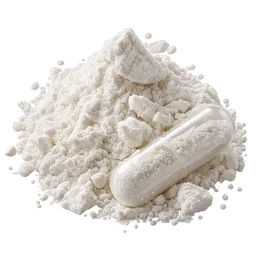
Picture a village bakery at dawn. Flour dust hangs in the air. Weeks later, villagers report feeling less on edge. What changed wasn't a new counselor or a pill—but the flour itself, now fortified with a single amino acid: L-lysine. Meanwhile, halfway around the world, a runner wonders if that same lysine could keep her relentless cold sores at bay. How can one molecule touch both stories?
From casein to clinics
L-lysine entered science in 1889, when Ferdinand Drechsel teased it out of milk protein; in 1902, Emil Fischer and Fritz Weigert mapped its structure. An essential amino acid, lysine must be eaten—our bodies can't make it. That mundane fact becomes the thread that ties this molecule to very human problems. 1
The viral tug-of-war you can't see
Herpes simplex virus (HSV), the culprit behind cold sores, is a builder that favors arginine-rich materials. Think of arginine as the bricks the virus stacks to raise new copies of itself. Lysine is the look-alike block that jams delivery—competing for the same transport routes and slowing the build. Lab and clinical reviews describe this as a balance: when arginine dominates, HSV replication is easier; when lysine is plentiful, the virus's assembly line stutters. 2
So does supplementation help real people? Trials from the late 1970s–1980s read like a detective file with conflicting clues:
In one randomized crossover, 1,000 mg/day for 12 weeks didn't change overall recurrence counts, yet more participants stayed outbreak-free on lysine than on placebo—hinting some people benefit. 6
Another trial found 624 mg/day was useless, but 1,248 mg/day reduced recurrences; healing time didn't budge. Dose mattered. 4
A higher-dose, six-month, multicenter study (3 g/day) reported fewer outbreaks and milder symptoms, with shorter healing—stronger, yet still small. 5
A separate controlled study found no benefit at 1.2 g/day among patients with very frequent recurrences, a reminder that HSV can be stubborn. 3
A 2017 literature review threads the needle: doses under 1 g/day generally don't help; daily doses above 3 g/day "may reduce recurrence rates and improve patients' self-reported symptoms," while evidence to treat an active sore is lacking. 7 In other words, lysine looks more like a preventive nudge than a crisis-stopper. Dermatologists still treat frequent cold sores with daily antivirals; lysine can be an adjunct, not a replacement. 11
A bakery experiment changes mood
Now, back to that village flour. When researchers fortified wheat with lysine in rural Northwest Syria for three months, something unexpected happened: markers of the stress response calmed. Women showed a reduced cortisol surge to a standard stressor (a blood draw). Men reported lower chronic anxiety scores on a validated inventory, especially those who started out most anxious. The authors' plain statement—"Lysine is a limiting amino acid in diets based on wheat as the staple"—explains the setup: these diets skimp on lysine. Restore it, and the nervous system's stress dial turned down. 8
The size of that anxiety improvement was small but meaningful—on par with shifts seen in clinical tests of medications like fluoxetine or diazepam, the researchers noted. 9 In public health terms, that's arresting: an essential nutrient, added back to staple food, nibbled at anxiety in real communities.
Flour, children, and immune hints
The Syria work wasn't alone. In Henan, China, families eating lysine-fortified wheat for three months saw children gain more height and weight than controls; adult prealbumin (a protein-status marker) rose, and several immune proteins nudged upward across family members. No magic—just filling the lysine gap in cereal-heavy diets and watching biology respond. 10
A side note on bones: calcium's traveling companion
Calcium metabolism research adds a quieter subplot. In controlled human studies, adding modest lysine doses around calcium loads blunted the usual spike in urinary calcium among healthy adults and increased intestinal calcium absorption in osteoporotic patients—suggesting lysine helps the body hang onto more of the mineral it just absorbed. It's not a bone cure, but it's a useful physiological clue. 12
What this means when you're the one with the tingling lip
If you get recurrent cold sores, lysine won't replace antivirals, but it may tilt the terrain in your favor when used daily at adequate doses. Think of it as rearranging the pantry the virus raids. Several practical threads emerge from the evidence:
Prevention over rescue: Benefits show up with steady daily use, not sporadic doses during a flare. Trials typically ran 8–24 weeks. 567
Dose matters: Sub-gram doses tend to disappoint; studies showing benefit used about 1.2–3 g/day, often in divided doses. 457
Diet matters, too: Lowering arginine-dense triggers (for some, nuts or chocolate) while keeping protein balanced may help the lysine tilt. Mechanistically, that's the tug-of-war. 2
Keep standards of care in view: Dermatology guidance still leans on antivirals for frequent outbreaks—daily low-dose medication to reduce recurrences. Consider lysine as a complementary strategy you tailor with your clinician. 11
When flour changes a feeling
The fortification stories add a broader perspective for health-conscious readers. Stress is not only psychological; it's also nutritional. In places where plates skew heavily toward wheat, lysine is the missing puzzle piece. it, and the stress system—wired through serotonin circuits the brain uses to gauge threat—may quiet a notch, as the Syrian trial and related animal work suggest. 89
Where the evidence sits today
For HSV, the picture is mixed but encouraging at the right doses—promising, not definitive. For mood and stress in lysine-inadequate populations, randomized community trials show small but meaningful effects. For calcium handling, early human work suggests a modest assist. The common thread isn't miracle claims; it's a modest molecule doing expected work when given the chance.
"Doses in excess of 3 g/day may reduce recurrence rates and improve patients' self-reported symptoms," concluded one clinical review—tempering enthusiasm with a call for longer, better trials. 7 And in the words that launched the bakery experiment: "Lysine is a limiting amino acid in diets based on wheat as the staple." 8
A grounded way to try it
If cold sores dog you, a practical trial looks like this: maintain your usual care, add 1–3 g/day of L-lysine in divided doses with meals for 8–12 weeks, keep a simple outbreak log, and adjust with your clinician. If you notice benefit, you've likely shifted that invisible arginine–lysine balance just enough. If you don't, you've learned something just as valuable about your biology—without closing the door on nutrition's quieter roles elsewhere in your life. 56711
The small philosophy of lysine
Lysine's story resists the single-problem, single-pill mindset. It reminds us that molecules live many lives: scaffolding for collagen, a brake on a virus's building blocks, a missing note in a grain-heavy diet that, when restored, softens a village's pulse. The lesson isn't to lionize a supplement, but to look for leverage in the ordinary—because sometimes the smallest pieces are the ones that make a system feel whole.
Key takeaways
What to walk away with
- 01
For recurrent cold sores, sub-gram lysine rarely helps; about 1–3 g/day with meals shows the most preventive signal, while treatment of active lesions isn't supported.
- 02
Mechanism: HSV relies on arginine; lysine competes for shared transport, tilting the balance away from viral replication when lysine availability is higher.
- 03
In a three-month flour-fortification setting, lysine reduced cortisol reactivity in women and trait anxiety in men—effects strongest in higher-anxiety individuals.
- 04
With calcium loads, lysine blunted urinary calcium spikes and increased intestinal absorption in osteoporotic patients, suggesting better mineral use.
- 05
Timing matters: begin before common triggers (UV, illness, stress) and track for 8–12 weeks; many trials ran for months, not days.
- 06
Who may benefit most: people with frequent HSV-1 outbreaks, grain-heavy/low-protein diets, or those optimizing calcium balance—coordinate care if on daily antivirals or with kidney issues.
Effect timeline
When to expect what
- Immediate
- No
- Peak
- 6-12 weeks
- Duration needed
- 8-12 weeks minimum for prevention trials; ongoing if helpful
- Wears off
- Often within 1-4 weeks after stopping in some reports
Research trajectory
What the studies actually show
-
Sub-gram lysine doses seldom help; around 1.2–3 g/day shows preventive signals for HSV, while treatment of active lesions lacks support. 7
Mixed RCTs from 1978–1987 plus a 2017 review converge on a dose-response pattern.
Positions lysine as a preventive adjunct, not a rescue therapy.
-
Lysine fortification of wheat for 3 months reduced stress hormone reactivity in women and trait anxiety in men (especially high-anxiety subgroup). 9
Randomized, double-blind community fortification in Syria; effect sizes comparable to those seen in pharmacologic tests, though modest.
Links amino acid adequacy to stress physiology at a population level.
-
In humans, lysine around calcium loads reduced urinary calcium spikes and increased intestinal absorption in osteoporotic patients. 12
Controlled metabolic studies measured serum calcium, calciuria, and isotope absorption with added lysine.
Suggests a supportive role in calcium handling; not a stand-alone bone treatment.
Human trials
What real trials found
-
Three-month lysine-fortified wheat in rural Northwest Syria; women had lower cortisol response to stress; men with high baseline anxiety reported reduced trait anxiety. 8
- Outcome
- Physiological stress responses and anxiety scores modestly improved.
- Why it matters
- Shows lysine's impact when diets are lysine-poor.
- Source
- PNAS randomized community trial
-
Henan, China families using lysine-fortified wheat flour for 3 months. 10
- Outcome
- Children gained more height/weight; several immune markers rose; hemoglobin unchanged.
- Why it matters
- Public health validation of lysine fortification in cereal-reliant diets.
- Source
- Food and Nutrition Bulletin 2004 trial
-
Adults with recurrent HSV given 3 g/day L-lysine for 6 months vs placebo. 5
- Outcome
- Fewer outbreaks, reduced severity, shorter healing reported.
- Why it matters
- Higher-dose prophylaxis signal for cold sores.
- Source
- Multicenter double-blind trial
Expert insights
Voices in the field
Lysine is a limiting amino acid in diets based on wheat as the staple. 8
Doses in excess of 3 g/day may reduce recurrence rates and improve patients' self-reported symptoms. 7
To reduce the number of outbreaks, some people who get frequent cold sores take a low dose of antiviral medication every day. 11
Practical guidance
Putting it to use
Who may benefit
People with frequent HSV-1 cold sores seeking adjunct prevention; individuals whose diets are grain-heavy with limited high-quality protein; those optimizing calcium balance alongside standard nutrition.
Dosing
For prevention of recurrent cold sores, consider 1–3 g/day in divided doses with meals; sub-gram dosing is unlikely to help. Not proven to shorten an active sore.
Timing
Begin before common triggers (UV, illness, stress). Track for 8–12 weeks—many trials ran months, not days.
Quality
Choose plain L-lysine (often as monohydrochloride). Pair with a balanced diet; avoid overly arginine-heavy snacking if you notice it triggers you.
Cautions
Evidence review advises caution in people with cardiovascular or gallbladder disease (theoretical risks). Coordinate with your clinician if you use daily antivirals or have kidney issues.
A closing thought
Nutrition's most powerful moves are often restorations, not revolutions. Lysine doesn't dazzle—it completes. In the right context, that completion can mean fewer sores, steadier nerves, or better use of minerals you already eat. The art is knowing your context—and giving small molecules the chance to do big, quiet work.
Frequently asked
Common questions
What dose of lysine is most supported for preventing cold sores?
Does lysine help once a cold sore is already active?
How long should I try lysine before judging results?
Who should be cautious or avoid lysine supplements?
Can lysine affect stress or anxiety?
Does lysine change calcium handling?
Related
More on this supplement
Pulled from across the site — rankings, comparisons, combinations, and reviews where this supplement shows up.
Sources
- 1. Lysine—history and chemistry (2023)
- 2. Lysine for Herpes Simplex Prophylaxis: A Review of the Evidence (mechanism summary) (2017)
- 3. Failure of lysine in frequently recurrent herpes simplex infection (1984)
- 4. Treatment of recurrent herpes simplex infections with L-lysine monohydrochloride (1984)
- 5. Success of L-lysine therapy in frequently recurrent herpes simplex infection (1987)
- 6. Lysine prophylaxis in recurrent herpes simplex labialis: double-blind crossover (1980)
- 7. Lysine for Herpes Simplex Prophylaxis: A Review of the Evidence (2017)
- 8. Lysine fortification reduces anxiety and lessens stress (Syria) (2004)
- 9. Lysine fortification—results and comparison to pharmacologic effects (2004)
- 10. Lysine-fortified wheat flour in Northern China (2004)
- 11. American Academy of Dermatology—Cold sores: diagnosis and treatment (2024)
- 12. Dietary L-lysine and calcium metabolism in humans (1992)
1,096 words · 12 sources · L-Lysine