New Probiotics Published Apr 22, 2026
From Sour Milk to Precision Microbes: What Probiotics Can—and Can't—Do
Digestive protection during antibiotics, better gut balance after illness, and support for healthy immune function
Evidence summary
Probiotics reduce antibiotic-associated diarrhea in children most clearly, but digestive benefits are strain-specific and generic blends do not reliably help across conditions.
- High-dose probiotics lowered antibiotic-associated diarrhea in children, with NNT around 6-9, a clinically noticeable benefit.4
- Lactobacillus rhamnosus GG and Saccharomyces boulardii are the best-studied strains in pediatric antibiotic use.
- Generic multi-strain products colonize inconsistently and can delay recovery of the native microbiome after antibiotics.
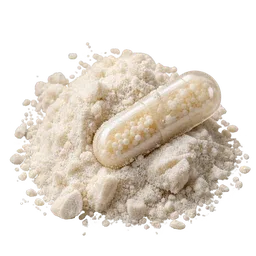
In 1908 Paris, a Nobel laureate hinted that sour milk might slow aging. In 2023, U.S. regulators warned hospitals after a premature infant died following a probiotic. Between these poles lies the real story of probiotics: powerful in the right context, disappointing—or even risky—in the wrong one.
The first ferment
A century ago, immunologist Élie Metchnikoff marveled at the longevity of Bulgarian villagers and suspected their yogurt—teeming with lactic-acid bacteria—kept harmful gut microbes in check. He drank sour milk daily and popularized the idea that friendly microbes could aid health, seeding a cultural wave that still ripples through grocery aisles today.2 Decades later in Japan, physician-microbiologist Minoru Shirota isolated a hardy lactic-acid strain and built Yakult so ordinary people could access it—a public-health mission in a tiny bottle.3 Fast-forward to the 21st century, and science has given "probiotics" a precise meaning: live microorganisms that, in adequate amounts, confer a health benefit on the host. The definition matters because not every microbe—or product—qualifies.1
What they are—and what they aren't
Here's the first twist: fermented foods and probiotics overlap but are not identical. Many fermented foods are delicious and may be healthy, but only products with well-characterized strains shown to benefit humans get to wear the probiotic badge.5 That's why a jar of kimchi and a capsule with specific strains play different roles. A second twist: benefits are strain-specific and condition-specific. The American Gastroenterological Association (AGA) combed through the evidence and found support for only a few clinical situations—prevention of certain antibiotic-related problems, prevention of pouchitis recurrence, and protection in specific preterm-infant scenarios—while recommending against or not endorsing probiotics for most other digestive conditions. "Patients taking probiotics for Crohn's, ulcerative colitis or IBS should consider stopping," said guideline chair Dr. Grace L. Su.411
The post-antibiotic paradox
You've probably heard: take a probiotic with antibiotics to restore your microbiome. The reality is more nuanced. In elegant human studies, researchers led by Eran Elinav performed endoscopies to sample the gut lining and found that generic probiotic mixtures colonized some people but not others, and stool tests alone missed the story. Their conclusion: colonization is highly personal, guided by your existing microbiome and biology.6 In a companion trial, the same team reported that after antibiotics, probiotics could actually delay the of your own native microbes—whereas giving people back their own pre-antibiotic microbes via autologous FMT sped recovery. As Elinav put it, in some participants probiotics "completely inhibited the of the indigenous microbiome."717 So should you skip probiotics with antibiotics? Not necessarily. There's solid evidence that certain strains reduce antibiotic-associated diarrhea, especially in children, and likely help prevent C. difficile in higher-risk settings. But that's a different goal—preventing a complication—than "restoring" your personal microbiome blueprint.91011
Where they shine (and where they don't)
Antibiotic-associated diarrhea (AAD): Across 6,000+ children, probiotics cut AAD from 19% to 8%; higher doses (≥5 billion CFU/day) worked better. Lactobacillus rhamnosus GG and Saccharomyces boulardii led the pack.9 In adults, dozens of trials also show benefit when probiotics are taken during the antibiotic course and for about a week after.10
C. difficile prevention: Evidence suggests a small absolute benefit in adults and children on antibiotics, with safety in non-immunocompromised populations; AGA suggests specific strains/combinations when prevention is a priority.114
IBS and everyday digestion: Meta-analyses report modest short-term symptom improvements, but heterogeneity is huge and AGA advises against routine use. If tried, evaluate after 4–8 weeks and stop if there's no clear benefit.4
Food as a microbial lever
Sometimes the most powerful "probiotic move" isn't a pill. In a Stanford randomized trial, a diet rich in fermented foods (yogurt, kefir, kimchi, kombucha) increased gut microbial diversity and lowered multiple inflammatory markers across healthy adults. "This is a stunning finding," said microbiologist Justin Sonnenburg. Fiber alone didn't budge diversity over 10 weeks in that study, highlighting how different levers shape the microbiome.8
Real-world cautionary tales
Stories keep us honest. In October 2023, the U.S. FDA warned hospitals after a preterm infant died from sepsis genetically matched to a probiotic given in the NICU; the agency underscored that no probiotic is FDA-approved for infants and that vulnerable preterm babies face unique risks.12 Case reports and hospital clusters document rare bloodstream infections from probiotic strains in critically ill patients or those with central lines—Lactobacillus rhamnosus GG in a patient receiving that exact strain, and Saccharomyces boulardii outbreaks in ICUs likely from catheter contamination.1314 An earlier randomized trial in severe acute pancreatitis found higher mortality in the probiotic group, a sobering reminder that context matters.15
How to use probiotics like a scientist
You're on antibiotics? Think of probiotics as seatbelts against AAD—use evidence-based strains at adequate doses and start early. You're chasing general wellness? Consider starting with fermented foods and a diverse, fiber-rich diet; supplements are tools, not talismans. And remember: strain, dose, and timing are the plot points that determine whether your story ends in benefit or disappointment. Practical guardrails:
Choose products listing the exact strains and CFU through end of shelf life. Only call it a "probiotic" if those strains have human data.116
For AAD prevention, start within 48 hours of antibiotics; continue through therapy plus ~7 days (typical trial protocols). Doses of ≥5–10 billion CFU/day are common in positive studies, with LGG or S. boulardii among the best-studied.910
Give any probiotic trial 4–8 weeks for IBS-type symptoms; if no clear benefit, stop.4
If you have a central venous catheter, are critically ill, or are a preterm infant, avoid probiotics outside research or specialized medical protocols.12131415
The next chapter: beyond "one-size-fits-all"
Microbiome science is moving toward precision: matching microbes to people and problems, developing postbiotics (non-living microbial preparations that still deliver benefits), and designing multi-strain consortia more like an orchestra than a soloist.141 Metchnikoff's hunch wasn't wrong—it was just incomplete. The future isn't "good bugs" in general; it's the right microbes, at the right dose, for the right person, at the right moment.
"This is a stunning finding." — Justin Sonnenburg, PhD, on the anti-inflammatory effect of fermented foods.8
"Patients taking probiotics for Crohn's, ulcerative colitis or IBS should consider stopping." — Grace L. Su, MD, on the limits of current evidence.4
A century after sour milk captivated Paris, probiotics are no longer a myth or a miracle. They're instruments—powerful when scored to the right piece, discordant when played out of tune. The art now is learning when to press play—and when to let food, time, or personalized care take the lead.
Key takeaways
What to walk away with
- 01
Probiotics have a precise, evidence-based role: preventing antibiotic-associated diarrhea (NNT ~6–9), with LGG and S. boulardii among the best-studied.
- 02
Generic multi-strain capsules don't reliably colonize and may delay the native microbiome's recovery after antibiotics—precision and context matter.
- 03
A fermented-food diet increased microbiome diversity and reduced inflammatory markers in healthy adults; fiber alone did not over 10 weeks.
- 04
For AAD prevention, start within 48 hours of antibiotics, use ≥5–10B CFU/day of proven strains (LGG or S. boulardii), and continue ~7 days after finishing.
- 05
If trialing for IBS-type symptoms, use a single product for 4–8 weeks and stop if there's no clear benefit; pair with fermented foods and diverse fibers.
- 06
Avoid live-microbe probiotics if critically ill, with a central line, severe acute pancreatitis, or in preterm infants in routine care.
Effect timeline
When to expect what
- Immediate
- Within days for antibiotic-associated diarrhea prevention; otherwise minimal immediate effects.
- Peak
- 3–8 weeks for symptom change in IBS-type complaints.
- Duration needed
- During antibiotics and ~1 week after for AAD; 4–8 weeks trial for IBS symptoms.
- Wears off
- Benefits typically fade within 2–4 weeks after stopping if no underlying diet change.
Research trajectory
What the studies actually show
-
High-dose probiotics prevent antibiotic-associated diarrhea in children (NNT ~6–9), with LGG and S. boulardii among best-studied. 9
Cochrane review of 33 trials, 6,352 children; higher CFU performed better.
Supports targeted use during antibiotics to reduce a common adverse effect.
-
Generic multi-strain probiotics variably colonize the human gut and may delay recovery of the native microbiome after antibiotics. 6
Back-to-back Cell papers used endoscopies and multi-omics to track mucosal colonization and recovery.
Argues for personalized approaches rather than one-size-fits-all supplements post-antibiotics.
-
A fermented-food diet increased microbiome diversity and reduced inflammatory markers in healthy adults; fiber alone did not over 10 weeks. 8
Randomized Stanford trial comparing high-fermented vs high-fiber diets.
Positions fermented foods as a practical, food-first lever for microbiome and immune tone.
Human trials
What real trials found
-
Preterm infant in a U.S. hospital developed Bifidobacterium longum sepsis genetically matching a probiotic (Evivo with MCT Oil) and died; FDA issued warnings. 12
- Outcome
- Product recalled for hospital use; FDA emphasizes no probiotic is approved for infants.
- Why it matters
- Illustrates risk in highly vulnerable populations and regulatory gaps.
- Source
- FDA Safety Communication (2023)
-
Adult patient given Lactobacillus rhamnosus GG developed bloodstream infection; whole-genome sequencing matched the probiotic strain. 13
- Outcome
- Cleared infection; highlights catheter-related/probiotic translocation risk.
- Why it matters
- Shows rare but real invasive events with specific strains in hospital settings.
- Source
- Case report with WGS confirmation (2022)
-
ICU cluster of Saccharomyces boulardii fungemia among roommates of patients receiving the probiotic. 14
- Outcome
- Resolved with antifungals; contamination of central lines implicated.
- Why it matters
- Emphasizes infection-control and handling precautions with live-yeast probiotics.
- Source
- Journal of Clinical Microbiology outbreak report
Expert insights
Voices in the field
This is a stunning finding. 8
Patients taking probiotics for Crohn's, ulcerative colitis or IBS should consider stopping. 4
Completely inhibited the of the indigenous microbiome. 17
Practical guidance
Putting it to use
Who may benefit
People starting antibiotics who want to lower their risk of antibiotic-associated diarrhea; individuals with recurrent pouchitis under GI guidance; wellness seekers choosing fermented foods to support diversity and lower inflammation.
Who should avoid
Critically ill patients, those with central venous catheters, individuals with severe acute pancreatitis, and preterm infants outside carefully controlled protocols.
Dosing
For AAD prevention, begin within 48 hours of antibiotics, use ≥5–10 billion CFU/day of evidence-backed strains (e.g., Lactobacillus rhamnosus GG or Saccharomyces boulardii), and continue for ~7 days after finishing antibiotics.
Timing
If trialing for IBS-type symptoms, give a single product 4–8 weeks; stop if no clear benefit. Pair supplements with fermented foods and diverse fibers for a stronger base.
Quality
Pick labels listing exact strains and guaranteed CFU through end of shelf life; favor third-party tested brands. Remember: fermented foods are not automatically 'probiotics' unless strains and benefits are documented.
Cautions
Avoid live-microbe probiotics if you are critically ill, have a central venous catheter, severe acute pancreatitis, or are a preterm infant in routine care; risks have been documented in these settings.
A closing thought
Metchnikoff saw in sour milk a way to civilize our inner wilderness. Today we know the wilderness is personal—more fingerprint than forest. The future of probiotics will reward humility: use the right strains when they help, lead with food when it suffices, and let precision—not folklore—decide when to invite new microbes in.
Frequently asked
Common questions
Which probiotic strains are best for antibiotic-associated diarrhea?
Do probiotics permanently take up residence in the gut?
Are fermented foods or fiber better for microbiome diversity?
Should people with IBS or IBD take probiotics?
Who should avoid probiotics due to safety concerns?
How long should I trial a probiotic for gut symptoms?
Related
More on this supplement
Pulled from across the site — rankings, comparisons, combinations, and reviews where this supplement shows up.
Ingredient evidence
Ingredient evidence
NewProbiotics
All scored outcomes
Aug 27, 2026
Ranking
Colds and Upper Respiratory Infections
NewThe 7 Supplements That Actually Help You Catch Fewer Colds
Evidence ranking
Apr 4, 2026
Ranking
Day-to-day anxiety
NewBest Supplements for Anxiety, Ranked by Clinical Evidence
Evidence ranking
Apr 4, 2026
Sources
- 1. Probiotics definition and criteria (ISAPP) (2013)
- 2. A Science Lecture Accidentally Sparked a Global Craze for Yogurt (Metchnikoff history) (2016)
- 3. History—Yakult Company Timeline (2025)
- 4. AGA press release: Probiotics not recommended for most digestive conditions (2020)
- 5. ISAPP consensus: fermented foods are not the same as probiotics (2021)
- 6. Cell (2018): Personalized colonization resistance to empiric probiotics (2018)
- 7. Cell (2018): Post-antibiotic recovery impaired by probiotics; improved by autologous FMT (2018)
- 8. Cell (2021): Gut-microbiota-targeted diets modulate human immune status (2021)
- 9. Cochrane Review (2019): Probiotics prevent pediatric antibiotic-associated diarrhea (2019)
- 10. AAFP summary (2021): Adult AAD prevention trials and typical durations (2021)
- 11. AGA Clinical Guidance page: Role of probiotics in GI disorders (2020)
- 12. FDA: Risk of invasive disease in preterm infants given probiotics (Dear HCP Letter) (2023)
- 13. Lactobacillus rhamnosus GG bacteremia case confirmed by WGS (2022)
- 14. ICU outbreak of Saccharomyces boulardii fungemia (2003)
- 15. PROPATRIA Trial (Lancet 2008): Probiotics increased mortality in severe acute pancreatitis (2008)
- 16. ISAPP: Reiterating what probiotics are (criteria and labeling) (2019)
- 17. Weizmann Institute news: Probiotics not as beneficial as thought (Elinav quotes) (2018)
1,095 words · 17 sources · Probiotics