New Spinach Published Apr 6, 2026
Leaves That Learned to Beat: What Spinach Really Teaches Us About Strength
Better blood flow and artery flexibility, eye protection with natural pigments, and heart-healthy nutrition
Evidence summary
Spinach's clearest benefit is a short-term nitrate-driven boost to vascular function and blood pressure in healthy adults, not a proven strength supplement.
- A randomized trial of nitrate-rich spinach lowered arterial stiffness and systolic blood pressure in healthy volunteers 5.
- Most evidence comes from short studies in healthy adults using meals, soup, or extracts rather than pills.
- Macular-pigment gains came from small pilot studies, so eye benefits remain less certain than vascular effects.
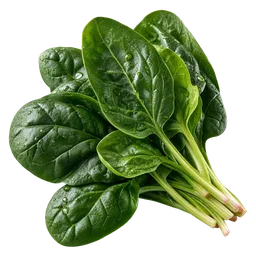
Popeye reached for a can of spinach for iron. A century later, scientists reached for a spinach leaf and made it beat like a heart. The real story of strength in these leaves lies not in a decimal point of iron, but in rivers of veins and a whisper of gas that tells our arteries to relax. 16
From "Persian vegetable" to everyday power food
Long before cartoon sailors, spinach traveled along human routes of trade and taste. Cultivated in ancient Persia, it arrived in China in 647 CE as the "Persian vegetable," then crossed the Mediterranean with Arab agronomists and reached Europe in the Middle Ages, valued for appearing when gardens were still waking from winter. 12
The iron myth—and the lesson it left behind
You've probably heard it: spinach is packed with iron. Then you may have heard the counter-myth: a 19th-century chemist slipped a decimal point. The second story is itself a legend. Scholars traced the "decimal error" to a chain of sloppy citations; the real reasons were mundane—methods, dried-versus-fresh measurements, and the fact that spinach's iron is harder to absorb. The moral isn't to shun spinach; it's to be precise about why it's useful. 1617
What spinach actually does—fast
Picture lunch: a bowl with a generous handful of spinach. Within hours, compounds in leafy greens—natural nitrates—can be turned by mouth bacteria into nitrite, then into nitric oxide, the body's quick signal to widen blood vessels. In randomized trials where the "study food" was spinach itself (soups, meals, leaves), researchers saw acute drops in systolic blood pressure and improvements in measures of artery flexibility. Effects showed up the same afternoon and persisted across a week without obvious tolerance. 345 Not every study shows lasting blood-pressure change with simply "more nitrate-rich vegetables" over weeks, and large population studies suggest the heart benefits of greens likely come from the whole package of nutrients, not nitrates alone. As Dr. Walter Willett put it, "There are clear reasons to..eat more vegetables. But so far, the evidence is not at all clear that nitrates are an important part of that risk or benefit." 9
A different kind of vision: pigments for the eye (and maybe the mind)
Spinach is one of nature's reliable sources of lutein and zeaxanthin—the yellow pigments that settle into the retina like a pair of sunglasses for the macula. Small human studies feeding actual spinach reported increases in serum lutein and in macular pigment optical density within 1–2 months. Large trials in people at high risk for age-related macular degeneration (AMD) show that lutein/zeaxanthin supplements can be part of evidence-based eye formulas, even if they're not a cure. Food first, pills when indicated. 7810
The satiety twist: leaves that slow the craving clock
Researchers also explored thylakoids—the tiny green membranes inside spinach leaves that help plants light into energy. When concentrated from spinach and added to a drink, these membranes delayed fat digestion just a bit, dialing down hunger and food longing over the next two hours in a controlled crossover trial. Think of it as tapping the brakes on the snack impulse. 6
When a leaf becomes a map
In 2017, engineers washed the cells out of a spinach leaf, leaving its lacework of veins—nature's capillary map—then seeded it with human heart cells. Days later, the tissue began to beat. "To be able to just take something as simple as a spinach leaf..and that into a tissue that has the potential for blood to flow through it" was "very, very exciting," said lead researcher Glenn Gaudette. The work didn't make an organ; it offered a blueprint for moving blood through engineered tissue. 1112
Real-world cautions: oxalate and context
Spinach's oxalate content is high. For most people, variety and hydration make this irrelevant. But in susceptible folks—those with a history of calcium-oxalate stones, chronic kidney disease, gastric bypass, or very high "green smoothie" intakes—oxalate can pile up. Case reports document acute oxalate nephropathy following large, prolonged intakes of oxalate-rich drinks, sometimes leading to dialysis, especially in people with other risk factors. Pairing spinach with calcium-rich foods (so oxalate binds in the gut) and boiling then discarding the water can lower exposure. 131415
How to put the leaf to work (without the lore)
Aim for a cup of cooked or two cups of raw leafy greens most days; let spinach be one of several players (kale, arugula, lettuces). 9
For vascular perks, think meal-by-meal: a spinach salad or sauté can nudge nitric oxide the same afternoon. Don't expect miracles—expect small, cumulative wins. 345
For iron, remember spinach's iron is less absorbable; adding vitamin-C-rich foods (citrus, peppers) helps. For stone-formers, add calcium at the same meal (yogurt, sardines, tofu set with calcium) or choose lower-oxalate greens more often. 15
For eyes, food sources of lutein/zeaxanthin (spinach, egg yolks) are a base; supplements enter the picture if your clinician recommends an AREDS2-type formula. 10
What endures
Spinach's story isn't about a decimal point or a single nutrient. It's about a leaf that carries ancient trade winds, widens arteries after lunch, tints the retina's shield, tempers appetite, and—on a lab bench—offers a ready-made roadmap for future tissues. Its strength is the strength of systems working together: plant and person, history and science, plate and possibility. 13611
Key takeaways
What to walk away with
- 01
Spinach's high nitrates can acutely improve endothelial function and modestly lower systolic pressure after a meal; a week of high-nitrate spinach soup lowered central and brachial BP in healthy adults.
- 02
Lutein and zeaxanthin from daily spinach raise blood levels and macular pigment within 1–2 months; large trials support these pigments in eye formulas for people at risk of AMD.
- 03
Make it routine, not heroic: about 2 cups raw or 1 cup cooked daily alongside other greens; rotate varieties across the week.
- 04
Timing depends on the goal: for vascular effects, include spinach with lunch or dinner and expect same-day changes; for eye health, think in weeks to months.
- 05
Cautions match the leaf: high oxalate means stone-formers and those with CKD should moderate portions, pair with calcium, emphasize variety, and talk with a clinician; vitamin K consistency matters on warfarin.
Effect timeline
When to expect what
- Immediate
- Within hours (post-meal vascular effects; short-term satiety).
- Peak
- 1–2 months for increases in macular pigment; 1 week shows no tolerance for nitrate-related hemodynamics.
- Duration needed
- Ongoing as part of a varied diet; weeks to sustain eye-pigment gains.
- Wears off
- Vascular effects fade within 24–48 hours after stopping high-nitrate meals; macular pigment declines gradually over weeks without intake.
Research trajectory
What the studies actually show
-
Spinach-rich meals acutely improve endothelial function and lower systolic blood pressure in healthy adults. 3
Randomized crossover trials compared spinach-containing meals/soups with control foods and measured artery dilation and central pressure within hours.
Positions spinach as a same-day nudge to vascular tone, not a magic bullet.
-
Seven days of high-nitrate spinach soup reduced central and brachial blood pressure without apparent tolerance. 5
Participants alternated a week of spinach soup vs. low-nitrate soup with washout; benefits appeared at 180 minutes on day 7.
Short-term, food-based nitrate can be functional—useful for meal planning.
-
Daily spinach intake for 1–2 months raises blood lutein and macular pigment in small human studies; AREDS2 supports lutein/zeaxanthin in clinical eye formulas for those at risk of AMD. 7
Pilot spinach-feeding studies plus the large randomized AREDS2 trial of carotenoids.
Connects a familiar leaf to long-view eye health.
Human trials
What real trials found
-
Acute kidney injury after a multi-day 'green smoothie cleanse' heavy in spinach in a woman with predisposing factors (gastric bypass, recent antibiotics). 13
- Outcome
- Progressed to end-stage renal disease; illustrates oxalate risk with extreme intake and risk factors.
- Why it matters
- Cautionary tale: quantity, context, and individual risk matter.
- Source
- Case report in the literature.
-
Biopsy-proven oxalate nephropathy in a patient with CKD after markedly increasing leafy-green consumption. 14
- Outcome
- Required hemodialysis; highlights vulnerability in CKD.
- Why it matters
- Guides tailored advice for those with kidney disease.
- Source
- Journal of Medical Case Reports (2021).
Expert insights
Voices in the field
"There are clear reasons to...eat more vegetables. But so far, the evidence is not at all clear that nitrates are an important part of that risk or benefit." 9
"To be able to just take something as simple as a spinach leaf... and actually that into a tissue that has the potential for blood to flow through it... is really very very exciting." 12
Practical guidance
Putting it to use
Who may benefit
People seeking modest, meal-scale support for blood-pressure control; older adults nurturing eye health; anyone building a vegetable-forward plate who appreciates quick-cooking versatility.
Who should avoid
History of recurrent calcium-oxalate kidney stones or advanced chronic kidney disease; those on warfarin requiring stable vitamin K intake.
Dosing
Make spinach one of your daily greens: about 2 cups raw or 1 cup cooked alongside other leafy vegetables; rotate varieties through the week.
Timing
For vascular effects, enjoy spinach at lunch or dinner—benefits can appear the same afternoon; for eye pigments, think in months, not days.
Quality
Boiling then discarding the water lowers oxalates; pairing with citrus boosts iron absorption; combining with calcium at the same meal binds oxalate in the gut.
Cautions
If you've had calcium-oxalate stones or CKD, moderate portions, pair with calcium, emphasize variety, and discuss with your clinician; consistent vitamin K intake matters if you're on warfarin.
A closing thought
In a world hungry for superfoods, spinach offers something subtler and wiser: not a miracle, but a map. Its veins hint at future tissues; its pigments color our vision; its nitrates whisper to our arteries. Strength, it turns out, is a system—and a leaf can teach it.
Frequently asked
Common questions
How quickly can spinach affect blood pressure or vessel function?
Does spinach measurably help eye health, and how long does it take?
I take warfarin—can I still eat spinach?
What if I've had calcium-oxalate kidney stones?
Who should be cautious with spinach?
Sources
- 1. Spinach | Description, Nutrition, Types, & Facts | Britannica (2025)
- 2. Oxford Dictionary of Word Origins: Spinach (entry) (2024)
- 3. Flavonoid-rich apples and nitrate-rich spinach augment nitric oxide status and improve endothelial function in healthy men and women: a randomized controlled trial (2011)
- 4. Effects of a nitrate-rich meal on arterial stiffness and blood pressure in healthy volunteers (2013)
- 5. Effect of Spinach, a High Dietary Nitrate Source, on Arterial Stiffness and Related Hemodynamic Measures: A Randomized, Controlled Trial (2015)
- 6. Acute Effects of a Spinach Extract Rich in Thylakoids on Satiety: A Randomized Controlled Crossover Trial (2015)
- 7. Effects of Constant Intake of Lutein-rich Spinach on Macular Pigment Optical Density: a Pilot Study (2016)
- 8. Spinach cultigen variation for tissue carotenoids influences human serum levels and macular pigment optical density following a 12-week dietary intervention (2006)
- 9. Nitrates in food and medicine: What's the story? (Harvard Health) (2022)
- 10. AREDS2 Randomized Clinical Trial (JAMA) (2013)
- 11. WPI Team Grows Heart Tissue on Spinach Leaves (2017)
- 12. Researchers Spinach Leaf into Beating Heart Tissue (TIME) (2017)
- 13. "Green Smoothie Cleanse" Causing Acute Oxalate Nephropathy (case report) (2017)
- 14. A hidden cause of oxalate nephropathy: a case report (Journal of Medical Case Reports) (2021)
- 15. Avoiding kidney stones (Harvard Health) (2013)
- 16. Academic urban legends (Ole Bjørn Rekdal) (2014)
- 17. How rumors spread via sloppy citation practices (Inside Higher Ed) (2014)
1,043 words · 17 sources · Spinach