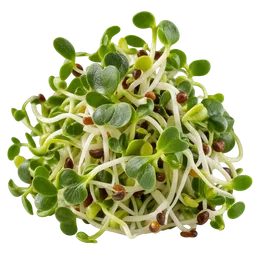
Broccoli sprout
What the trials found
Broccoli sprout produces measurable biological changes, but evidence remains insufficient for clear, reliable everyday health benefits across the general population.
- 36 papers
- 0 of 86 outcomes
- 5 severe
Median effective dose, most-studied outcomes
- Support NQO1 gene expression 30 mg 2 wk
Risk, worst reported severity
- cholecystitis (hospitalization) severe
- COPD exacerbation (hospitalization) severe
- n-acetylcysteine moderate
- oxaliplatin moderate
Dose, timing & forms
How much
Trials focused on cellular defense markers have used roughly 8 to 30 mg daily for periods ranging from 2 to 15 weeks.24 A 30 mg daily protocol appeared in research measuring NQO1, one of the genes controlled by the Nrf2 defense system, but that finding comes from limited evidence rather than a proven target dose for feeling healthier.4 The studies examining overall antioxidant capacity and stress-response gene activity did not establish a consistent, meaningful benefit.4
When and how long
The research uses daily intake over weeks, not occasional use before a stressful day or workout.24 It does not establish a best time of day or show that taking it with food produces better results. Follow the product directions, and do not improvise higher dosing because the useful human data centers on biomarker research rather than symptom relief.24
Forms & standardisation
Look for a label that states both the glucoraphanin amount and whether it includes active myrosinase, the enzyme that converts glucoraphanin into sulforaphane.34 A label that only says "broccoli sprout powder" leaves the likely sulforaphane yield unclear. Products standardized to sulforaphane or paired with myrosinase offer a more predictable approach than an unstated sprout-powder dose.4
Studied range, by outcome
| Outcome | Studied range | Median effective | Duration | Evidence |
|---|---|---|---|---|
| Support stress response gene activity | 7.98–30 mg | — | 2–15 wk | 2 papers |
| Support overall antioxidant capacity | 30 mg | — | <1–12 wk | 2 papers |
| Support NQO1 gene expression | 30 mg | 30 mg | 2 wk | 1 paper 1 sig. endpoint |
Adverse events and drug interactions
Safety events
Drug interactions
Recommended Broccoli sprout products
Real products that dose Broccoli sprout where the research does, in a clean formulation, from brands we've audited. We only list ones we'd stand behind.
-

PureBulk.com
Broccoli Extract Powder
Well dosed 500 mg/day A formula -

SMNutrition
Activated Sulforaphane Complex
Well dosed 100 mg/day A formula -

GNC SuperFoods
SuperFoods Supreme Berry flavor
Well dosed 200 mg/day A formula -

Vital Nutrients
Vital Clear
Well dosed 100 mg/day A formula -

New Chapter
40+ Every Women's One Daily Multi
Well dosed 50 mg/day A formula -

Evogen Naturals
Evogreens Lemon Mint
Well dosed 50 mg/day A formula
Chosen for adequate Broccoli sprout dosing vs. the studied range, a clean formulation (grade A–C), and independent brand-quality audits. Not sponsored.
What this is and how it works
- Across 36 papers reviewed here, evidence spans 86 outcomes, with stronger support for biomarkers than felt health benefits.4
- Human studies have examined broccoli sprout beverages and sulforaphane across detoxification, skin protection, and cellular-defense outcomes.1
- Benefits depend on sulforaphane dose, preparation, and population, limiting broad conclusions about broccoli sprout supplements.4
Sulforaphane loosens KEAP1's hold on Nrf2, a protein that turns on genes involved in antioxidant and chemical-processing defenses.1 Think of Nrf2 as a building's emergency control panel: sulforaphane releases the cover so the panel can switch on its cleanup crew.1 Human research detects shifts in these defense-related markers, although marker shifts do not automatically equal a noticeable health benefit.24
Bottom line
Broccoli sprout makes the most sense for someone interested in a food-derived supplement with a well-described gene-signaling effect, not for someone expecting a reliable fix for fatigue, inflammation, or general wellness.24 The human evidence currently supports biomarker changes more clearly than felt benefits. Skip self-experimenting if you take prescription medicines or have significant health conditions, and discuss it with a clinician first.
Co-studied with
 Mustard8 shared
· d=1.30
Mustard8 shared
· d=1.30 Moringa7 shared
· d=0.59
Moringa7 shared
· d=0.59 Curcumin1 shared
· d=1.19
Curcumin1 shared
· d=1.19
Common questions
What does broccoli sprout extract actually do?
Is broccoli sprout the same as sulforaphane?
Can you get sulforaphane from regular broccoli?
Is broccoli sprout extract worth taking every day?
Sources
Sources
- 1. Sulforaphane mobilizes cellular defenses that protect skin against damage by UV radiation (2005) ↑
- 2. Rapid and sustainable detoxication of airborne pollutants by broccoli sprout beverage: results of a randomized clinical trial in China (2014) ↑
- 3. Broccoli sprouts: an exceptionally rich source of inducers of enzymes that protect against chemical carcinogens (1997) ↑
- 4. Broccoli or Sulforaphane: Is It the Source or Dose That Matters? (2019) ↑
Generated August 27, 2026
Related
More evidence for Broccoli sprout
Ranking
Mental speed and reaction time
NewThe 10 Supplements With Real Evidence for Faster Thinking
Evidence ranking
Apr 3, 2026
Ingredient evidence
Ingredient evidence
NewAnthocyanidins
All scored outcomes
Aug 27, 2026
Ingredient evidence
Ingredient evidence
NewAstaxanthin
All scored outcomes
Aug 27, 2026
Ingredient evidence
Ingredient evidence
NewBilberry
All scored outcomes
Aug 27, 2026
Ingredient evidence
Ingredient evidence
NewBlack Currant
All scored outcomes
Aug 27, 2026
Ingredient evidence
Ingredient evidence
NewBlueberry
All scored outcomes
Aug 27, 2026