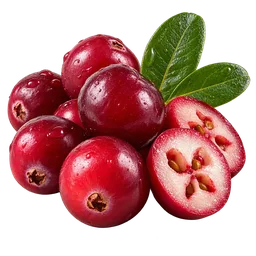
Cranberry
What the trials found
Cranberry provides a proven but unnoticeable reduction in recurrent urinary tract infections, while evidence across other outcomes remains less decisive.
- 33 papers
- 1 of 75 outcomes
- 1 severe, 6 major interactions
Median effective dose, most-studied outcomes
- Prevent repeat urinary infections 500 mg 26–52 wk
Risk, worst reported severity
- serious adverse events (participants experiencing ≥1 SAE) severe
- Suprapubic pain, dysuria, backache, cloudy urine and single vomit (possible pyelonephritis) moderate
- simvastatin major
- felodipine major
What cranberry actually does
| Outcome | Effect | Evidence | Dose | Time | Rank |
|---|---|---|---|---|---|
| Modest benefits 1 | |||||
| Get fewer urinary tract infections Proven but unnoticeable Urinary tract infections can cause burning with urination, frequent urges, and lower abdominal pain. | | 5 meta-analyses 12 papers · n=19k | — | 26–52 wk | — |
Effect tiers come from native-unit MCID where available, Cohen's d otherwise.
Dose, timing & forms
How much
For preventing repeat urinary infections, the reviewed trials span a very wide 0.838 to 1,000 mg daily, with 500 mg daily as the median effective supplement dose. Most prevention protocols run for 26 weeks, and some continue to a year, so cranberry is a long-game habit rather than a short course.1 The benefit is modest on average, so do not expect a dramatic change in every person.1
When and how long
The useful pattern is consistency: trials evaluate cranberry taken daily for months, not only after sex or when urinary discomfort starts.1 The specific time of day is not established as the driver of results, so choose a time you can repeat reliably and follow your product's directions. Cranberry does not take the place of urgent evaluation for pain with fever, back pain, nausea, or vomiting.
Forms & standardisation
Capsules, tablets, extracts, and juice products all appear in prevention research, but they are not interchangeable because their active proanthocyanidin content can differ substantially.1 Look for a label that names cranberry extract and, when available, states the amount of proanthocyanidins. A fruit-flavored drink or a label that simply says “cranberry” tells you little about the anti-attachment compounds studied in laboratory work.3
Studied range, by outcome
| Outcome | Studied range | Median effective | Duration | Evidence |
|---|---|---|---|---|
| Prevent repeat urinary infections | — | 500 mg | 26–52 wk | 11 papers 9 sig. endpoints |
Adverse events and drug interactions
Safety events
Drug interactions
Recommended Cranberry products
Real products that dose Cranberry where the research does, in a clean formulation, from brands we've audited. We only list ones we'd stand behind.
-

Doctor's Best
Whole Cranberry 250 mg
Well dosed 500 mg/day A formulaBrand audit 82/100
-

Pure Encapsulations
Cranberry NS
Well dosed 1,500 mg/day A formulaBrand audit 78/100
-

Puritan's Pride
Cranberry Fruit Concentrate 500 mg
Well dosed 500 mg/day A formulaBrand audit 68/100
-

Puritan's Pride
Natural Cranberry Fruit Extract 25,000 mg
Well dosed 500 mg/day A formulaBrand audit 68/100
-

Doctor's Best
Cranberry with Cranberex 240 mg
Well dosed 480 mg/day B formulaBrand audit 82/100
-

SuperSmart
Prosta Friendly 500 mg
Well dosed 500 mg/day A formulaBrand audit 63/100
Chosen for adequate Cranberry dosing vs. the studied range, a clean formulation (grade A–C), and independent brand-quality audits. Not sponsored.
What this is and how it works
- Across 12 studies (n=18,807), cranberry’s urinary-tract-infection prevention effect was small and mixed.1
- The review covers 33 papers and 75 outcomes, with urinary-tract-infection prevention the strongest supported claim.
- Mixed prevention endpoints limit confidence about consistent benefit across different groups.
Cranberry comes from the tart red fruit of Vaccinium macrocarpon. Supplements concentrate compounds from the fruit into capsules, tablets, powders, or liquids, which avoids the sugar load of many cranberry juice drinks.1
Certain cranberry compounds, called A-type proanthocyanidins, interfere with the tiny grip-like structures that some E. coli bacteria use to latch onto the urinary tract lining.3 Think of them as making a bathroom tile too slick for a suction cup to stay attached. This anti-attachment effect explains why cranberry research focuses on prevention, not on clearing an infection that is already underway.1
Bottom line
Cranberry is worth considering if you get repeat urinary tract infections and want a low-intensity prevention option with realistic expectations. The average benefit is small, and active urinary symptoms need medical attention rather than more cranberry. Avoid self-starting it without pharmacist or clinician input if you take warfarin or certain cholesterol, blood-pressure, or heart-rhythm medicines.
Co-studied with
- Lingonberry3 shared · d=0.43
Common questions
Do cranberry supplements prevent urinary tract infections?
What is the best cranberry supplement for repeat urinary infections?
How long does cranberry take to work for urinary tract health?
Can cranberry replace antibiotics for a urinary tract infection?
Sources
Sources
Generated August 27, 2026