Curcumin
Best for
Ease joint pain
Proven strong benefit 90–2000 mg/day 8–26 weeks 3 meta-analyses, n=1.4k #6 of 23 studied
- 73 papers
- 7 of 132 outcomes
- 6 positive
- 1 severe
Curcumin provides a proven strong benefit for reducing persistent pain and improving everyday movement, with the clearest evidence concentrated in joint pain and broader recurring pain outcomes.
Risk, worst reported severity
- hepatotoxicity by usnic acid severe
- nausea mild
What curcumin actually does
The immune system can drive body-wide inflammation that affects long-term health and how people feel day to day. 25302215 · 35719707 · 35979355 +18
Liver blood tests can rise when liver cells are injured or bile flow is blocked. 41053771
| Outcome | Effect | Evidence | Dose | Time | Rank |
|---|---|---|---|---|---|
| Strong benefits 2 | |||||
| Feel less pain Proven strong benefit Pain relief can make it easier to move, rest, focus, and get through the day. | | 5 meta-analyses 10 papers · n=9.3k | 150–4000 mg | 1–13 wk | — |
| Ease joint pain Proven strong benefit Comfortable joints can make walking, stairs, and everyday movement easier. | | 3 meta-analyses 5 papers · n=1.4k | 90–2000 mg | 8–26 wk | #6 /23 |
| Modest benefits 3 | |||||
| Lower systemic inflammation Likely modest benefit The immune system can drive body-wide inflammation that affects long-term health and how people feel day to day. | | 11 meta-analyses 21 papers · n=34k | — | 1–52 wk | #4 /83 |
| Ease rheumatoid arthritis symptoms Likely modest benefit Rheumatoid arthritis causes immune-driven joint inflammation that can bring pain, swelling, stiffness, and fatigue. | | 3 meta-analyses 3 papers · n=631 | 80–6000 mg | 10 wk | #1 /7 |
| Move with less stiffness Proven but unnoticeable Stiff joints can make everyday movements feel restricted or uncomfortable. | | 1 meta-analysis 2 papers · n=806 | 90–2000 mg | 13 wk | #3 /10 |
| Worth watching 1 | |||||
| Seniors move more easily Promising early signal Comfortable movement makes it easier to walk, get around, and take part in everyday life. | | 2 RCTs 2 papers · n=150 | 500–1000 mg | 8–12 wk | #1 /19 |
| Early research 1 | |||||
| Lower liver enzyme levels Not enough research Liver blood tests can rise when liver cells are injured or bile flow is blocked. | | 2 RCTs 1 papers · n=— | 105–170 mg | 1–13 wk | #1 /39 |
Effect tiers come from native-unit MCID where available, Cohen's d otherwise.
Dose, timing & forms
How much
For the best-supported use, pain and joint studies span roughly 90 to 2,000 mg/day of curcumin preparations, while general pain protocols extend as high as 4,000 mg/day.1 Bigger numbers do not automatically mean better results because formulation changes how much curcumin actually gets absorbed. Start with the product's studied daily amount rather than chasing a high-dose turmeric label.14
When and how long
Use curcumin consistently every day when you are testing it for ongoing pain. Taking it with a meal is a practical fit for many people, especially if an empty stomach causes nausea or loose stools. If your label uses a divided serving, splitting it between meals can make the routine easier, but the key feature in pain trials is sustained use over time rather than a particular hour of the day.1
Forms & standardisation
The label matters more than the front-of-bottle turmeric imagery. Look for the stated amount of curcuminoids and a named absorption approach, since plain curcumin has very limited absorption in humans.4 Piperine is one well-studied enhancer, but it changes how the body handles curcumin, so people who take medicines should review the combination with a pharmacist before choosing it.4
Adverse events and drug interactions
Safety events
Recommended Curcumin products
Real products that dose Curcumin where the research does, in a clean formulation, from brands we've audited. We only list ones we'd stand behind.
-

Life Extension
Advanced Bio-Curcumin
Well dosed 600 mg/day A formulaBrand audit 90/100
-

Nootropics Depot
CuroWhite Powder
Well dosed 250 mg/day A formulaBrand audit 87/100
-

Life Extension
Black Cumin Seed Oil and Bio-Curcumin Turmeric Extract
Well dosed 400 mg/day A formulaBrand audit 90/100
-

Nature's Answer
Turmeric Rhizome Extract
Well dosed 525 mg/day B formulaBrand audit 75/100
-

Nootropics Depot
CuroWhite Tablets 250 mg
Well dosed 250 mg/day C formulaBrand audit 87/100
-

NutraBio
Curcumin Advanced
Well dosed 400 mg/day A formulaBrand audit 90/100
Chosen for adequate Curcumin dosing vs. the studied range, a clean formulation (grade A–C), and independent brand-quality audits. Not sponsored.
What this is and how it works
- Across 10 studies (n=9,325), curcumin reduced time spent in pain across 43 endpoints, supporting strong benefit.1
- The reviewed evidence spans 73 papers and 132 outcomes, including joint pain, movement, inflammation, and stiffness.
- Evidence is strongest for pain and mobility, while inflammation-marker and stiffness benefits remain less certain.
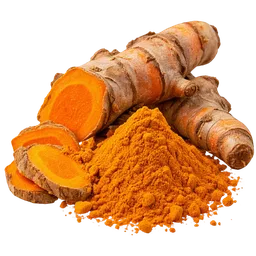
Curcumin is a bright yellow plant compound found in turmeric root, the spice behind many curries. Supplements concentrate curcumin and related curcuminoids far beyond what you get from seasoning food, which is why trial results do not automatically apply to a turmeric-heavy dinner.1
Curcumin turns down NF-kB, a cellular switch that tells immune cells to produce inflammatory signals. Think of NF-kB as a building's overly sensitive fire alarm. Curcumin helps reduce unnecessary alarms without shutting down the whole safety system.3 This signaling effect fits the small improvements seen across inflammation-related blood markers and the stronger results for pain in joint conditions.13
Bottom line
Curcumin is a sensible option if joint pain or recurring general pain limits your day and you want an evidence-backed supplement trial. Expect relief to build gradually, not overnight, and keep expectations modest for blood inflammation markers or stiffness. Skip self-experimenting with high-dose products if you have liver concerns, significant stomach symptoms, or take medicines without first checking with a clinician or pharmacist.
Common questions
Is curcumin the same as turmeric?
How long does curcumin take to work for joint pain?
Does curcumin lower inflammation?
What should you look for in a curcumin supplement?
Sources
Sources
- 1. Curcumin for the treatment of osteoarthritis: a systematic review and meta-analysis (2017) ↑
- 2. A randomized, pilot study to assess the efficacy and safety of curcumin in patients with active rheumatoid arthritis (2012) ↑
- 3. Curcumin and its effects on inflammatory biomarkers: a systematic review of randomized controlled trials (2017) ↑
- 4. Influence of piperine on the pharmacokinetics of curcumin in animals and human volunteers (1998) ↑
Generated August 27, 2026
Related
More evidence for Curcumin
Evidence guide
Curcumin
NewThe Golden Paradox: When a Kitchen Spice Meets the Hard Edges of Science
Evidence guide
May 28, 2026
Evidence map
Sleep
NewSleep: evidence map across 37 supplements
Evidence coverage map
Jul 30, 2026
Evidence map
Stress
NewStress: evidence map across 46 supplements
Evidence coverage map
Jul 30, 2026
Evidence map
Metabolic health
NewMetabolic health: evidence map across 82 supplements
Evidence coverage map
Jul 30, 2026