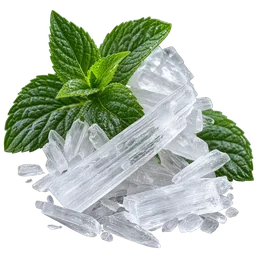
Menthol
What the trials found
Menthol does not yet show useful improvements in cold hands and feet or other health outcomes because human evidence remains too limited for firm conclusions.
- 2 papers
- 1 of 6 outcomes
What menthol actually does
Cold tolerance describes how comfortable your body feels in cold conditions. 37571316
| Outcome | Effect | Evidence | Dose | Time | Rank |
|---|---|---|---|---|---|
| Early research 1 | |||||
| Feel less cold in the cold Not enough research Cold tolerance describes how comfortable your body feels in cold conditions. | | 1 RCT 1 papers · n=28 | — | — | — |
Effect tiers come from native-unit MCID where available, Cohen's d otherwise.
Dose, timing & forms
How much
There is no well-supported oral or supplemental menthol dose for cold comfort, energy, anxiety, heart health, or exercise performance. The available consumer-facing finding is a small, early signal for altered cold sensation in the hands and feet, not a proven reason to take menthol daily.12 Follow the labeled use for a specific product rather than trying to convert topical or flavoring amounts into a supplement dose.
When and how long
Timing has not been established for a health outcome because human research does not yet show a reliable benefit from scheduled menthol use. If you use a labeled topical product for its sensory effect, use it only as directed and judge it by short-term comfort, not by an expectation of lasting warming or performance changes.12
Forms & standardisation
The best-understood form is menthol used topically or inhaled as an aroma or vapor, where it directly reaches sensory nerves. Peppermint oil is not interchangeable with isolated menthol because its other plant compounds and concentration vary. Look for a product that clearly states its menthol content and intended route of use.
What this is and how it works
- Across 1 study (n=28), menthol showed no clear change in finger and toe warmth; no MCID was established.1
- Two papers reviewed here span six outcomes, including thermosensation, cold pain, energy, and exercise performance.
- Available evidence primarily concerns short-term topical sensations rather than supplement use or sustained health benefits.
Menthol is a naturally occurring compound best known from peppermint and other mint oils. It gives mint its sharp, cooling character and appears in products ranging from cough drops to topical rubs.1
Menthol activates TRPM8, a temperature-sensing channel on sensory nerves that normally detects cooling. It is like tapping the cold button on your skin's sensory control panel, sending a cool signal even without a major change in skin temperature.1 Menthol can also alter pain-related nerve signaling, which helps explain why the sensation can feel intense or soothing depending on the setting.2
Bottom line
Menthol makes sense when you want its familiar short-term cooling sensation from a properly labeled product. It does not yet earn a spot in a supplement routine for warming cold hands and feet, boosting energy, or improving exercise results because the human evidence is too limited and the observed cold-comfort effect is trivial.12
Common questions
Does menthol actually warm your hands and feet?
Is menthol good for exercise performance?
How does menthol create a cooling feeling?
Sources
Sources
Generated August 27, 2026