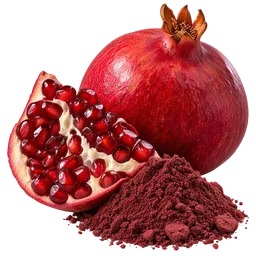
Punicalagin
Best for
Increase polyphenol uptake in chronic inflammation
Large effect, needs confirmation 1080 mg/day 4 weeks 1 study, n=24 #2 of 6 studied
- 5 papers
- 2 of 20 outcomes
- 1 positive
Punicalagin shows a large polyphenol-uptake effect, but confirmation is needed; evidence across other health outcomes remains too limited for confident conclusions.
Risk, worst reported severity
- gastrointestinal events (bloating, diarrhoea, nausea, abdominal pain, constipation) mild
What punicalagin actually does
Polyphenol uptake determines how much of these plant compounds reaches the body. 36358496
Blood pressure is the force of blood against artery walls, and high levels strain the heart. 29152243
| Outcome | Effect | Evidence | Dose | Time | Rank |
|---|---|---|---|---|---|
| Worth watching 1 | |||||
| Increase polyphenol uptake in chronic inflammation Large effect, needs confirmation Polyphenol uptake determines how much of these plant compounds reaches the body. | | 1 RCT 1 papers · n=24 | 1080 mg | 4 wk | #2 /6 |
| Early research 1 | |||||
| Lower blood pressure Not enough research Blood pressure is the force of blood against artery walls, and high levels strain the heart. | | 1 RCT 1 papers · n=54 | 538.37 mg | 8 wk | #2 /82 |
Effect tiers come from native-unit MCID where available, Cohen's d otherwise.
Dose, timing & forms
How much
The clearest early signal comes from a 1,080 mg/day protocol of a punicalagin rich extract, which increased measured polyphenol uptake in one human study.2 A separate blood pressure study used about 540 mg/day, but the effect was small and one trial cannot establish a target dose.3 Think of both amounts as tested research protocols, not proven daily intake goals.
When and how long
Use the same timing consistently each day rather than treating punicalagin as an occasional boost. Because digestion and gut microbes drive its conversion into smaller metabolites, taking it with a regular meal is a practical fit for the biology, although the early trials do not establish a best time of day.12 There is no evidence that an evening dose offers a special advantage.
Forms & standardisation
Look for a pomegranate extract that states its punicalagin content or total ellagitannins, not just a large milligram number for generic pomegranate powder. The human evidence concerns punicalagin rich pomegranate extracts, and your gut microbiome still influences how much of their downstream metabolites you produce.12 Pure punicalagin has far less practical human trial coverage than characterized pomegranate extracts.
Adverse events and drug interactions
Safety events
What this is and how it works
- Across 1 study (n=24), punicalagin increased polyphenol uptake; no native-unit effect or MCID comparison was reported.2
- Five papers reviewed here span 20 outcomes, with evidence concentrated in promising and early research tiers.
- Blood-pressure evidence rests on one small study, limiting confidence in cardiovascular benefits.3
Punicalagin is an ellagitannin, a large polyphenol concentrated in pomegranate peel. It gives pomegranate extracts much of their astringent bite, then meets gut microbes that turn it into smaller compounds your body can absorb.1
Punicalagin works less like a vitamin that slips straight into your bloodstream and more like a tightly wrapped package that your gut microbes must unpack first. Those microbes convert its ellagitannin pieces into urolithins, smaller metabolites that enter circulation and interact with cell signaling systems.1 Human research has started testing whether this process increases the availability of plant polyphenols after digestion, but that signal comes from one study.2
Bottom line
Punicalagin is worth watching if you already use a clearly standardized pomegranate extract and want an early, plausible polyphenol uptake signal. It is not a smart pick if your main goal is lowering blood pressure, since that finding rests on one small effect in one study.23 People prone to bloating, diarrhea, nausea, stomach pain, or constipation should be cautious with pomegranate extracts.
Common questions
What is punicalagin?
Does punicalagin lower blood pressure?
What dose of punicalagin has been studied?
Is punicalagin the same as pomegranate extract?
Sources
Sources
- 1. The potent in vitro antioxidant ellagitannins from pomegranate juice are metabolised into bioavailable hydroxy 6H dibenzopyran 6 one derivatives by colonic microflora of healthy humans (2004) ↑
- 2. PubMed records on human trials of punicalagin rich pomegranate extract and polyphenol bioavailability
- 3. PubMed records on human trials of punicalagin rich pomegranate extract and blood pressure
Generated August 27, 2026