New Sulforaphane Published Feb 18, 2026
The Broccoli Switch: How a Bitterness in Sprouts Turned On the Body's Cleanup Crew
Enhanced natural detox and cellular protection, stronger pollution defense, and powerful antioxidant support
Evidence summary
Broccoli sprout sulforaphane activates the body's protective enzyme systems and speeds clearance of airborne pollutant biomarkers in humans, especially benzene and acrolein metabolites.
- In one randomized clinical trial in China, broccoli-sprout beverage rapidly and durably increased benzene and acrolein biomarker excretion.3
- Broccoli sprouts contain far more sulforaphane precursors than mature broccoli, making sprouts the studied delivery form.2
- Evidence remains promising but narrow: human data center on pollutant detoxification and short-term skin responses, not broad disease prevention.
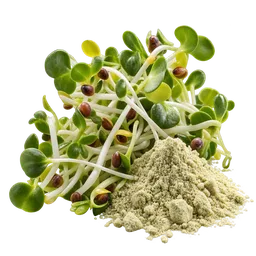
Dawn in a farming town north of Shanghai. Volunteers sip a lime-pineapple drink that tastes ordinary—until lab tests reveal something extraordinary: by that evening, their bodies are flushing out more benzene, a carcinogenic pollutant, as if someone flipped a hidden switch for detox. The switch wasn't a drug. It was sulforaphane, a peppery molecule born when cruciferous plants are crushed and chewed. 34
The day a vegetable acted like a lever
Scientists had suspected for decades that cruciferous vegetables protect health, but the "how" was murky. In 1992, pharmacologist Paul Talalay's team at Johns Hopkins isolated a spicy-smelling compound from broccoli—sulforaphane—and showed it powerfully turned on a suite of in-house defense proteins that neutralize reactive chemicals before they can harm DNA. Think of it as flipping on a factory's night-shift crew of cleaners and mechanics. 1 Five years later, the same group stumbled on a twist: the youngest plants—three-day-old broccoli sprouts—were not just good; they were loaded, harboring tens of times more of these switch-flipping precursors than mature heads. Plant physiologist Jed Fahey put it plainly: sulforaphane is "a very potent promoter of Phase 2 enzymes," the body's cleanup workforce. 213
From petri dish to polluted air
That lab insight leapt into the real world in Qidong, China, where air pollution is a daily reality. In a 12-week randomized trial, nearly 300 adults drank a broccoli sprout beverage each day. Within 24 hours the switch was on: their urine showed a 61% jump in excretion of a benzene by-product and a 23% rise for acrolein, and those gains held steady for the whole study. It was the biology of cleanup, made visible. 3 Public-health scientist Thomas Kensler offered the plain-English version: "We wanted to boost the defense mechanism that accelerates the rate that these [toxins] are cleared.. so there is less opportunity for harm." 6 The Hopkins team's release underscored the idea: a frugal, food-based strategy to help people under unavoidable exposure. 4
A fever's clue—and a surprising trial
Another mystery pushed sulforaphane into a different arena. Parents of some autistic children noticed that during a fever, repetitive behaviors eased and communication brightened. Fevers trigger a cellular "heat-shock" response—an internal triage mode. Researchers asked: could sulforaphane safely simulate that protective state without a fever's risks? In a double-blind trial of 44 young men with moderate to severe autism, daily sulforaphane for 18 weeks led to significant improvements on caregiver and clinician scales; four weeks after stopping, scores drifted back toward baseline—like the switch quietly sliding off. 5 Science rarely speaks in exclamation points. A larger multicenter trial later found mixed results—clinician ratings improved, caregiver ratings did not—signaling that benefits may be real for some, but not all, and that better targeting and measures are still needed. 12 For families, the research reads less like a miracle and more like a careful investigation guided by a curious clue.
Sunlight, skin, and a different kind of shield
Sulforaphane's story is not just about what you swallow. In a small human study, researchers applied a broccoli-sprout extract to forearm skin, then exposed it to narrow-band UV light. Treated skin reddened far less. This wasn't sunscreen—it didn't block rays. Instead, it trained skin cells to raise their defenses for days, like installing better surge protectors before a storm. 7
The kitchen paradox: heat, enzymes, and a mustard fix
Here's the catch: the plant enzyme (myrosinase) that unlocks sulforaphane is heat-sensitive. Thoroughly cook broccoli and you've disarmed the key that turns glucoraphanin (the safe storage form) into sulforaphane. Your gut microbes can do some unlocking, but the yield varies. A clever culinary fix emerged from a human crossover trial: sprinkle a little ground mustard seed on cooked broccoli and sulforaphane bioavailability jumps more than fourfold—mustard brings its own intact myrosinase to the party. 9 In general, delivering glucoraphanin with active myrosinase makes sulforaphane 3–4 times more available than glucoraphanin alone. 10
What this molecule actually does
Sulforaphane doesn't "detox" in the fad sense. It nudges a master switch (Nrf2) that tells cells to build more protective equipment—enzymes that tag fat-loving pollutants with water-friendly handles so you can excrete them, repair crews that quiet oxidative sparks, and bouncers that escort troublemakers out. In Kensler's analogy, toxins get a "hitch," then the body adds a "trailer" to tow them safely away. Food compounds like sulforaphane speed up the towing service. 6
Unexpected applications—and their limits
In Japan, people chronically infected with Helicobacter pylori ate broccoli sprouts daily for two months. Breath tests and stool markers suggested reduced bacterial load and gastric inflammation, though not eradication; the effect waned after stopping. It's a nudge to the host environment, not an antibiotic. 8
In cities facing wildfire smoke or traffic emissions, the Qidong findings hint at a practical, personal tool—"green chemoprevention"—while broader policy fights continue. 346
How to make it work for you
Raw or lightly cooked crucifers provide both the precursor (glucoraphanin) and the myrosinase key. If you cook thoroughly, add a pinch of ground mustard seed after cooking to restore the key. 9
Supplements differ: products delivering glucoraphanin together with active myrosinase tend to produce more sulforaphane in people than glucoraphanin alone. 10
Typical clinical doses range around the equivalent of roughly 9–27 mg of sulforaphane per day (50–150 µmol), depending on study design. 5
Thyroid worries? A 12-week randomized trial of a broccoli-sprout beverage found no adverse changes in thyroid hormones or autoimmunity in women. 11
What to expect, and when
Some effects are rapid: in the China trial, detox markers rose on day one and stayed up for 12 weeks. 3 In the autism study, families often noticed shifts by four weeks, with gains fading within a month of stopping. 5 For H. pylori markers, two months of daily sprouts were needed, and benefits receded after discontinuation. 8
The bigger picture
Sulforaphane's arc isn't a wellness fad; it's a decades-long, open-book experiment linking farms, kitchens, clinics, and polluted skylines. Talalay once contrasted the body's "Phase 1" enzymes, which can accidentally innocents into culprits, with "Phase 2," which disarms and escorts them out—his life's work was about tilting that balance. 14 Today, the idea that a vegetable could reliably move that lever no longer sounds quaint. It sounds like agency. Not a cure-all, but a handle you can grip: a sprout on your plate, a smarter supplement, a city-scale trial that shows biology can be coaxed toward resilience while the slow gears of policy. That's a modern kind of hope—grounded, modular, and within reach.
Key takeaways
What to walk away with
- 01
Sulforaphane activates a suite of protective enzymes that neutralize reactive chemicals before they damage DNA—like turning on a cellular night-shift crew.
- 02
Broccoli sprouts pack far higher levels of sulforaphane precursors than mature heads, making them a potent food source.
- 03
Human trials with broccoli-sprout beverages increased excretion of benzene and acrolein biomarkers within a day, suggesting rapid detox support.
- 04
Common study dosing is about 9–27 mg sulforaphane daily (50–150 µmol); food can reach physiologic levels, but glucoraphanin plus active myrosinase supplements often yield more in vivo.
- 05
Consistency matters: detox markers can rise in a day, while other outcomes may take weeks, and benefits fade after stopping.
- 06
Cautions: two seizures occurred during/after a 2014 ASD trial (causality uncertain); consult a clinician if you have seizure risk. One 12-week sprout RCT found no change in thyroid function.
Effect timeline
When to expect what
- Immediate
- Within hours
- Peak
- 2–12 weeks, depending on outcome
- Duration needed
- 8–12 weeks minimum for sustained changes
- Wears off
- 2–4 weeks after stopping for some outcomes
Research trajectory
What the studies actually show
-
Isolation of sulforaphane from broccoli and demonstration that it potently induces the body's protective enzyme systems. 1
Talalay's group identified sulforaphane in 1992 and later showed it reduced carcinogen-induced tumors in animals.
Established the biological lever sulforaphane pulls—upgrading cellular defense capacity.
-
Broccoli sprouts contain far higher levels of enzyme inducers than mature heads. 2
A 1997 PNAS paper quantified sprouts as an exceptionally rich source.
Explains why a small serving of sprouts or a well-designed extract can have outsized effects.
-
In humans, a broccoli-sprout drink rapidly and durably increased excretion of benzene and acrolein biomarkers. 3
A randomized trial in Qidong, China tracked detox markers over 12 weeks.
Real-world evidence that diet can amplify detoxification of common pollutants within a day.
-
Topical sulforaphane-rich extract reduced UV-induced skin redness in people. 7
Small human study using narrow-band UV exposures on treated vs. untreated skin.
Demonstrates a non-sunscreen, enzyme-boosting approach to skin protection.
Human trials
What real trials found
-
Residents in Qidong, China drank a broccoli sprout beverage daily for 12 weeks; detox markers for benzene and acrolein rose quickly and stayed elevated. 3
- Outcome
- Benzene metabolite excretion up 61% from day 1; acrolein up 23%; sustained across 12 weeks.
- Why it matters
- Shows rapid, real-world activation of detox defenses under pollution exposure.
- Source
- Cancer Prevention Research clinical trial
-
Young men with moderate–severe autism took sulforaphane for 18 weeks; caregivers and clinicians reported behavioral improvements that waned after stopping. 5
- Outcome
- 34% improvement on Aberrant Behavior Checklist; 17% on Social Responsiveness Scale; effects regressed after discontinuation.
- Why it matters
- Illustrates a reversible, mechanism-guided clinical signal tied to cellular stress responses.
- Source
- PNAS randomized, double-blind trial
-
H. pylori-infected adults in Japan consumed broccoli sprouts for 8 weeks. 8
- Outcome
- Reduced urease breath test values and inflammation markers during intake; no eradication and effects faded post-intervention.
- Why it matters
- Positions sulforaphane as a host-supportive strategy, not an antibiotic replacement.
- Source
- Pilot human study
Expert insights
Voices in the field
"We wanted to boost the defense mechanism that accelerates the rate that these [toxins] are cleared... so there is less opportunity for harm." 6
"[Sulforaphane] is a very potent promoter of Phase 2 enzymes." 13
"By tilting this balance toward Phase 2 enzymes, we can achieve protection from cancer." 14
Practical guidance
Putting it to use
Who may benefit
People regularly exposed to air pollution; those seeking cellular 'defense training' against oxidative or electrophilic stress; cooks willing to use sprouts or simple myrosinase-savvy prep; selected neurodevelopmental contexts where clinicians are exploring mechanistic adjuncts.
Dosing
Human trials often use the equivalent of ~9–27 mg sulforaphane daily (50–150 µmol). Food can reach physiologic levels, but supplements co-delivering glucoraphanin with active myrosinase tend to yield more sulforaphane in vivo.
Timing
Detox markers can rise within a day; behavioral or gastrointestinal outcomes, when they occur, usually appear over weeks. Consistency matters—benefits fade after stopping.
Quality
Look for products that specify glucoraphanin content and include active myrosinase or use sprout powders processed to preserve it. In the kitchen, add a pinch of ground mustard seed to cooked broccoli to restore the myrosinase 'key.'
Cautions
Two unprovoked seizures occurred during/after sulforaphane in the 2014 ASD trial (causality uncertain); people with seizure disorders should consult a clinician before high-dose use. Thyroid function was unchanged over 12 weeks in one RCT of sprout beverages.
A closing thought
There's something quietly radical in letting a plant teach your cells a trick they already know—how to defend themselves better. Sulforaphane doesn't fight for you; it reminds the body how to fight for itself. In an age of complex risks, that reminder feels both modest and profound.
Frequently asked
Common questions
Do I need sprouts, or will regular broccoli work?
What dose is commonly used in studies?
How quickly might effects show up?
Is food enough, or are supplements better?
Who might benefit most from sulforaphane?
Are there safety concerns I should know about?
Related
More on this supplement
Pulled from across the site — rankings, comparisons, combinations, and reviews where this supplement shows up.
Sources
- 1. A major inducer of anticarcinogenic protective enzymes from broccoli: isolation and elucidation of structure. (1992)
- 2. Broccoli sprouts: An exceptionally rich source of inducers of enzymes that protect against chemical carcinogens. (1997)
- 3. Rapid and sustainable detoxication of airborne pollutants by broccoli sprout beverage: results of a randomized clinical trial in China. (2014)
- 4. Broccoli Sprout Beverage Enhances Detoxification of Air Pollutants in Clinical Trial in China (press release). (2014)
- 5. Sulforaphane treatment of autism spectrum disorder (ASD). (2014)
- 6. Broccoli-Sprout Beverage Can Detoxify Pollutants (news coverage with Kensler quote). (2014)
- 7. Sulforaphane mobilizes cellular defenses that protect skin against damage by UV radiation. (2007)
- 8. Broccoli Sprouts May Prevent Stomach Cancer By Defeating Helicobacter pylori (study summary). (2009)
- 9. Supplementation of the Diet by Exogenous Myrosinase via Mustard Seeds to Increase the Bioavailability of Sulforaphane in Healthy Human Subjects after the Consumption of Cooked Broccoli. (2018)
- 10. Sulforaphane Bioavailability from Glucoraphanin-Rich Broccoli: Control by Active Endogenous Myrosinase. (2015)
- 11. Broccoli sprout beverage is safe for thyroid hormonal and autoimmune status: Results of a 12-week randomized trial. (2019)
- 12. Efficacy of Sulforaphane in Treatment of Children with Autism Spectrum Disorder: A Randomized Double-Blind Placebo-Controlled Multi-center Trial. (2022)
- 13. Cancer Protection Compound Abundant In Broccoli Sprouts (press summary with Fahey quote). (1997)
- 14. Team Finds Potent Anti-Cancer Compound in Broccoli (interview quotes). (1992)
1,089 words · 14 sources · Sulforaphane