New Caffeine Published Apr 20, 2026
Wide Awake, Wise to the Buzz: How a 500-Year Habit Became a Precision Tool
Sharper focus, enhanced athletic performance, and dependable energy when timed carefully
Evidence summary
Caffeine sharply boosts alertness, especially during sleep loss, making a centuries-old drink a fast, precise way to wake the brain.
- Caffeine at 75 mg or more increases alertness, the clearest benefit highlighted by EFSA3.
- Benefits show up in healthy adults, sleep-deprived drivers, and exercisers; gum and coffee act quickly.
- Late caffeine cuts sleep, and a 400-mg dose six hours before bed shortened sleep by more than 60 minutes6.
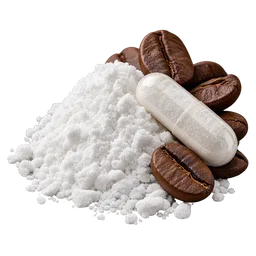
A Sufi monk in 15th-century Yemen sips a bitter brew to outrun sleep; five centuries later, a medic chews a piece of gum that wakes the brain in minutes. The molecule is the same.
From night prayers to rations
Legend says Sufi communities brewed coffee to keep vigil through the night, turning a shrub from Ethiopia into a ritual that spread across Arabia and the world. Coffeehouses followed, humming with argument and ideas, powered by a plant's clever defense chemical: caffeine. 1 Two centuries later, the poet Goethe handed a young chemist a box of coffee beans. Friedlieb Ferdinand Runge went back to his bench and teased out their active spark—"Kaffeebase," later caffeine—an origin story that reads like a hinge between folklore and lab science. 2 Today, the U.S. military slips that spark into rations. "You don't want to wait for the caffeine to start working," psychologist Harris Lieberman told a reporter about caffeinated gum. "You want to get the effect as immediately as you possibly can." 7 That gum can kick in within 5–10 minutes—useful when the task at hand cannot wait. 7
What caffeine actually does
Think of adenosine as the brain's sandman: with every waking hour, it piles up and whispers "slow down." Caffeine is the look-alike that slips into adenosine's seats and keeps those whispers from getting through. Michael Pollan puts it plainly: "When the caffeine is finally metabolized..the receptors are available again," and the adenosine flood explains the post-buzz slump. 18 This blockade sharpens attention quickly. Regulators in Europe concluded that products delivering at least 75 mg of caffeine can increase alertness, a rare case where a health claim met a high evidentiary bar. 3 Safe daily intake for most non-pregnant adults sits around 400 mg. 415
Proof it changes performance
Across sports, the pattern repeats: pooled analyses of dozens of trials show caffeine consistently nudges performance upward—endurance, strength, power, even jump height—though the biggest wins tend to show up in aerobic work. 5 Under sleep restriction, carefully dosed caffeine can hold reaction time, vigilance, and reasoning closer to baseline when the eyes say "bed." 6 One of the oddest, most useful findings: the "caffeine nap." Give sleepy drivers a short nap window and 150–200 mg of caffeine; the combination slashes lane-drift incidents far more than either alone—because the caffeine is rising just as the 10–15-minute doze clears the heaviest sleepiness. 89
The trade-off you feel that night
The same keys that unlock alertness can jam the door to sleep. In a controlled trial, a 400-mg dose taken even six hours before bed cut total sleep by more than an hour. 10 Real-world sensors echo that story: in a randomized N-of-1 trial, caffeinated coffee days meant about 1,000 extra steps but 36 fewer minutes of sleep, and more premature ventricular beats in those drinking more than a cup. Benefits for movement; costs to sleep. Choose with eyes open. 11
Why caffeine feels different for different people
Your response isn't just habit; it's hardware. A common variant in CYP1A2—the liver enzyme that clears caffeine—helps explain why some people process it fast while others linger in the buzz. In a large case-control study, heavy coffee raised heart-attack risk mainly in slow metabolizers; in fast ones, it didn't. 12 In the brain, variations in ADORA2A (the adenosine A2A receptor) predict who gets anxiety from a modest dose. 13 And the dose you think you're getting may not be the dose you get. Analyses of café coffees found a 10-fold swing in caffeine, and "decaf" still had measurable amounts. 14
Edges and cautions
Case reports describe healthy teens arriving in emergency rooms with atrial fibrillation after energy-drink binges—single stories, not proof of causation, but a reminder that concentrated stimulants plus sugar and add-ins can be a rough mix. 17 Pure powdered caffeine is another edge to avoid entirely: a teaspoon can equal 20–28 cups of coffee; the FDA links these products to deaths. 16 For everyday use, the agency estimates that about 1,200 mg taken rapidly can provoke toxic effects like seizures; for most adults, up to 400 mg/day is the general upper bound. 15
How to use the buzz like a tool
If your goal is focus, 75–200 mg (about one small strong coffee) usually does the job. 3 If you train, many athletes see benefits at ~3 mg/kg taken 30–60 minutes pre-workout; higher isn't necessarily better and may just add jitters. 5 In operations or shift work, military studies suggest spaced doses can preserve vigilance when sleep is scarce, but they don't replace sleep. 6 Timing matters. With a half-life around five hours (longer for some), caffeine taken late can lean on your sleep even when you feel "tired but wired." A simple rule: land your last dose at least six hours before bed; eight is kinder for sensitive sleepers. 1020 If a long drive looms, the caffeine-nap trick—150–200 mg, then eyes closed for 10–15 minutes—remains a rare hack that's both memorable and well-tested. 89 Fast delivery matters in emergencies; that's where gum shines: sublingual absorption, effects in minutes. 7 But for day-to-day life, remember that coffees vary wildly. Start smaller than you think—you can always add more. 14
A final, surprising thread
Epidemiology keeps whispering that habitual caffeine exposure tracks with lower Parkinson's risk, and some analyses even hint at slower progression—intriguing, not definitive, and a reminder that adenosine signaling weaves through many neural circuits we're still mapping. 21 You don't need to worship at the altar of coffee to respect caffeine's power. It is both torch and timer: a bright beam through foggy mornings, and a shadow that lengthens toward night. Use it like a tool—measured, timed, and tuned to your wiring—and it will more often work for you than against you. 351011
Key takeaways
What to walk away with
- 01
Robust evidence: ≥75 mg boosts alertness; most adults tolerate up to ~400 mg/day.
- 02
Performance edge: Caffeine improves endurance, strength, and power across varied tasks.
- 03
Timing matters: A 400 mg dose 6 hours pre-bed can cut sleep by over an hour—land the last dose ≥6 hours before sleep (8 if sensitive).
- 04
Practical dosing: For focus, 75–200 mg often works; for training, ~3 mg/kg 30–60 minutes pre-workout; small spaced doses can help during sleep restriction.
- 05
Fast delivery forms: Military use of caffeinated gum underscores speed—effects can arrive within minutes compared with beverages.
- 06
Safety notes: Avoid concentrated powders and energy-drink binges; palpitations and other effects are more likely in susceptible people.
Effect timeline
When to expect what
- Immediate
- Within minutes
- Peak
- 30–60 minutes after a typical drink
- Duration needed
- Ongoing (acute effects per dose)
- Wears off
- Most alerting effects fade within 3–6 hours; half-life ~5 hours
Research trajectory
What the studies actually show
-
Products with ≥75 mg caffeine increase alertness; up to ~400 mg/day is generally safe for most adults. 3
EFSA reviewed human trials for attention/alertness claims and safety across populations.
Sets practical, evidence-based dosing guardrails for everyday use.
-
Caffeine improves exercise performance across endurance, strength, and power tasks. 5
An umbrella review synthesized 21 meta-analyses across exercise modalities.
Supports targeted timing/dosing before training or competition.
-
A 400-mg dose six hours before bedtime still reduced sleep by >60 minutes. 10
Randomized, placebo-controlled trial measured objective sleep disruption at 0, 3, and 6 hours pre-bed.
Explains why afternoon caffeine quietly taxes tonight's recovery.
-
Real-world randomized trial: coffee days meant ~1,000 extra steps, ~36 fewer minutes of sleep, and more PVCs with higher intake. 11
The CRAVE N-of-1 design used wearables, geofencing, and receipts to track behavior and physiology.
Quantifies everyday trade-offs to inform personal choices.
-
Genetic differences shape risk and feel: slow CYP1A2 metabolizers saw higher MI risk with heavy coffee; ADORA2A variants predict caffeine-induced anxiety. 12
Case-control genetics in Costa Rica (MI) and double-blind psychopharmacology for anxiety response.
Motivates personalized limits instead of one-size-fits-all advice.
Human trials
What real trials found
-
Two healthy adolescents developed atrial fibrillation after consuming multiple highly caffeinated energy drinks. 17
- Outcome
- Both were cardioverted with no structural heart disease found; authors caution about ED binges as a potential trigger.
- Why it matters
- Illustrates rare but serious arrhythmia risk at extreme intakes, especially with energy drinks.
- Source
- Journal of Medical Case Reports (2011)
-
U.S. FDA documented deaths and severe toxicity from bulk powdered/liquid caffeine sold directly to consumers. 16
- Outcome
- Agency warned/banned bulk sales; emphasized that a teaspoon can equal 20–28 cups of coffee.
- Why it matters
- Shows why dose form and concentration matter more than mythology about 'natural' caffeine.
- Source
- FDA consumer advisories and enforcement notices
Expert insights
Voices in the field
"You don't want to wait for the caffeine to start working...You want to get the effect as immediately as you possibly can." 7
"When the caffeine is finally metabolized...the receptors are available again," and the adenosine surge brings fatigue. 18
Practical guidance
Putting it to use
Who may benefit
People needing short-term alertness (e.g., shift workers), endurance athletes targeting a modest edge, and anyone planning tasks demanding vigilance—so long as sleep and sensitivity are respected.
Who should avoid
Individuals with known arrhythmias, uncontrolled hypertension, severe reflux, or panic disorder may need to limit or avoid caffeine; discuss personalized limits with a clinician.
Dosing
For focus, 75–200 mg often suffices; for training, ~3 mg/kg 30–60 minutes pre-workout; spaced small doses can help during sleep restriction—but never replace sleep.
Timing
Land your last dose ≥6 hours before bed (8 if sensitive). For long drives, try a proven 'caffeine nap': 150–200 mg, then 10–15 minutes eyes-closed.
Quality
Café caffeine can vary 10-fold; decaf still has some. Gum or mints act faster (5–10 minutes) than drinks or pills.
Cautions
Avoid bulk powdered or highly concentrated caffeine; a teaspoon can equal 20–28 cups. Energy-drink binges can provoke palpitations, especially in susceptible people.
A closing thought
Caffeine is less a magic potion than a lever. Pull it with intention—dose, form, and timing—and it can lift the day without borrowing too much from the night.
Frequently asked
Common questions
How much caffeine is generally considered safe per day?
What doses work best for focus versus workouts?
How late in the day can I have caffeine without hurting sleep?
Can caffeine replace sleep during long or demanding days?
Are certain forms or amounts riskier than others?
Who is most likely to benefit from targeted caffeine use?
Related
More on this supplement
Pulled from across the site — rankings, comparisons, combinations, and reviews where this supplement shows up.
Ingredient evidence
Ingredient evidence
NewCaffeine
All scored outcomes
Aug 27, 2026
Ranking
Staying asleep through the night
NewBest Supplements to Stay Asleep Through the Night
Evidence ranking
Apr 4, 2026
Evidence map
Focus & memory
NewFocus & memory: evidence map across 45 supplements
Evidence coverage map
Jul 30, 2026
Evidence map
Sleep
NewSleep: evidence map across 37 supplements
Evidence coverage map
Jul 30, 2026
Evidence map
Stress
NewStress: evidence map across 46 supplements
Evidence coverage map
Jul 30, 2026
Sources
- 1. History of coffee: discovery and spread; Sufi use for night prayers (2024)
- 2. Google Doodle Celebrates the Chemist Who 'Discovered' Caffeine (Runge and Goethe) (2019)
- 3. EFSA opinion: caffeine and increased alertness (≥75 mg) (2014)
- 4. EFSA scientific opinion on the safety of caffeine (habitual up to 400 mg/day) (2015)
- 5. Umbrella review: caffeine supplementation and exercise performance (2020)
- 6. Caffeine improves vigilance and reasoning during restricted sleep (2014)
- 7. Inside the Crazy Lab Where the Army Spikes Its Rations With Caffeine (Lieberman quotes; gum onset) (2014)
- 8. Counteracting driver sleepiness: effects of napping and caffeine (1996)
- 9. Suppression of sleepiness in drivers: caffeine plus a short nap (1997)
- 10. Caffeine taken 0, 3, or 6 hours before bed disrupts sleep (2013)
- 11. CRAVE trial: acute effects of coffee on steps, sleep, ectopy (2023)
- 12. Coffee, CYP1A2 genotype, and risk of myocardial infarction (2006)
- 13. ADORA2A and DRD2 polymorphisms linked to caffeine-induced anxiety (2008)
- 14. Caffeine content of specialty coffees (2003)
- 15. FDA: How much caffeine is too much? (400 mg guidance; ~1,200 mg toxic) (2024)
- 16. FDA warns about pure and highly concentrated caffeine (2018)
- 17. Atrial fibrillation in healthy adolescents after highly caffeinated beverages (case reports) (2011)
- 18. Michael Pollan interview on caffeine (NPR transcript) (2020)
- 19. EFSA: caffeine and increased physical performance (Article 13 claims) (2011)
- 20. CDC/NIOSH training: caffeine onset and half-life (2014)
- 21. Meta-analysis: caffeine/coffee and Parkinson's risk and progression (2020)
1,147 words · 21 sources · Caffeine