New Creatine Published Apr 16, 2026
From Beef Tea to Brain Fuel: The Many Lives of Creatine
Stronger muscles, better workouts, sharper thinking, and improved mood support
Evidence summary
Creatine is a well-validated energy buffer that raises muscle creatine and strengthens training gains, especially when paired with resistance training in older adults.
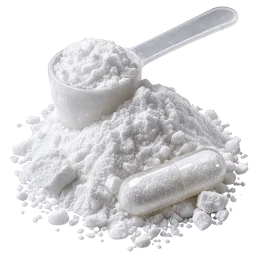
A French chemist boiled beef in the 1830s and pulled out a crystal he named after κρέας—meat. Nearly two centuries later, the same molecule is helping sprinters hold speed, older adults keep their legs, and researchers probe fatigue in the brain. How did a kitchen-sounding extract become one of the most validated—and misunderstood—tools in modern health?
Sparks in the muscle, echoes in history
In 1832, Michel Eugène Chevreul isolated a new substance from meat and called it creatine—"of flesh." It sat in the background of physiology for decades until the 1920s, when scientists discovered phosphocreatine, the body's rapid-response energy reserve. Think of it as a rechargeable battery pack that snaps onto ATP—the energy coin your cells spend every second—and refills it in bursts when demand spikes. Later, a Swedish team showed that simply swallowing creatine could raise the muscle's stores, like topping up a power bank before a race. Within five days of 5-gram servings, human quadriceps held markedly more creatine—sometimes 20–50% more—especially in those who started low. 123
What it actually does (without the jargon)
When effort surges—standing from a chair, finishing a hill, bracing a suitcase—the body burns ATP in milliseconds. Creatine's job is to hand ATP a spare phosphate so it can reform instantly. More creatine on the shelves means more split-second energy before the "burn" arrives. In repeated-sprint and strength tests, that translates into holding power deeper into the set, squeezing out extra reps, or slowing the fade across sprints—small advantages that compound over weeks of training. 456
The broadening circle: beyond the weight room
The first surprise is age. A meta-analysis in older adults found that adding creatine to resistance training improved strength and lean mass versus training alone. More recent analyses extend this to day-to-day function (faster sit-to-stand), with the effect clearest when creatine partners with lifting. As one clinician put it in a February 2025 feature: "Certainly, if you're not doing any resistance training, I wouldn't bother taking creatine." 789
The second surprise is blood sugar. In a 12-week randomized trial of people with type 2 diabetes, five grams of creatine per day alongside exercise lowered HbA1c by about 1.1 percentage points compared with placebo—likely by helping muscles pull in more glucose during training. 10
And the brain? Here the story shifts from certainty to curiosity. Under stress—sleep loss or low oxygen—creatine acts like a backup generator. In controlled trials, supplementation blunted the attention and mood decline after 24–36 hours without sleep and restored cognitive performance under hypoxia, consistent with the brain drawing on that extra energy reserve. "The brain already uses creatine for its great energy demands," notes exercise physiologist Eric Rawson. "Supplemental creatine could add to the energy reserve." 111213
Real people, real trials
In women with major depression starting an SSRI, adding 5 g/day of creatine led to faster and greater symptom improvement, visible by week two and sustained through week eight, versus placebo. It's an early but eye-catching hint that shoring up cellular energy can help mood treatments work quicker. 14
In a randomized pilot in children and teens with traumatic brain injury, six months of creatine was linked to shorter ICU stays and better cognitive and behavior scores compared with controls—preliminary, but human data that keeps the neuroprotective question open. 15
For long COVID, small trials suggest creatine replenishes depleted muscle and brain stores, with signals for less fatigue and better exercise tolerance when paired with other therapies. It's not a cure, but it marks a frontier. 161718
Myths that refused to die—and what the data says
"Creatine dehydrates you and causes cramps." In multi-season NCAA football data, users had lower or similar rates of cramping, heat illness, and total injuries than non-users. Other cohorts echo the finding. 1920
"It wrecks your kidneys." High-quality reviews—including a meta-analysis in the Journal of Renal Nutrition and a 2023 narrative review—find no evidence of renal harm in healthy users at studied doses. Serum creatinine can rise a little—but that lab number partly reflects the supplement itself, not kidney damage. 2122
"It makes your hair fall out." A 2009 rugby study linking creatine to higher DHT seeded the rumor. A 12-week randomized trial directly measured hair parameters and found no differences between creatine and placebo; clinicians stress the evidence does not show creatine causes baldness. 2324
"The current body of evidence does not indicate that creatine causes hair loss." —Jose Antonio, PhD, sports nutrition researcher. 24
How to use it in real life
For most healthy adults, creatine monohydrate is the form to choose—well-studied, inexpensive, and effective. Two on-ramps work:
Load 20 g/day split into 4 doses for 5–7 days, then 3–5 g/day to maintain. You'll feel the performance edge within days. 3
Or, skip loading and take 3–5 g/day; muscles fill more gradually over ~3–4 weeks. 6
Take it with a meal or post-workout to reduce stomach upset. Look for third-party tested products (e.g., NSF Certified for Sport or equivalent). If labs are being monitored, tell your clinician you're supplementing—creatinine may tick up without indicating harm. And remember the pairing lesson: the biggest day-to-day wins show up when creatine rides alongside resistance training. 825
The longer view
Creatine isn't a cure-all; it's a battery. For younger athletes, it helps you hold power. For older adults, it can make training work a little harder for you. For metabolism and mind, the evidence is promising in specific contexts (exercise with diabetes; stress-tested cognition; select mood disorders) and emerging elsewhere. Muscle stores fade back to baseline about four weeks after stopping—like a power bank slowly self-discharging—so benefits ebb if you do. 6
If there's a philosophy to borrow from creatine's past, it's this: energy is a currency of capability. From Chevreul's benchtop crystal to modern hospital wards and home gyms, we're still learning when topping up that cellular wallet matters most—and how to spend it well. 11415
Key takeaways
What to walk away with
- 01
Creatine tops up the phosphocreatine "battery," rapidly refueling ATP during high-demand efforts for stronger, repeated performance.
- 02
Five days of 5 g servings can raise muscle creatine substantially (often 20–50%), especially in people starting with lower stores.
- 03
Best results show up alongside resistance training—particularly in older adults where strength and functional gains are the goal.
- 04
Use creatine monohydrate: either load (20 g/day split for 5–7 days, then 3–5 g/day) or take 3–5 g/day consistently without loading.
- 05
Take with meals or post-workout to reduce GI upset; vegetarians/vegans and adults 50+ often stand to benefit most.
- 06
Creatinine on blood tests may rise without indicating kidney harm; tell your clinician you supplement so labs are read correctly.
Effect timeline
When to expect what
- Immediate
- Within days with loading; otherwise gradual
- Peak
- 3–8 weeks (with consistent training)
- Duration needed
- Ongoing for continued benefits; or 8–12 weeks minimum
- Wears off
- ~4 weeks after stopping
Research trajectory
What the studies actually show
-
Five days of 5 g servings elevated muscle creatine substantially (often 20–50%), especially in low-baseline individuals. 3
Karolinska investigators measured muscle stores before/after short-term dosing and confirmed uptake.
Establishes that oral creatine meaningfully increases the body's energy reserve.
-
Creatine plus resistance training improves strength/lean mass in older adults; functional gains appear when combined with training. 7
Systematic reviews and meta-analyses aggregated RCTs in aging populations; journalism highlighted the training dependency.
Positions creatine as a healthy-aging adjunct, not a standalone fix.
-
Under sleep deprivation and hypoxia, creatine preserved attention, mood, and corticomotor excitability. 12
Randomized trials stressed the brain (no sleep; low oxygen) and observed protection with supplementation.
Suggests brain benefits are context-dependent—most visible when the brain is energy-stressed.
Human trials
What real trials found
-
Women with major depression starting escitalopram improved faster when 5 g/day creatine was added vs. placebo over 8 weeks. 14
- Outcome
- Greater HAM-D score reductions by week 2; maintained at weeks 4 and 8.
- Why it matters
- Illustrates a clinical context beyond athletics where cellular energy support may accelerate response.
- Source
- Am J Psychiatry 2012 RCT
-
Children/adolescents with traumatic brain injury received creatine for 6 months in an open-label randomized pilot. 15
- Outcome
- Shorter ICU stays and better cognitive/behavior scales; no reported adverse effects.
- Why it matters
- Suggests potential neuroprotective applications to explore.
- Source
- J Trauma 2006 pilot RCT
-
Adults with type 2 diabetes doing exercise training plus 5 g/day creatine for 12 weeks. 10
- Outcome
- HbA1c dropped ~1.1% vs. placebo; improved glucose handling.
- Why it matters
- Shows metabolic benefits when paired with exercise.
- Source
- Med Sci Sports Exerc 2011 RCT
Expert insights
Voices in the field
The brain already uses creatine for its great energy demands; supplemental creatine could add to the energy reserve. 11
Certainly, if you're not doing any resistance training, I wouldn't bother taking creatine. 9
The current body of evidence does not indicate that creatine causes hair loss. 24
Practical guidance
Putting it to use
Who may benefit
- Lifters and field/court athletes chasing repeated-effort performance. - Adults 50+ adding or maintaining strength training to protect muscle and function. - Vegetarians/vegans (often start with lower stores), and people training while managing blood sugar. - Individuals facing occasional sleep loss or hypoxic stress who want a small cognitive buffer.
Who should avoid
People with diagnosed kidney disease or taking nephrotoxic medications without medical supervision; individuals with bipolar spectrum disorders due to rare reports of manic switch in augmentation trials.
Dosing
Use creatine monohydrate. Either load (20 g/day split for 5–7 days, then 3–5 g/day) for faster effects, or take 3–5 g/day consistently without loading.
Timing
Take with meals or post-workout to minimize GI upset; pair with resistance training for the biggest functional payoff.
Quality
Choose third-party tested products (e.g., NSF Certified for Sport). Fancy "new" forms haven't beaten monohydrate in head-to-head trials.
Cautions
Creatinine on blood tests may rise slightly without indicating kidney harm; tell your clinician you supplement so labs are interpreted correctly.
A closing thought
Creatine's story is oddly democratic: the same molecule that helps a sprinter lean into a finish can help a grandparent stand up more easily—and perhaps steady a fatigued mind. Not magic, just more available energy when life asks for it. The open question for the next decade isn't whether creatine works—it's where that extra energy matters most, and how to pair it with training and therapy so capability grows where it counts.
Frequently asked
Common questions
What form and dose should I use?
Do I need to lift weights for creatine to help?
How fast will I notice effects?
When should I take it to avoid stomach upset?
Who is most likely to benefit?
Should I worry if my creatinine goes up on labs?
Related
More on this supplement
Pulled from across the site — rankings, comparisons, combinations, and reviews where this supplement shows up.
Ingredient evidence
Ingredient evidence
NewCreatine
All scored outcomes
Aug 27, 2026
Ranking
Body Fat Reduction
NewBest Supplements for Fat Loss, Ranked by Clinical Evidence
Evidence ranking
Apr 4, 2026
Ranking
Healthy Brain Aging
NewBest Supplements to Protect Brain Tissue as You Age (2026)
Evidence ranking
May 18, 2026
Ranking
Memory and recall
NewThe 10 Best Supplements for Memory, Ranked by Evidence
Evidence ranking
May 9, 2026
Systematic review
Systematic review
NewCreatine for Strength and Muscle Performance
GRADE evidence review
May 4, 2026
Evidence map
Focus & memory
NewFocus & memory: evidence map across 45 supplements
Evidence coverage map
Jul 30, 2026
Sources
- 1. Creatine — History (2025)
- 2. Phosphocreatine — History of discovery (2025)
- 3. Elevation of creatine in resting and exercised muscle of normal subjects by creatine supplementation (1992)
- 4. Effects of oral creatine supplementation on sprint swimming performance (1998)
- 5. Influence of oral creatine supplementation on muscle torque during repeated bouts of maximal voluntary exercise in man (1993)
- 6. Creatine supplementation increases muscle total creatine but not maximal intermittent exercise performance (1999)
- 7. Creatine supplementation during resistance training in older adults—a meta-analysis (2014)
- 8. Creatine supplementation for optimization of physical function in adults at risk of disability: systematic review and meta-analysis (2024)
- 9. Washington Post: Can creatine supplements help older adults? (2025)
- 10. Creatine in type 2 diabetes: a randomized, double-blind, placebo-controlled trial (2011)
- 11. Washington Post: Brain energy quote (Eric Rawson) (2025)
- 12. Skill execution and sleep deprivation: effects of acute caffeine or creatine—randomized placebo-controlled trial (2011)
- 13. Creatine supplementation enhances corticomotor excitability and cognitive performance during oxygen deprivation (2015)
- 14. Oral creatine augmentation of SSRI in women with major depression: randomized, double-blind trial (2012)
- 15. Creatine administration in pediatric traumatic brain injury: open-label randomized pilot (2006)
- 16. Reduced tissue creatine levels in patients with long COVID: cross-sectional study (2023)
- 17. Creatine plus breathing exercises in long COVID: double-blind parallel pilot (2023)
- 18. Eight-week creatine±glucose for long COVID symptoms: randomized trial (note) (2024)
- 19. Creatine use and injury/cramping in NCAA football: Journal of Athletic Training report (2003)
- 20. Creatine supplementation during college baseball: injuries and cramps (2003)
- 21. Effects of creatine supplementation on renal function: systematic review and meta-analysis (2019)
- 22. Is it time for a requiem for creatine-induced kidney failure? Narrative review (2023)
- 23. Does creatine cause hair loss? 12-week randomized controlled trial (2025)
- 24. Men's Health: expert rebuttal of hair loss claim (Jose Antonio) (2021)
- 25. ISSN Position Stand: Safety and efficacy of creatine in exercise, sport, and medicine (2017)
1,110 words · 25 sources · Creatine