New Phosphatidylcholine (PC) Published May 4, 2026
Oil and Water: The Hidden Life of Phosphatidylcholine
Supports normal liver fat export and bile protection; investigated for NAFLD and ulcerative colitis; supplies essential choline
Evidence summary
Phosphatidylcholine helps the liver package and move fat, with the clearest human signal in fatty liver and choline deficiency.
- Essential phospholipids lowered ALT and triglycerides in NAFLD across small randomized trials.3
- Phosphatidylcholine supplies choline, a major bile phospholipid, and many adults need about 400 mg daily.7
- Modified-release LT-02 missed remission in mesalamine-refractory ulcerative colitis, despite acceptable safety.2
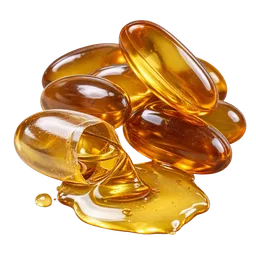
An egg yolk gave away the secret. In 1850, pharmacist Théodore Gobley pulled from it a slippery substance that made oil and water cooperate. He named it lécithine—phosphatidylcholine—and unknowingly opened a story that still unfolds in our livers, bile, and gut today.
The molecule that keeps the peace
Imagine your cells as little water balloons. To keep their membranes intact when they meet oily fats or harsh bile acids, they recruit a peacekeeper: phosphatidylcholine (PC). It's the emulsifier nature invented—half loves water, half loves fat—first isolated from egg yolk by Théodore Gobley, who mapped its chemistry over three decades in the 1800s. Without PC, oil and water refuse to meet; with it, they make truce. 12
When choline runs low, the liver pays
PC is also your body's main delivery truck for fat export from the liver. The truck—VLDL—can't roll without PC in its outer shell. Deprive humans of choline (the backbone used to make PC), and fat piles up in the liver within weeks; enzymes leak into blood; muscles ache. Re-introduce choline and the damage reverses. Controlled depletion–repletion studies and guidance from European authorities cemented this: most adults need roughly 400 mg/day of choline, more in pregnancy. 12789 Clinicians learned this the hard way. In the 1990s and 2000s, patients on long-term parenteral nutrition (hospital feeding) developed fatty liver because their formulas lacked choline. Adding choline—or lecithin/PC—raised blood choline, melted liver fat on CT within 2–4 weeks, and lowered ALT/AST; stop the choline and fat crept back within ~10 weeks. That's a transformation story written in scans. 1011161415
"We thought people didn't require choline.. I took choline away and most men and post-menopausal women developed fatty liver or muscle damage. That work proved humans require choline," said nutrition scientist Steven Zeisel, recalling how deficiency in people overturned textbooks. 6
NAFLD: supportive role, not a silver bullet
Because choline shortages impair fat export, researchers tested essential phospholipids (soy-derived PC mixtures, often called EPL or PPC) in nonalcoholic fatty liver disease. A 2020 systematic review and network meta-analysis found that, across small trials (4–72 weeks), adding EPL to standard care tended to reduce ALT by ~11–29 U/L and lower triglycerides and total cholesterol; authors urged larger trials to confirm. 345 A 2024 phase IV trial now underway is giving 1,800 mg/day of Essentiale (EPL) for six months to measure liver fat by elastography—exactly the kind of study needed to move from promise to proof. 1920 Bottom line: in NAFLD, PC-rich EPL looks promising as an adjunct—especially alongside diet and movement—but it's not established disease-modifying therapy. 3
Bile's bodyguard: why PC matters to gall and bile ducts
Every minute, bile acids—nature's detergents—flow through tiny ducts. To keep those soaps from dissolving your own tissues, the liver flips PC into bile via the ABCB4 (MDR3) transporter, where PC and bile acids form mixed micelles that soften bile's sting and stabilize cholesterol. Genetic glitches in ABCB4 strip PC from bile, leading to gritty stones (LPAC), pregnancy cholestasis, and duct injury; recent structural biology shows exactly how ABCB4 recruits and moves PC, and how some drugs can clog this pump. Think of PC here as the bubble-wrap that keeps bile's detergents from scratching the pipes. 2122232627
The gut barrier twist: coating the mucus
Another surprising place PC works is on top of the colon's mucus—a water-shedding layer that keeps resident microbes from rubbing the lining raw. In ulcerative colitis (UC), this PC coat runs thin. Early trials with a delayed-release PC (LT-02) that survives the stomach hinted that topping up the mucus PC might calm symptoms and promote mucosal healing, especially at higher doses (~3.2 g/day). 18 But science is a detective story with wrong turns. In 2024, two larger, international, double-blind trials found no significant benefit in inducing remission and only faint maintenance signals; the induction study stopped early for futility. Safety looked good, but efficacy didn't replicate. The idea—rebuilding a hydrophobic mucus shield—remains elegant; the drug, so far, hasn't delivered. 1713
"Intestinal mucus serves as the first line barrier.. a deficiency of mucus phosphatidylcholine predisposes to inflammation," wrote gastroenterologist Wolfgang Stremmel in a 2024 review, making the mechanistic case even as clinical results stay mixed. 24
The paradox you should know: choline, microbes, and TMAO
PC delivers choline, and gut microbes can choline into TMAO, a compound linked in human cohorts to higher cardiovascular risk and platelet reactivity. A Cleveland Clinic team showed supplemental choline can raise TMAO and heighten platelet responsiveness—one plausible route to more clotting risk in some people. Yet TMAO biology is nuanced: microbiome gene counts don't reliably predict who makes TMAO, and foods that raise TMAO (like fish) often associate with better heart outcomes. The signal is there; the context matters. 25[^19a][^13a]
Where this leaves a health-conscious reader
If your diet skimps on choline-rich foods (eggs, meats, some fish, soy), meeting the 400 mg/day choline target—through food or choline-bearing supplements like PC—helps the liver do its core job: export fat safely. 78
In NAFLD, EPL/PC may improve enzymes and lipids as add-ons to lifestyle changes. Expect gradual effects over months, not days. Watch for larger trials. 319
For UC, modified-release PC remains experimental; the largest trials to date didn't meet endpoints. 17
Be wary of a cosmetic detour: PC/deoxycholate "fat-dissolving" injections (often sold as PCDC). FDA warns they're unapproved and have caused scars, infections, and deformities; only deoxycholic acid (Kybella) is approved—and only under the chin, in clinical hands. 282930
Practical notes you can use
Typical clinical research doses vary by goal: UC trials used 1.6–3.2 g/day of modified-release PC; a current NAFLD trial uses 1.8 g/day of EPL. Over-the-counter lecithin products often provide grams of PC but far less choline than pure choline salts—adjust expectations accordingly. 181719
Timeline: in deficiency states (e.g., parenteral-nutrition–related), imaging changes appeared within 2–4 weeks; in NAFLD studies, benefits accrued over 8–24+ weeks. Stopping can let problems creep back within weeks to a few months. 101116
If you have cardiovascular disease or high TMAO, focus on whole-diet patterns (more plants, fish, fiber) and discuss choline/PC dosing with your clinician; the microbiome's response varies by person. 25[^2a]
A closing thought
Phosphatidylcholine doesn't behave like a typical "supplement." It's more like infrastructural material—grease in the gears and bubble-wrap on the pipes. Where systems are starved of choline or stripped of PC, restoring it can set physiology right. Where systems are already stable, adding more brings diminishing returns—and, occasionally, new questions. The story began in an egg yolk; it continues in your liver, bile, and gut, one careful trial at a time. 1
Key takeaways
What to walk away with
- 01
- 02
- 03
- 04
- 05
Gut microbes can choline into TMAO; cardiovascular implications depend on context. 25[^2a]
- 06
Effect timeline
When to expect what
- Immediate
- No
- Peak
- 6-12 weeks
- Duration needed
- 8-24 weeks minimum; longer for liver fat change
- Wears off
- 2-10 weeks after stopping, based on deficiency studies
Research trajectory
What the studies actually show
-
EPL (soy-PC) add-on therapy reduced ALT and triglycerides in NAFLD across small RCTs; more trials needed. 3
Network meta-analysis pooled heterogeneous studies (4–72 weeks).
Signals benefit but calls for definitive outcomes and imaging.
-
LT-02 (modified-release PC) did not induce remission in mesalamine-refractory UC in Phase III; safety acceptable. 17
Multinational, double-blind trials stopped induction early for futility.
Tempered expectations for UC despite mechanistic allure.
-
Choline deficiency in humans causes fatty liver and muscle injury, reversible with repletion; many adults require ~400 mg/day. 7
Controlled depletion–repletion feeding studies informed EFSA AIs.
Establishes foundational need; PC supplies choline.
Human trials
What real trials found
-
Parenteral-nutrition patients with fatty liver normalized liver density and enzymes after choline/lecithin repletion; relapse after discontinuation. 10
- Outcome
- CT improvement within 2–4 weeks; enzymes fell; recurrence after ~10 weeks off choline.
- Why it matters
- Demonstrates causal role of choline/PC in human liver fat export.
- Source
- Hepatology 1995; JPEN 2001; summary in nutrition society review
Expert insights
Voices in the field
We thought that people didn't require choline... I took choline away and most men and post-menopausal women developed fatty liver or muscle damage. That work proved humans require choline. 6
Intestinal mucus serves as the first line barrier... a deficiency of mucus phosphatidylcholine predisposes to mucosal inflammation. 24
Practical guidance
Putting it to use
Who may benefit
People with low choline intake; those with NAFLD seeking adjuncts to diet and exercise; patients at choline risk (e.g., certain genetics or post-menopause) under clinician guidance.
Who should avoid
Those considering cosmetic 'lipodissolve' injections using PC/DC; these products are not FDA-approved and have caused serious harm.
Dosing
Meet choline intake (≈400 mg/day adults) via food or supplements; EPL/PC research doses range from ~1.8 g/day (NAFLD protocol) to 1.6–3.2 g/day (UC trials).
Timing
In deficiency, imaging and enzyme changes may appear in 2–4 weeks; NAFLD studies generally assess at 8–24+ weeks. Benefits fade weeks after stopping.
Quality
Look for standardized soy or sunflower PC (EPL/PPC) with clear PC content per dose; lecithin labels vary widely in actual PC and choline delivered.
Cautions
Avoid unapproved PC/deoxycholate 'fat-dissolving' injections; only deoxycholic acid (Kybella) is FDA-approved for submental fat under medical supervision.
A closing thought
PC isn't a miracle molecule so much as a material—like mortar between bricks. Where structure is missing, adding mortar changes everything; where the wall is sound, piling on more looks like excess. The art is knowing which is which.
Frequently asked
Common questions
Is phosphatidylcholine the same as 'lecithin'?
Will PC supplements fix fatty liver on their own?
Does PC raise TMAO and heart risk?
Can PC help ulcerative colitis?
Are fat-dissolving PC injections safe?
Related
More on this supplement
Pulled from across the site — rankings, comparisons, combinations, and reviews where this supplement shows up.
Sources
- 1. Théodore Nicolas Gobley—discoverer of lecithin (2024)
- 2. Lecithin (PC) overview (2025)
- 3. Essential phospholipids for NAFLD—systematic review & network meta-analysis (2020)
- 4. PubMed record of NAFLD EPL meta-analysis (2020)
- 5. WJGNet figure page for EPL meta-analysis (2020)
- 6. Steven Zeisel interview (podcast transcript) (2025)
- 7. EFSA Dietary Reference Values for choline (2016) (2016)
- 8. EFSA press note on choline AIs (2016)
- 9. Review: Choline's role in maintaining liver function (2013)
- 10. Hepatology 1995: Choline deficiency causes PN-associated fatty liver; reversal with IV choline (1995)
- 11. JPEN 2001: Placebo-controlled choline repletion in PN patients (2001)
- 12. NCBI Book: Human requirement for choline; VLDL needs PC (1999)
- 13. Phase II UC study of LT-02 (2014): dose-response signal (2014)
- 17. Phase III UC trials (2024): no significant benefit; safe (2024)
- 18. EU trial registry details for LT-02 dosing (2024)
- 19. Phase IV protocol: EPL 1,800 mg/day for MASLD/NAFLD (2024)
- 21. PNAS: Structures of ABCB4 reveal PC translocation into bile (2021)
- 22. MedlinePlus Genetics: ABCB4 and disease spectrum (2024)
- 23. Orphanet J Rare Dis: ABCB4-related cholestatic liver disease (2024)
- 24. Livers 2024 review: PC in intestinal mucus and inflammation (2024)
- 25. Cleveland Clinic news: Choline→TMAO increases platelet reactivity (2017)
- 28. FDA consumer warning: unapproved fat-dissolving injections (PC/DC) (2023)
- 30. Kybella (deoxycholic acid) prescribing information (2024)
1,120 words · 25 sources · Phosphatidylcholine (PC)