New Gymnema sylvestre Published Apr 27, 2026
When Sweet Turns Silent: The Sugar-Destroying Leaf That Trains Taste—and Metabolism
Immediate sugar craving reduction and gentler blood sugar levels with sustained use
Evidence summary
Gymnema sylvestre is a sweet-taste blocker that temporarily silences sweetness and reduces sugar cravings, while early diabetes studies link it to lower glucose and lipids.
- In a randomized crossover study, a gymnema mint reduced chocolate intake 21% within 15 minutes and lowered desire ratings.2
- Two-week ad-lib use in self-identified sweet-tooth adults cut sugary-drink intake 42% and reduced cravings.3
- Pooled diabetes studies found lower glucose and lipids, but heterogeneity limits confidence in metabolic effects.8
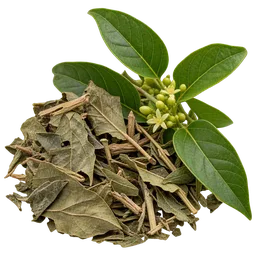
You unwrap a favorite chocolate, expecting the familiar rush. But after letting a tiny mint dissolve on your tongue, the sweetness vanishes. The treat tastes like cardboard. What just happened—and why have physicians in India called this vine "gurmar," the sugar destroyer, for centuries?1
The day sweetness disappeared
In moments like this, Gymnema sylvestre reveals its oldest trick. Chewing the leaves—or using a lozenge or mint made from them—can temporarily erase the taste of sweet, a party trick Ayurveda named long ago: gurmar, literally "sugar destroyer."1 In 2020, researchers asked 56 volunteers to test it. After a gymnema mint, participants ate about a fifth less chocolate within 15 minutes and rated it less pleasant, especially those with a pronounced sweet tooth.2 In 2025, a two-week crossover trial extended the idea into real life: ad-lib use of gymnema mints reduced daily sugary-drink intake by roughly 42% and lowered sugar cravings versus placebo.3
"Our mouth can identify when a sweetener has the potential to deliver calories versus a non-caloric sweetener." —Paul Breslin, PhD, Monell Chemical Senses Center4
That insight helps explain why a leaf that mutes sweetness can feel like training wheels for willpower. If your tongue stops flagging rewards, your brain's urge to chase another bite quiets down.
How a leaf outwits sugar sensors
Modern taste science traced the effect to a specific molecular handshake. Sweetness is detected by a paired protein receptor on taste cells (T1R2/T1R3). In 2014, scientists showed that gymnemic acids from the leaf dock into a pocket on the T1R3 half of the human receptor, jamming the signal; rinse it away, and sweetness returns.5 It's elegantly selective: other tastes remain intact. Humans are particularly sensitive to this block—a curious species twist the same study highlighted.5
Beyond the tongue: the gut chapter
The plot thickens lower down. Several experiments suggest gymnemic acids can also dampen glucose entry from the intestine by inhibiting SGLT1, the main conveyor that pulls sugar from food into the bloodstream.6 Inhibiting SGLT1 slows glucose absorption; in other contexts, that can nudge up helpful hormones like GLP-1 and smooth post-meal spikes.7 It's a physiological one-two: ** down the desire at the tongue, then ease the surge in the gut**.
From folk medicine to clinical wards
Ayurvedic practitioners have used Meshashringi/Madhunāshinī for metabolic ailments for centuries. Modern trials, while not massive, are increasingly instructive. A 2021 systematic review and meta-analysis pooling 10 studies (419 people) found gymnema supplementation reduced fasting and post-meal glucose and HbA1c, and also trimmed triglycerides and total cholesterol—though results varied between studies.8 Another meta-analysis focusing on randomized trials reported reductions in fasting glucose, several lipids, and diastolic blood pressure.9
Zoom in on individual trials and the story gets human:
In prediabetes, a randomized, placebo-controlled trial (n=30) using 300 mg twice daily for 90 days lowered two-hour glucose and HbA1c and improved an insulin-sensitivity index. The authors concluded: "G. sylvestre administration.. decreased 2-h OGTT and A1C, increasing insulin sensitivity."10
In adults with metabolic syndrome, 12 weeks of 600 mg/day reduced body weight, BMI, and VLDL, even without changes in insulin secretion measures.11
Earlier, long-term Indian clinic reports using a standardized extract (GS4, 400 mg/day) described people with type 2 diabetes needing lower drug doses, and in five of 22 cases, maintaining control on gymnema alone; type 1 participants on insulin saw HbA1c and insulin requirements fall over 6–8 months.1213
These were not modern double-blind designs, but they seeded today's interest.
A surprising, practical paradox
The very feature that made gymnema famous—erasing sweetness within minutes—is also what makes it unusually actionable for everyday life. If you're working to dial down sugar:
A mint or lozenge that contacts the tongue can flatten sweet taste for 30–60 minutes; using it just before dessert or a craving tends to be most effective.32
If your target is blood sugar, standardized extracts (often 24–25% gymnemic acids) have been studied in the 200–400 mg/day range, commonly divided with meals.1412
These aren't prescriptions, but they illustrate how different forms map to different jobs: tongue-contact for cravings, capsules for metabolic metrics.
Cautions, because plants have power
Herbs that move numbers can over-achieve when stacked with medications. Gymnema may amplify the effects of insulin or sulfonylureas, risking lows; medical supervision and glucose monitoring are essential if you're on those drugs.1514 The herb has a generally favorable safety profile, but rare liver-injury case reports exist; U.S. LiverTox labels gymnema a "possible" but rare cause, with self-limited recovery after stopping.16 As with any supplement, quality matters—look for third-party testing and clear standardization.
Where the research is headed
The 2025 sugar-reduction trial called for longer ad-lib studies, brain-response imaging, and testing in people with impaired glucose tolerance.3 Mechanistic work continues at the receptor level—why humans are uniquely sweet-blocked by gymnema—and in the gut, where titrating SGLT1 inhibition without upsetting digestion could compound benefits.67 If the ancient name captured the effect, modern science is learning to aim it: when to silence sweetness, and when to let it sing.
"Studies, although few, have shown that [gymnema] has led to a decrease in both A1C and fasting glucose levels." —American Diabetes Association Clinical Diabetes review14
Key takeaways
What to walk away with
- 01
Gymnemic acids bind the T1R3 sweet-taste receptor to block sweetness; the effect is reversible.
- 02
A single gymnema mint cut chocolate intake by about 21% within 15 minutes and reduced desire/pleasantness.
- 03
Two weeks of ad-lib gymnema mints reduced sugary-drink intake by ~42% and lowered sugar cravings versus placebo.
- 04
Common capsule dosing: 200–400 mg/day of standardized leaf extract (≈24–25% gymnemic acids); older GS4 trials used 400 mg/day. Mints/lozenges often supply ~4 mg gymnemic acids for taste blocking.
- 05
Timing: let a mint or liquid touch the tongue 5–10 minutes before dessert; sweetness stays muted ~30–60 minutes. Take capsules with meals for metabolic goals.
- 06
Cautions: may intensify insulin or sulfonylureas; rare liver injury reported—stop if jaundice/dark urine/fatigue. Pause before surgery per clinician advice.
Effect timeline
When to expect what
- Immediate
- Yes (sweetness suppression within minutes).
- Peak
- Cravings: same day; glycemic changes: ~12 weeks.
- Duration needed
- About 12 weeks of consistent use for metabolic outcomes.
- Wears off
- Sweetness block lasts ~30–60 minutes; metabolic benefits likely fade over weeks after stopping.
Research trajectory
What the studies actually show
-
Gymnemic acids bind within the T1R3 subunit of the human sweet receptor, blocking sweet signaling; the effect is reversible. 5
Cell assays with human vs. mouse receptors pinpointed a transmembrane pocket on T1R3 and explained the human-specific block.
Explains the fast, selective loss of sweetness people experience.
-
A gymnema mint reduced chocolate intake by ~21% within 15 minutes and lowered desire/pleasantness ratings. 2
Single-blind crossover trial offered favorite chocolate after a gymnema vs. placebo mint.
Demonstrates immediate, behavioral impact—not just theory.
-
Two-week ad-lib gymnema mint use cut sugary-drink intake 42% and reduced cravings in self-identified sweet-tooth adults. 3
Randomized crossover design compared systematic vs. ad-lib regimens to placebo over three 14-day phases.
Shows practical, real-world reduction of sugar exposure.
-
Gymnema supplementation lowered fasting glucose, post-meal glucose, HbA1c, and lipids in pooled analyses, with heterogeneity. 8
Systematic reviews/meta-analyses synthesized trials through 2021.
Positions gymnema as a promising adjunct for cardiometabolic risk.
-
Gymnemic acids inhibit intestinal SGLT1, suggesting reduced glucose uptake from meals. 6
Electrophysiology and transport studies identified saponin-mediated blockade of electrogenic glucose uptake.
Adds a gut mechanism to the tongue effect, linking to post-meal control.
Human trials
What real trials found
-
Type 2 diabetes patients taking GS4 (400 mg/day) alongside conventional drugs for 18–20 months saw improved glucose markers; five maintained control on gymnema alone. 12
- Outcome
- Lower fasting glucose and HbA1c; some reduced or discontinued other meds.
- Why it matters
- Illustrates long-term adjunct use and dose range that informed later studies.
- Source
- J Ethnopharmacol. 1990;30:295–300.
-
Type 1 diabetes patients on insulin added GS4 for 6–8 months. 13
- Outcome
- Reduced insulin requirements and HbA1c versus insulin-only follow-up.
- Why it matters
- Signals potential insulin-sparing effects under supervision.
- Source
- J Ethnopharmacol. 1990;30:281–294.
-
Prediabetes RCT (n=30): gymnema 300 mg twice daily for 90 days versus placebo. 10
- Outcome
- Lower 2-hour OGTT glucose and HbA1c; improved insulin sensitivity index.
- Why it matters
- Modern randomized evidence for early metabolic benefit.
- Source
- J Med Food. 2021;24(1):28–32.
-
LiverTox case: 60-year-old developed acute hepatitis after starting a gymnema-containing tea; recovered after cessation. 16
- Outcome
- Self-limited injury; causality labeled 'possible, rare'.
- Why it matters
- Safety signal guiding monitoring and product quality emphasis.
- Source
- NCBI LiverTox monograph.
Expert insights
Voices in the field
Our mouth can identify when a sweetener has the potential to deliver calories versus a non-caloric sweetener. 4
G. sylvestre administration... decreased 2-h OGTT and A1C, increasing insulin sensitivity. 10
Practical guidance
Putting it to use
Who may benefit
People working to cut added sugar; those with a 'sweet tooth' who want a behavioral assist; adults with prediabetes or type 2 diabetes seeking an adjunct to diet, exercise, and prescribed therapy—with medical supervision.
Who should avoid
Unsupervised use with insulin or insulin-secreting drugs; known active liver disease.
Dosing
Studies commonly use standardized leaf extract at 200–400 mg/day (≈24–25% gymnemic acids); older GS4 trials used 400 mg/day. Mints/lozenges often contain ~4 mg gymnemic acids for taste-blocking tasks.
Timing
For cravings, let a gymnema mint or liquid touch the tongue 5–10 minutes before dessert; sweetness stays muted for 30–60 minutes. For metabolic goals, take capsules with meals to minimize GI upset and align with glucose absorption.
Quality
Choose products stating % gymnemic acids and verified by third-party testing (USP/NSF/ConsumerLab). Tongue contact matters for taste effects; capsules alone won't mute sweetness.
Cautions
If you use insulin or sulfonylureas, involve your clinician and monitor glucose—gymnema can intensify these drugs. Rare liver injury has been reported; stop and evaluate if jaundice, dark urine, or unusual fatigue occur. Pause before surgery per clinician advice.
A closing thought
Gymnema doesn't fight sugar with force; it removes the illusion that sweetness guarantees reward. When the music of sweet goes quiet, choice gets louder—and metabolism may follow.
Frequently asked
Common questions
How quickly does gymnema work and how long does the sweet-muting last?
What dose should I use for cravings versus metabolic support?
Can gymnema really help me cut sugary foods or drinks?
How should I time gymnema around meals or desserts?
Who should avoid or use gymnema with caution?
Related
More on this supplement
Pulled from across the site — rankings, comparisons, combinations, and reviews where this supplement shows up.
Sources
- 1. Gymnema sylvestre (gurmar: 'sugar destroyer') (2025)
- 2. Consuming Gymnema sylvestre Reduces the Desire for High-Sugar Sweet Foods (Nutrients, randomized crossover) (2020)
- 3. The effect of a 14-day Gymnema sylvestre intervention to reduce sugar intake (Appetite, randomized crossover) (2025)
- 4. Novel sugar detector system in the human mouth (Monell/ScienceDaily quote) (2021)
- 5. Molecular Mechanisms for Sweet-Suppressing Effect of Gymnemic Acids (J Biol Chem, open access) (2014)
- 6. Gymnemic acids inhibit sodium-dependent glucose transporter 1 (SGLT1) (2014)
- 7. Intestinal SGLT1 inhibition enhances GLP-1 secretion (rodent studies) (2015)
- 8. Systematic review and meta-analysis: Gymnema in type 2 diabetes (2021)
- 9. Systematic review/meta-analysis of GS on lipids, glycemia, BP (2022)
- 10. Effect of Gymnema on glycemic control in impaired glucose tolerance (J Med Food RCT) (2021)
- 11. Gymnema in metabolic syndrome (J Med Food RCT) (2017)
- 12. Antidiabetic effect in non-insulin-dependent diabetes mellitus patients (GS4) (1990)
- 13. Use of GS4 in insulin-dependent diabetes mellitus (1990)
- 14. Diabetes and Dietary Supplements (ADA Clinical Diabetes review: gymnema section) (2010)
- 15. Gymnema Uses and Risks (WebMD monograph) (2024)
- 16. Gymnema — LiverTox (NCBI Bookshelf) (2023)
1,120 words · 16 sources · Gymnema sylvestre