New Turmeric (Curcuma longa) / Curcumin Published Mar 31, 2026
The Golden Paradox: When a Sacred Spice Meets the Skeptical Clinic
Less joint stiffness and pain, reduced inflammation, and natural alternative to NSAIDs
Evidence summary
Turmeric curcuminoids reduce pain and improve function in people with knee osteoarthritis, while piperine-enhanced products raise exposure and rare liver-injury concerns.
- Across 11 meta-analyses, curcuminoids improved knee-osteoarthritis pain and function versus placebo.5
- Piperine increases curcumin bioavailability about 2,000% in humans, supporting enhanced-absorption formulations.4
- Turmeric-associated liver injury is rare, but HLA-B*35:01 and enhanced-absorption products raise concern.8
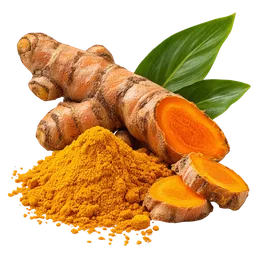
Morning light catches a bowl of saffron-yellow paste as aunties circle a bride, dabbing turmeric on her cheeks; across the world, a rheumatology clinic weighs a patient's options for knee pain. How did the same golden powder travel from wedding ritual to clinical conversation—and what does the science actually say?
From altar to assay
Turmeric's story is older than most medicines on the shelf. In South Asia it colored cloth and marked sacred transitions, found in Ayurvedic practice and even used to dye monastic robes; its stain was both symbol and signal. Modern monographs trace centuries of use for digestive upsets, skin complaints, and joint pain—cultural memory long before randomized trials. Today, the National Institutes of Health's complementary health center sums up the state of evidence with sober clarity: "We don't know enough to definitively conclude if turmeric or curcumin is beneficial for any health purposes," while noting early signals in osteoarthritis, nonalcoholic fatty liver disease, and oral mucositis. That honest ambivalence sets the stage for a surprisingly modern detective story. 13141
The paradox of a bright molecule
Curcumin—the pigment that makes turmeric glow—creates a scientific riddle. On paper and in petri dishes, it seems to do everything; in the body, it's famously hard to absorb. A landmark human study in the 1990s showed that adding piperine from black pepper acted like a backstage pass, boosting curcumin levels in the blood roughly twenty-fold, which explains why so many labels pair the two. But medicinal chemists later issued a bracing critique: curcumin often meddles with lab assays and falls apart quickly, making it a poor "lead" drug candidate on its own. So which is it—marvel or mirage? The answer emerges when we leave the test tube and follow patients. 415
Knees first: what the strongest signals show
If you're reading this for practical relief, the clearest human data cluster around knee osteoarthritis. An umbrella review pooling eleven meta-analyses of randomized trials reported significant reductions in pain and stiffness and better function on standard joint scales—results that, taken together, "strongly support" curcuminoids for symptom relief. In individual trials, Thai investigators found that four weeks of Curcuma domestica extract (about 1,500 mg/day) performed as well as 1,200 mg/day of ibuprofen for knee OA symptoms. Japanese researchers using an enhanced-absorption form (Theracurmin, 180 mg/day of curcumin) saw pain scores drop over eight weeks and patients relying less on celecoxib. None of these are magic bullets; they are, however, consistent hints that this spice can ease sore joints when delivered well. 567
Clinicians have noticed. When the American College of Rheumatology overhauled its osteoarthritis guideline, lead author Sharon Kolasinski reminded readers why one therapy rarely fits all: "The new guideline recognizes not only the variety of clinical presentations of OA, but also the broad array of treatment options.. It's important to remember that treatment for OA is not one size fits all." Her colleague Tuhina Neogi put it more simply during the launch week: "We need to think about.. what are the puzzle pieces that should go together to help manage osteoarthritis." For many patients, turmeric/curcumin has become one small, reasonable puzzle piece alongside exercise, weight loss, topical NSAIDs, braces, and injections. 23
The safety twist most people miss
Every remedy worth considering deserves an equally careful look at risk. Here, turmeric carries a plot twist: rare but real liver injury, often appearing after one to three months and sometimes linked to high-bioavailability formulas and the genetic marker HLA-B*35:01. The U.S. Drug-Induced Liver Injury Network described ten such cases, including one death, with most products confirming turmeric and several containing black pepper extract. Australia's regulator issued a safety advisory pointing to similar reports and cautioning that enhanced-absorption products may raise risk. LiverTox, the NIH reference, now classifies turmeric as a well-documented cause of clinically apparent liver injury—still very uncommon, but important to recognize quickly. Consider a concrete example: a 49-year-old woman developed marked hepatitis after a turmeric supplement; she recovered after stopping it, underscoring how prompt recognition matters. If you notice fatigue, dark urine, or jaundice on a new supplement, stop and call your clinician. 891012
A second, quieter caution: turmeric spice is rich in soluble oxalate, and supplemental doses have raised urinary oxalate in volunteers, a potential kidney-stone concern for those who form stones easily. The culinary pinch is not the problem; concentrated use is. 11
Finally, because curcumin can subtly thin blood or alter drug metabolism, it has occasionally spiked INR in people on warfarin. If you take anticoagulants or antiplatelet drugs, don't add high-dose turmeric/curcumin without medical supervision. 17
Beyond joints: where hints are emerging
Two areas stand out for "early but interesting." In head-and-neck cancer care, a small randomized trial found that a 0.1% curcumin mouthwash or a nanocapsule curcumin reduced the pain and severity of radiation-induced oral mucositis versus placebo over three weeks. In liver health, several meta-analyses suggest curcumin may nudge down liver enzymes and improve ultrasound features in nonalcoholic fatty liver disease, though heterogeneity is high and lifestyle change remains first-line. These threads are promising, not proven. 12161
How to use the spice without losing the plot
Think of turmeric as a character with bright talent and known quirks. Practical, evidence-aligned tips:
Choose delivery wisely. Trials often used standardized extracts providing 500–1,500 mg/day of curcumin or about 1,500–2,000 mg/day of Curcuma extract, for 4–12 weeks. If you try it, give it a full month; most benefits appear by weeks 4–8. 675
Pair with food. Curcumin is fat-loving; taking it with a meal containing oil can help. Black pepper (piperine) boosts absorption dramatically, but may also be the same "accelerator" implicated in some liver-injury cases—use that combo thoughtfully and monitor how you feel. 49
Mind quality and labels. Products vary wildly; some include other botanicals. NIH notes that "highly bioavailable" formulations have been linked to liver harm. Favor brands that disclose exact curcuminoid content and undergo third-party testing; avoid megadoses. 1
Know your red flags. History of liver disease, current warfarin/anticoagulant use, or a tendency to form oxalate kidney stones are reasons to talk with your clinician first—or to skip it. Stop immediately and seek care for signs of liver trouble. 101711
What the future likely holds
Researchers are tinkering with how to get curcumin where it needs to go—phospholipid complexes, nanoparticles, and other carriers—while keeping safety in view. Reviews in 2025 map a hotbed of work across inflammation, metabolism, and oncology. The goal isn't to anoint a panacea, but to sharpen delivery and define where the spice genuinely helps. As NIH puts it, more and better trials are the way through the glow. 115
"We don't know enough to definitively conclude if turmeric or curcumin is beneficial for any health purposes." — National Center for Complementary and Integrative Health (NIH) 1
A quiet closing
You can still picture the haldi paste, warming the room in song. Science doesn't erase that scene; it focuses it. Turmeric isn't a miracle, and it isn't a myth. It's a bright tool whose handle you should grasp carefully—especially for sore knees—while keeping an eye on the liver, the meds you take, and the dose on the label. That's what it looks like when tradition and evidence share the same bowl.
Key takeaways
What to walk away with
- 01
Evidence is promising but not definitive; signals are strongest for pain and function in knee osteoarthritis across multiple RCT meta-analyses.
- 02
Typical trial dosing: 500–1,500 mg/day curcumin or ~1,500–2,000 mg/day turmeric extract for 4–12 weeks; some enhanced-absorption formulas worked at 180 mg/day.
- 03
Take with a meal containing fat; black pepper (piperine) can markedly increase absorption but may also relate to rare liver risks—use thoughtfully.
- 04
Who may benefit: adults with symptomatic knee OA; clinician-directed curcumin mouthwash for oral soreness in oncology care; possible liver enzyme improvements in NAFLD alongside lifestyle change.
- 05
Red-flag symptoms: fatigue, nausea, dark urine, or jaundice—stop and seek care; avoid unsupervised use with warfarin/anticoagulants and consider skipping if prone to oxalate kidney stones.
- 06
Guideline mindset: OA care isn't one-size-fits-all—integrate curcumin as one puzzle piece within broader management.
Effect timeline
When to expect what
- Immediate
- No
- Peak
- 4-8 weeks
- Duration needed
- 8-12 weeks minimum
- Wears off
- Not well established
Research trajectory
What the studies actually show
-
Across 11 meta-analyses of RCTs, curcuminoids significantly improved pain and function in knee osteoarthritis. 5
An umbrella meta-analysis up to September 2023 synthesized visual analog scale and WOMAC outcomes.
Most consistent human signal; supports trying standardized extracts for symptomatic relief.
-
Adding piperine (black pepper) increased curcumin bioavailability by about 2,000% in humans. 4
A crossover pharmacokinetic study in healthy volunteers in the late 1990s established the absorption boost.
Explains common product combinations—and a possible link to higher liver-injury risk in susceptible people.
-
Turmeric-associated liver injury, though rare, shows a strong association with HLA-B*35:01 and may be more common with enhanced-absorption formulations. 8
The U.S. DILIN case series analyzed products and genetics; regulators in Australia issued parallel warnings.
Justifies cautious dosing and vigilance for symptoms, especially with pepper-enhanced products.
-
Curcumin mouthwash or nanocapsules reduced severity of radiation-induced oral mucositis over 3 weeks vs placebo. 12
A small randomized trial during head-and-neck radiotherapy compared topical and oral formulations.
Suggests targeted, local uses beyond joints may hold promise.
Human trials
What real trials found
-
49-year-old woman developed hepatitis after starting a turmeric supplement; labs normalized after discontinuation. 12
- Outcome
- Complete recovery once the product was stopped.
- Why it matters
- Illustrates rare but real hepatotoxicity and the importance of prompt recognition.
- Source
- ACG Case Reports Journal (2022): Turmeric-associated drug-induced liver injury.
-
Drug-Induced Liver Injury Network summarized 10 U.S. cases of turmeric-associated liver injury; 7 carried HLA-B*35:01; one death occurred. 8
- Outcome
- Most recovered; one fatality; strong genetic association noted.
- Why it matters
- Defines risk profile and possible higher risk with enhanced bioavailability and pepper extract.
- Source
- American Journal of Medicine (2022/2023): DILIN case series.
-
Multicenter RCT in Thailand: Curcuma domestica extract (1,500 mg/day) non-inferior to ibuprofen (1,200 mg/day) over 4 weeks for knee OA. 6
- Outcome
- Comparable symptom relief; fewer GI complaints vs ibuprofen.
- Why it matters
- Shows where turmeric extracts can be a practical option for joint pain.
- Source
- Clinical Interventions in Aging (2014).
Expert insights
Voices in the field
The new guideline recognizes not only the variety of clinical presentations of OA, but also the broad array of treatment options... It's important to remember that treatment for OA is not one size fits all. 2
We need to think about for each individual what are the puzzle pieces that should go together to help manage their osteoarthritis. 3
We don't know enough to definitively conclude if turmeric or curcumin is beneficial for any health purposes. 1
Practical guidance
Putting it to use
Who may benefit
Who should avoid
Dosing
Timing
Quality
Labels vary; some blends add other herbs. Prefer products that disclose exact curcuminoid content and undergo third-party testing; be wary of vague 'enhanced absorption' claims and avoid megadoses. NIH notes highly bioavailable forms have been implicated in liver injury. 1
A closing thought
Turmeric's modern lesson isn't that tradition trumps data or that skepticism must dim wonder. It's that both can be true: a ritual paste that brightens a wedding, and a carefully dosed extract that can help an aching knee—so long as we respect the organism that must process it and the limits of what we know.
Frequently asked
Common questions
What's the best way to take turmeric/curcumin for joint pain?
Should I add black pepper to boost absorption?
Who is most likely to benefit from curcumin?
What side effects or warning signs should I watch for?
Can I take curcumin with blood thinners or if I have kidney stones?
How long should I try it before deciding if it helps?
Related
More on this supplement
Pulled from across the site — rankings, comparisons, combinations, and reviews where this supplement shows up.
Ingredient evidence
Ingredient evidence
NewTurmeric
All scored outcomes
Aug 27, 2026
Ranking
Arthritis and joint pain
NewBest Supplements for Arthritis and Joint Pain, Ranked by Clinical Evidence
Evidence ranking
Apr 4, 2026
Ranking
Depression
NewBest Supplements for Depression, Ranked by Clinical Evidence
Evidence ranking
Apr 4, 2026
Ranking
Brain fog and mental clarity
NewBest Supplements for Brain Fog and Mental Clarity, Ranked by Evidence
Evidence ranking
Apr 4, 2026
Ranking
Fatty Liver Disease
NewBest Supplements for Fatty Liver Disease (NAFLD), Ranked by Evidence
Evidence ranking
Apr 4, 2026
Ranking
Memory and recall
NewThe 10 Best Supplements for Memory, Ranked by Evidence
Evidence ranking
May 9, 2026
Sources
- 1. Turmeric: Usefulness and Safety | National Center for Complementary and Integrative Health (NIH) (2025)
- 2. American College of Rheumatology/Arthritis Foundation Release Updated Treatment Guideline for Osteoarthritis (press release) (2020)
- 3. Updated OA management guideline emphasizes multimodal approach (ACR Convergence Today) (2019)
- 4. Influence of piperine on the pharmacokinetics of curcumin in animals and human volunteers (1998)
- 5. The efficacy of curcumin in relieving osteoarthritis: An umbrella meta-analysis of meta-analyses (2024)
- 6. Efficacy and safety of Curcuma domestica extracts compared with ibuprofen in patients with knee osteoarthritis: a multicenter study (2014)
- 7. Short-term effects of highly bioavailable curcumin (Theracurmin) for treating knee osteoarthritis: randomized, double-blind, placebo-controlled trial (2014)
- 8. Liver Injury Associated with Turmeric—A Growing Problem: Ten Cases from the DILIN (2022)
- 9. Medicines containing turmeric or curcumin—risk of liver injury (TGA safety advisory) (2023)
- 10. Turmeric—LiverTox (NIH NCBI Bookshelf) (2024)
- 11. Effect of cinnamon and turmeric on urinary oxalate excretion in healthy subjects (2008)
- 12. Turmeric-associated drug-induced liver injury (case report) (2022)
- 13. Curcuma longa (turmeric) monograph (2001)
- 14. Turmeric (Wikipedia, History section with cultural uses and dyeing robes) (2025)
- 15. The Essential Medicinal Chemistry of Curcumin (2017)
- 16. Curcumin as adjuvant treatment in NAFLD: systematic review and meta-analysis (2022)
- 17. Beware turmeric/curcumin containing products can interact with warfarin (Medsafe NZ) (2018)
1,135 words · 17 sources · Turmeric (Curcuma longa) / Curcumin