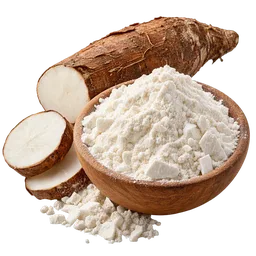
Resistant Starch
Best for
Avoid sharp blood sugar rises after meals
Proven strong benefit 1–12 weeks 1 meta-analysis, n=1.4k #1 of 42 studied
- 45 papers
- 5 of 81 outcomes
- 4 positive
Resistant starch provides a proven strong benefit for flattening after-meal glucose rises, while evidence for broader digestive and microbiome outcomes remains less consistent.
Median effective dose, most-studied outcomes
- Limit after-meal glucose rises 21 g 1–12 wk
- Support fiber fermentation in the gut 10 g 1–8 wk
- Fuel colon cells with butyrate 10 g 1–8 wk
What resistant starch actually does
| Outcome | Effect | Evidence | Dose | Time | Rank |
|---|---|---|---|---|---|
| Strong benefits 1 | |||||
| Avoid sharp blood sugar rises after meals Proven strong benefit Blood sugar normally rises after eating, but a smaller rise can make levels easier to manage. | | 1 meta-analysis 12 papers · n=1.4k | — | 1–12 wk | #1 /42 |
| Modest benefits 1 | |||||
| Increase short-chain fatty acids in the gut Likely modest benefit Gut bacteria ferment fiber into short-chain fatty acids that nourish cells in the colon. | | 1 meta-analysis 8 papers · n=564 | 2–40 g | 1–8 wk | #1 /7 |
| Worth watching 1 | |||||
| Build a more diverse gut microbiome Promising early signal A diverse gut microbiome contains many types of bacteria that help process food. | | 4 RCTs 5 papers · n=91 | 3.5–40 g | 1–12 wk | #6 /19 |
| Early research 2 | |||||
| Relieve constipation Barely detectable Constipation can mean infrequent, hard, or difficult bowel movements. | | 4 RCTs 3 papers · n=135 | 3.5–20 g | 0–12 wk | #8 /12 |
| Feel more comfortable after eating Not enough research Digestive comfort means fewer gut symptoms getting in the way of everyday life. | | 2 RCTs 2 papers · n=— | 3.5–20 g | 0–4 wk | — |
Effect tiers come from native-unit MCID where available, Cohen's d otherwise.
Dose, timing & forms
How much
For the best-supported goal, flatter after-meal glucose, studies commonly use roughly 4 to 40 g daily, with about 21 g/day as the median effective amount across the reviewed trials. Effects on gut fermentation often show up around 10 g/day, although research has tested 2 to 40 g daily.13
Do not treat more as automatically better. The glucose evidence is strongest, while bowel regularity and digestive-comfort findings remain weak or inconsistent at the smaller doses studied.
When and how long
Take resistant starch consistently rather than saving it for occasional use. For post-meal glucose, use it with or as part of a carbohydrate-containing meal, since that is when it replaces some rapidly digested starch and changes the meal's glucose response.1
Gut fermentation takes repeated intake, not one dose. Give a stable routine several weeks before judging changes in stool pattern or gut comfort, and increase gradually if gas becomes annoying.3
Forms & standardisation
High-amylose maize resistant starch, often called RS2, has substantial human trial coverage. Retrograded starch from cooked and cooled foods, often called RS3, offers a food-first option, but the exact resistant-starch amount varies with the food and preparation.3
Check whether a powder names its resistant-starch form and grams per serving. A label that only says "starch" does not tell you how much reaches the colon undigested.
Studied range, by outcome
| Outcome | Studied range | Median effective | Duration | Evidence |
|---|---|---|---|---|
| Limit after-meal glucose rises | 3.98–40 g | 21 g | 1–12 wk | 10 papers 20 sig. endpoints |
| Support fiber fermentation in the gut | 5–40 g | 10 g | 1–8 wk | 7 papers 3 sig. endpoints |
| Fuel colon cells with butyrate | 2–40 g | 10 g | 1–8 wk | 6 papers 5 sig. endpoints |
| Make bowel movements easier | 3.5–9 g | 3.5 g | 4–12 wk | 2 papers 3 sig. endpoints |
| Ease stomach and bowel discomfort | 3.5–20 g | — | <1–4 wk | 2 papers |
| Feel more satisfied with bowel habits | 10–20 g | — | <1 wk | 1 paper |
| Gut microbial community makeup | 9 g | — | 12 wk | 1 paper |
Recommended Resistant Starch products
Real products that dose Resistant Starch where the research does, in a clean formulation, from brands we've audited. We only list ones we'd stand behind.
-

Solaray
Mycrobiome Prebiotic Powder Unflavored
Well dosed 5,000 mg/day A formulaBrand audit 76/100
-

Solaray
Mycrobiome Prebiotic Powder Natural Citrus Flavor
Well dosed 5,000 mg/day A formulaBrand audit 76/100
-

Ortho Molecular Products
InosiCare
Well dosed 3.5 Gram(s)/day A formula
Chosen for adequate Resistant Starch dosing vs. the studied range, a clean formulation (grade A–C), and independent brand-quality audits. Not sponsored.
What this is and how it works
- Across 12 studies (n=1,377), resistant starch reduced after-meal glucose rises; a noticeable-change threshold was not reported.1
- The review covers 45 papers spanning 81 outcomes, with glucose control the strongest evidence area.
- Effects vary by resistant-starch type, dose, and individual tolerance of fermentable fibers.
Resistant starch is a type of carbohydrate found naturally in foods such as legumes, oats, firm green bananas, and cooked then cooled starchy foods. It resists digestion in the small intestine, so it behaves more like fermentable fiber than like ordinary starch.3
You can get it from food or from powders made with high-amylose maize or green banana flour. Different forms do not necessarily act the same way in the gut.3
Think of resistant starch as a packed lunch that bypasses your upper gut and arrives at the colon, where microbes unpack it into short-chain fats such as butyrate. Colon cells use butyrate as fuel, while the fermentation process can reshape which microbes thrive.3
Because less of that starch gets absorbed quickly as glucose, replacing digestible starch with it can blunt the post-meal sugar and insulin surge.1
Bottom line
Resistant starch is a sensible option if your priority is reducing after-meal glucose spikes or adding a fermentable fiber source to your diet. The evidence for glucose is strong, but do not buy it expecting a reliable fix for constipation, bloating, or a dramatic microbiome makeover.13
Skip the big starting dose if you already react strongly to fermentable fibers. Food sources offer a gentler place to start.
Common questions
Does resistant starch lower blood sugar after meals?
What foods contain resistant starch?
Does resistant starch help constipation?
How long does resistant starch take to affect the gut?
Sources
Sources
Generated August 27, 2026
Related
More evidence for Resistant Starch
Evidence map
Metabolic health
NewMetabolic health: evidence map across 82 supplements
Evidence coverage map
Jul 30, 2026
Ingredient evidence
Ingredient evidence
NewAlexandrian senna
All scored outcomes
Aug 27, 2026
Ingredient evidence
Ingredient evidence
NewAsian Psyllium
All scored outcomes
Aug 27, 2026
Ingredient evidence
Ingredient evidence
NewBlonde Psyllium
All scored outcomes
Aug 27, 2026
Ingredient evidence
Ingredient evidence
NewChicory
All scored outcomes
Aug 27, 2026
Ingredient evidence
Ingredient evidence
NewGalactooligosaccharides
All scored outcomes
Aug 27, 2026