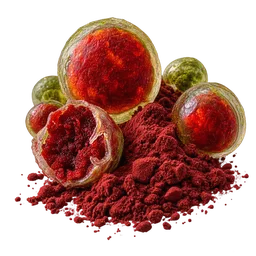
Haematococcus pluvialis
What the trials found
Haematococcus pluvialis extract does not yet establish a noticeable cognitive benefit, because the available human evidence rests on one small clinical trial with an early memory signal.
- 1 papers
- 0 of 2 outcomes
Risk, worst reported severity
- stool discoloration
Dose, timing & forms
How much
The only cognitive trial examined daily astaxanthin-rich Haematococcus pluvialis extract at 6 mg or 12 mg per day for 12 weeks. Treat those amounts as research reference points, not a proven target, because this evidence comes from one small study.1
When and how long
Take it consistently each day for weeks, not only before a demanding school or work task. The memory study tested a long daily routine, so it gives no evidence for immediate cognitive effects or a special time of day.1
Forms & standardisation
Look for an astaxanthin-rich extract that clearly states the amount of astaxanthin per serving. The human cognitive trial tested an extract from Haematococcus pluvialis, so evidence does not automatically transfer to products that simply list an unspecified algae blend.1
Adverse events and drug interactions
Safety events
What this is and how it works
- One randomized trial reported cognitive outcomes, but sample size and effect size were not available in the supplied evidence summary.1
- One paper reviewed here spans two consumer-facing outcomes involving astaxanthin-rich Haematococcus pluvialis extract.
- Evidence remains preliminary, with no reliable basis for expecting a noticeable memory improvement.
Haematococcus pluvialis is a freshwater microalga that turns red when it builds up astaxanthin, a protective pigment. Supplements usually contain an astaxanthin-rich extract from the algae rather than whole algae powder.1
Astaxanthin acts like a rust shield for the fatty outer walls of cells, where oxidation can damage delicate structures. Researchers propose that this antioxidant action could support brain cells under everyday metabolic stress, but the cognitive trial did not prove that this mechanism caused the test-score changes.1
Bottom line
Consider this only if you want to try an astaxanthin-rich algae extract and you understand that the memory evidence is still early. One small trial is a reason for curiosity, not a reason to expect a noticeable memory upgrade. People seeking a well-established cognitive supplement should look for stronger human evidence first.1
Common questions
Does Haematococcus pluvialis improve memory?
How long does Haematococcus pluvialis take to work?
Is Haematococcus pluvialis the same as astaxanthin?
Sources
Sources
Generated August 27, 2026