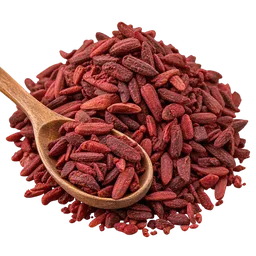
Monacolin
Best for
Lower cholesterol
Proven strong benefit 4–200 mg/day 4–13 weeks 1 meta-analysis, n=896 #2 of 97 studied
- 5 papers
- 1 of 12 outcomes
- 1 positive
Monacolin provides a proven strong benefit for lowering harmful LDL cholesterol, with the strongest evidence concentrated in adults with dyslipidemia rather than general wellness use.
What monacolin actually does
| Outcome | Effect | Evidence | Dose | Time | Rank |
|---|---|---|---|---|---|
| Strong benefits 1 | |||||
| Lower cholesterol Proven strong benefit High LDL cholesterol can build up in artery walls and raise the risk of heart disease. | | 1 meta-analysis 5 papers · n=896 | 4–200 mg | 4–13 wk | #2 /97 |
Effect tiers come from native-unit MCID where available, Cohen's d otherwise.
Dose, timing & forms
How much
The reviewed trials span products supplying roughly 4 to 200 mg of monacolin per day, with LDL and total cholesterol as the clearest outcomes.12 That wide range is exactly why the front-label amount of red yeast rice is not enough to compare products. Focus on the stated monacolin content, then confirm your response with a lipid test rather than assuming a larger capsule delivers a predictable dose.13
When and how long
Use monacolin consistently each day, because cholesterol measurements in clinical research reflect sustained use over weeks rather than a one-off dose.12 Taking it with a regular meal can make the habit easier and may be more comfortable if it bothers your stomach. Follow the product directions and do not stack multiple red yeast rice products, since their monacolin content can be hard to predict.3
Forms & standardisation
The strongest human evidence comes from red yeast rice preparations that contain monacolin K, not from generic fermented-rice marketing claims.12 Look for a label that names monacolin K and states its amount per daily serving, but recognize that independent analyses have found major variation among commercial products.3 A product that lists only milligrams of red yeast rice leaves the active amount unclear.
Adverse events and drug interactions
Safety events
What this is and how it works
- Across 5 studies (n=896), monacolin lowered harmful LDL cholesterol across 15 reported endpoints.1
- Five papers reviewed here span 12 outcomes, with strongest evidence for LDL and total cholesterol reduction.
- Product strength varies, and muscle-related risks matter especially alongside cholesterol-lowering medication.2
Monacolin usually means monacolin K, a natural compound made when rice ferments with red yeast. It shows up in some red yeast rice supplements, but the amount can swing dramatically from one product to the next.3
Bottom line
Monacolin stands out for people who want a nonprescription option with strong evidence for lowering LDL and total cholesterol.12 It is not a casual wellness add-on: variable product strength and muscle-related side effects matter, particularly if you already use cholesterol-lowering treatment or have unexplained muscle symptoms.23 Discuss it with a qualified clinician before using it alongside medication.
Co-studied with
 Coq104 shared
· d=0.85
Coq104 shared
· d=0.85 Grape4 shared
· d=0.85
Grape4 shared
· d=0.85 Olive4 shared
· d=0.85
Olive4 shared
· d=0.85- Vitaminb5 Group4 shared · d=0.85
 Vitaminb64 shared
· d=0.85
Vitaminb64 shared
· d=0.85 Vitaminb24 shared
· d=0.85
Vitaminb24 shared
· d=0.85 Vitaminb14 shared
· d=0.85
Vitaminb14 shared
· d=0.85 Vitaminb74 shared
· d=0.85
Vitaminb74 shared
· d=0.85 Vitaminb124 shared
· d=0.85
Vitaminb124 shared
· d=0.85 Vitaminb94 shared
· d=0.85
Vitaminb94 shared
· d=0.85
Common questions
What is monacolin used for?
Is monacolin the same as red yeast rice?
How long does monacolin take to lower cholesterol?
Can monacolin cause muscle pain?
Sources
Sources
Generated August 27, 2026
Related