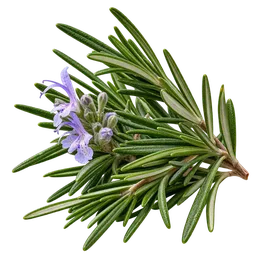
Rosemary
What the trials found
Rosemary does not have enough consistent human evidence to establish meaningful benefits across cognition, mood, anxiety, sleep, or memory in adults.
- 5 papers
- 0 of 15 outcomes
Risk, worst reported severity
- scalp itching / local irritation mild
- gastrointestinal discomfort mild
- fluoxetine minor
Dose, timing & forms
How much
There is no established rosemary supplement dose for memory, mood, or stress. In a small cognitive trial, 750 mg of dried rosemary leaf was the most encouraging single dose, while 6,000 mg did not perform better and tracked with poorer results on some measures.1 That result argues against treating more rosemary as better rosemary.
When and how long
The oral cognitive experiment assessed effects after a single dose, so it offers no solid basis for a daily morning or evening routine.1 Rosemary aroma research likewise tested short exposures during cognitive and mood assessments, not a long-term treatment schedule.2 If you try an oral product, follow its label and change only one variable at a time so you can tell whether it agrees with you.
Forms & standardisation
The human research does not yet identify one rosemary extract, active-compound percentage, or essential-oil profile as the clear winner. Oral dried leaf and inhaled aroma have both been studied, but they should not be swapped dose for dose because they deliver very different mixtures of plant compounds.12 Choose a product that clearly states whether it contains leaf powder, leaf extract, or essential oil, rather than relying on a front-label claim about “rosemary.”
Adverse events and drug interactions
Safety events
Drug interactions
What this is and how it works
- Across 5 papers reviewed here, participant totals and native-unit effects were not consistently reported, preventing MCID comparison.1
- Evidence spans older adults and healthy adults, with short-term exposure to rosemary leaf products or aroma.1
- Small experiments and differing rosemary forms or doses limit confidence in generalizing results to everyday supplementation.
Rosemary comes from the fragrant leaves of Salvia rosmarinus, an evergreen Mediterranean shrub. Supplements usually contain dried leaf powder or a concentrated leaf extract, while aromatherapy products use its volatile essential oil. Those are not interchangeable forms, even though both start with the same plant.
Rosemary contains compounds such as rosmarinic acid and carnosic acid that researchers are studying for antioxidant signaling, plus compounds that appear to slow the enzyme that clears acetylcholine, a chemical messenger involved in attention and memory.1 Think of acetylcholine as a text message between brain cells. Slowing its cleanup crew can leave the message on screen a little longer, though the small human trials do not yet prove that this produces dependable real-world cognitive benefits.1 Aroma studies also suggest that inhaled rosemary can influence alertness and mood during short testing sessions.2
Bottom line
Rosemary is worth a cautious look if you enjoy experimenting with herbs and want an early, low-certainty option for alertness or cognitive performance. The evidence is too small and mixed to count on for memory, anxiety, sleep, or mood, and the high-dose finding is a reason to avoid chasing bigger amounts.12 Skip self-experimentation if you have reacted to rosemary products before, and check with a clinician or pharmacist if you use regular medication.
Common questions
Does rosemary improve memory?
Is rosemary better as a capsule or an aroma?
How long does rosemary take to work?
Can a higher rosemary dose work better?
Sources
Sources
Generated August 27, 2026
Related