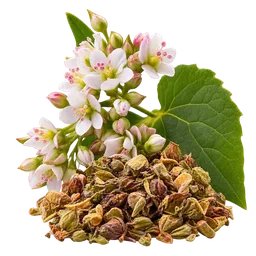
Rutin
What the trials found
Rutin does not have enough human evidence to establish a meaningful benefit across health outcomes, with only two papers reviewed and limited outcome-specific data.
- 2 papers
- 0 of 10 outcomes
Risk, worst reported severity
- mild side effects mild
- Increased liver zinc concentration
- vancomycin moderate
- ciprofloxacin moderate
Dose, timing & forms
How much
The available human evidence does not establish a reliable dose range for a specific consumer goal. Do not treat a high-dose rutin label as proof that the amount has demonstrated a meaningful benefit. Until stronger outcome trials define an effective protocol, a clinician or pharmacist can help you decide whether a product fits your situation.
When and how long
Human outcome research does not establish a best morning, evening, or pre-meal schedule for rutin. Consistency matters more than chasing a particular clock time, and taking it with food is a practical option if it causes mild stomach discomfort. Rutin’s processing depends heavily on gut microbes, so it is not an on-demand supplement with a predictable same-day effect. 1
Forms & standardisation
Look for a label that clearly states the amount of rutin, rather than a vague “bioflavonoid complex.” Rutin and quercetin are related compounds, but the sugar attached to rutin changes its absorption path, so substituting one for the other changes what you are taking. 1 Avoid assuming that a standardized extract automatically has better human evidence when the label does not identify its rutin content.
Adverse events and drug interactions
Safety events
Drug interactions
What this is and how it works
- One cited study examined quercetin absorption in healthy ileostomy volunteers, not a clinical health outcome. 1
- The review covers two papers and ten outcomes, without a reliable pooled estimate for rutin’s benefits.
Rutin is a plant pigment in the flavonoid family, found in foods such as buckwheat, citrus, apples, and some berries. It is built from quercetin plus a sugar called rutinose, so it is related to quercetin but does not behave identically after you swallow it. 1
Rutin largely reaches the lower gut before microbes split off its sugar piece, creating compounds your body can absorb. Think of the sugar as a shipping crate: gut microbes need to open it before much of the cargo can enter circulation. 1 This absorption route helps explain why rutin and quercetin cannot be treated as interchangeable supplements. 1
Bottom line
Rutin is a reasonable food-derived compound to be curious about, but it is not a first-choice supplement for a specific health outcome yet. Skip self-experimenting if you use prescription medicines or have a complex health history until a pharmacist checks for interactions. Food sources such as buckwheat and citrus offer a simpler starting point for most people.
Common questions
What is rutin used for?
Is rutin the same as quercetin?
Should you take rutin in the morning or at night?
Sources
Sources
Generated August 27, 2026