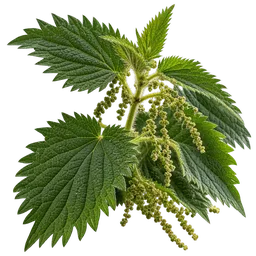
Stinging Nettle
Best for
More comfortable breastfeeding
Large effect, needs confirmation 4 weeks 1 study, n=78 #1 of 2 studied
- 5 papers
- 2 of 20 outcomes
- 2 positive
Stinging nettle shows a large effect for breastfeeding comfort in one small study, but the result needs confirmation while allergy relief lacks convincing human evidence.
Risk, worst reported severity
- urticaria (skin burning/stinging sensation) mild
- Diarrhea
- anxiolytics moderate
- lorazepam moderate
What stinging nettle actually does
Comfort can make breastfeeding feel more manageable for mother and baby. 38828258
Allergic rhinitis can affect your nose, eyes, breathing, sleep, and daily comfort. 29844782
| Outcome | Effect | Evidence | Dose | Time | Rank |
|---|---|---|---|---|---|
| Worth watching 1 | |||||
| More comfortable breastfeeding Large effect, needs confirmation Comfort can make breastfeeding feel more manageable for mother and baby. | | 1 RCT 1 papers · n=78 | — | 4 wk | #1 /2 |
| Early research 1 | |||||
| Relieve allergic rhinitis symptoms Faint early signal Allergic rhinitis can affect your nose, eyes, breathing, sleep, and daily comfort. | | 1 RCT 1 papers · n=40 | 150 mg | 4 wk | #4 /8 |
Effect tiers come from native-unit MCID where available, Cohen's d otherwise.
Dose, timing & forms
How much
There is not enough successful clinical evidence to establish a standard stinging nettle dose for allergy relief. The available allergic-rhinitis trial used 150 mg doses of freeze-dried nettle leaf over 4 weeks, but participants did not show a statistically significant reduction in overall allergy burden.1 Treat that protocol as research context, not a proven target dose.
When and how long
The allergy study used nettle daily across four weeks, so the research tests consistent use rather than an occasional dose on a high-pollen day.1 It does not establish an ideal time of day, whether to split a daily amount, or whether food changes results. Follow the product label unless a clinician gives you different guidance.
Forms & standardisation
Freeze-dried Urtica dioica leaf has the clearest direct trial connection for allergy symptoms.1 Look for the full botanical name and the plant part, usually leaf, because tea, root products, and concentrated extracts are not interchangeable. Extract research also shows that nettle preparations can act differently depending on their chemical makeup.2
Studied range, by outcome
| Outcome | Studied range | Median effective | Duration | Evidence |
|---|---|---|---|---|
| Lighten the overall allergy load | 150 mg | — | 4 wk | 1 paper |
Adverse events and drug interactions
Safety events
Drug interactions
What this is and how it works
- One study (n=78) reported more comfortable breastfeeding across four endpoints; the large effect needs confirmation.
- Five papers reviewed here span 20 outcomes, including a small allergic-rhinitis trial without meaningful overall symptom improvement.1
Stinging nettle is Urtica dioica, a leafy plant covered in tiny hairs that irritate skin on contact. Supplements skip the fresh plant's sting and use dried leaf, freeze-dried leaf, or extracts instead.
Nettle compounds interact with several parts of the allergy signaling system, including histamine-related receptors and enzymes involved in making inflammatory messengers.2 Think of it like turning several knobs on an oversensitive smoke alarm rather than removing the smoke itself. That laboratory activity sounds promising, but the small human allergy trial did not show a significant improvement in overall symptoms.1
Bottom line
Stinging nettle is a reasonable curiosity for people who want to explore an herbal product, but it is not an evidence-backed answer for allergy relief. The human allergy result is negative so far, despite interesting lab findings.12 Skip it if you want a supplement with established results, and check its interaction and safety information before using it.
Common questions
Does stinging nettle work for allergies?
How long should you try stinging nettle for allergies?
What kind of stinging nettle supplement is best studied?
Sources
Sources
Generated August 27, 2026
Related
More evidence for Stinging Nettle
Evidence guide
Nettle Root (Urtica dioica radix)
NewGrasping the Nettle: How a Stinging Weed Became a Nighttime Ally for the Aging Prostate
Evidence guide
Apr 10, 2026
Ingredient evidence
Ingredient evidence
NewBlack Seed
All scored outcomes
Aug 27, 2026
Ingredient evidence
Ingredient evidence
NewVitamin D
All scored outcomes
Aug 27, 2026