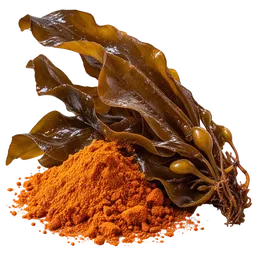
Fucoxanthin
What the trials found
Fucoxanthin has insufficient human evidence for meaningful fat loss or broader health benefits, with the main positive signal confined to one multi-ingredient product.
- 3 papers
- 0 of 24 outcomes
Median effective dose, most-studied outcomes
- Use more fat as fuel 4.4 mg 12 wk
Risk, worst reported severity
- Phototoxicity (concern based on chlorophyll degradation products PHA/PPHA) moderate
- palpitations mild
- rifampin moderate
- cisplatin moderate
Dose, timing & forms
How much
For the only salient fat-use outcome, the studied protocol provided 4.4 mg daily for 12 weeks as part of a combination product.1 That is a useful reference point, not a proven standalone fucoxanthin dose, since the trial product also contained pomegranate seed oil.1 Avoid assuming that a higher-dose seaweed extract delivers a bigger or faster result, because human dose-response evidence is not established.1
When and how long
Treat fucoxanthin as a daily routine, not an occasional pre-workout or quick fix. The available trial assessed outcomes after sustained use over 12 weeks, and it does not establish a best time of day or a clear advantage for splitting the dose.1 Follow the product directions rather than treating timing claims as settled science.
Forms & standardisation
The most relevant human evidence comes from Xanthigen, a combination of brown-seaweed fucoxanthin and pomegranate seed oil, not purified fucoxanthin.1 A label should state the actual fucoxanthin amount, not only the total seaweed-extract weight. Standalone fucoxanthin products ask you to make a bigger leap from the available human trial evidence.1
Studied range, by outcome
| Outcome | Studied range | Median effective | Duration | Evidence |
|---|---|---|---|---|
| Use more fat as fuel | 4.4 mg | 4.4 mg | 12 wk | 1 paper 1 sig. endpoint |
Adverse events and drug interactions
Safety events
Drug interactions
What this is and how it works
- One cited clinical study reported weight-management outcomes for a fucoxanthin-containing product, but participant numbers and effect size are unavailable here.1
- Three papers reviewed here span 24 outcomes, leaving the overall human evidence base very thin.
- The strongest signal involved obese premenopausal women with non-alcoholic fatty liver disease, not fucoxanthin alone.1
Fucoxanthin is a carotenoid, a family of naturally colorful compounds, found in brown seaweeds such as wakame and kombu. Supplements usually concentrate it from seaweed extracts rather than asking you to eat seaweed by the bowlful.
Researchers think fucoxanthin influences fuel-handling signals in fat tissue, including a heat-producing protein called UCP1. Think of UCP1 as a thermostat that lets some fuel leave as warmth instead of storing all of it, although the key human trial tested a multi-ingredient product rather than fucoxanthin in isolation.1
Bottom line
Fucoxanthin is worth watching if you are curious about seaweed-derived compounds and understand that the human evidence is still very thin. It is not a first-choice supplement for fat loss, because the main positive signal comes from one multi-ingredient product rather than fucoxanthin alone.1 Skip self-directed use if you take rifampin or cisplatin, or if you have experienced palpitations, dizziness, blurred vision, or light sensitivity with supplements.
Co-studied with

Common questions
Does fucoxanthin help you burn fat?
What is the best form of fucoxanthin?
How long does fucoxanthin take to work?
Sources
Sources
Generated August 27, 2026
Related
More evidence for Fucoxanthin
Ingredient evidence
Ingredient evidence
NewCapsaicinoids
All scored outcomes
Aug 27, 2026
Ingredient evidence
Ingredient evidence
NewCarnitine
All scored outcomes
Aug 27, 2026
Ingredient evidence
Ingredient evidence
NewGreen Tea
All scored outcomes
Aug 27, 2026
Ingredient evidence
Ingredient evidence
NewSynephrine
All scored outcomes
Aug 27, 2026