Rice Bran
Best for
Lower cholesterol
Promising early signal 8 weeks 1 study, n=24
- 1 papers
- 1 of 11 outcomes
- 1 positive
Rice bran shows a promising early signal for lowering harmful cholesterol, but evidence is too limited to support large expectations or replace established cholesterol care.
What rice bran actually does
High LDL cholesterol can build up in artery walls and raise the risk of heart disease. 24955613
| Outcome | Effect | Evidence | Dose | Time | Rank |
|---|---|---|---|---|---|
| Worth watching 1 | |||||
| Lower cholesterol Promising early signal High LDL cholesterol can build up in artery walls and raise the risk of heart disease. | | 1 RCT 1 papers · n=24 | — | 8 wk | — |
Effect tiers come from native-unit MCID where available, Cohen's d otherwise.
Dose, timing & forms
How much
The reviewed cholesterol trial lasted 8 weeks, but the available evidence does not provide a dependable supplemental dose range to copy. With only one early study, a label dose is not the same thing as an established cholesterol protocol.1
When and how long
Use rice bran consistently rather than treating it like an occasional add-on, since the available cholesterol result came after 8 weeks of use.1 Taking a fiber-containing food ingredient with a meal makes practical sense, but the trial evidence does not establish an ideal time of day or whether splitting servings changes results.1
Forms & standardisation
The current evidence does not establish a best standardized rice bran extract or a required active-compound level. Look for a clearly identified rice bran food or supplement product, and do not assume that rice bran oil delivers the same fiber profile or the same effect.1
What this is and how it works
- One study (n=24) reported lower harmful cholesterol after eight weeks, but no numerical effect or MCID comparison is available.1
- One paper reviewed here spans 11 outcomes, with cholesterol reduction the strongest consumer-facing claim.
- Evidence comes from a single small, short-term trial and does not establish cardiovascular benefit.
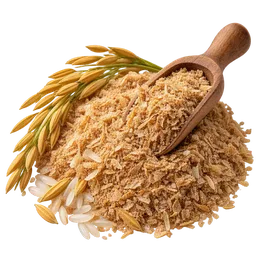
Rice bran is the thin, nutrient-dense outer layer of a rice grain. It supplies fiber, fats, vitamin E family compounds, and plant sterols, which are natural plant substances that resemble cholesterol.1
Its fiber and plant sterols can act like extra people filling seats on a bus: they take up space in the gut that cholesterol would otherwise use to get absorbed. Compounds in rice bran also influence how the liver handles cholesterol, but the direct human evidence remains limited to an early 8-week trial.1
Bottom line
Rice bran is worth watching if you want a food-based addition to an overall cholesterol plan and you are comfortable with early evidence. One trial showed a moderate, promising cholesterol signal after 8 weeks, but it does not yet justify big expectations or replace proven diet and medical guidance.1 Avoid treating it as a stand-alone answer if you have persistently high cholesterol or other cardiovascular risk factors.
Common questions
Does rice bran lower cholesterol?
How long does rice bran take to affect cholesterol?
Is rice bran oil the same as rice bran?
Sources
Sources
Generated August 27, 2026
Related
More evidence for Rice Bran
Ingredient evidence
Ingredient evidence
NewArtichoke
All scored outcomes
Aug 27, 2026
Ingredient evidence
Ingredient evidence
NewAsian Psyllium
All scored outcomes
Aug 27, 2026
Ingredient evidence
Ingredient evidence
NewAvocado
All scored outcomes
Aug 27, 2026
Ingredient evidence
Ingredient evidence
NewBarberry (Berberis spp.)
All scored outcomes
Aug 27, 2026
Ingredient evidence
Ingredient evidence
NewBerberine
All scored outcomes
Aug 27, 2026
Ingredient evidence
Ingredient evidence
NewBergamot (Citrus bergamia)
All scored outcomes
Aug 27, 2026